Step into a gripping political thriller that uncovers the unsettling power of Christian fundamentalists in the United States. Backed by millions of dollars and direct ties to government corridors, this movement is not just preaching—they are mobilizing for what they call The Holy War, determined to bring about the prophesied Armageddon. The film takes viewers behind the scenes of their world, exposing the powerful megachurch leaders who rally their followers toward a "final battle" they believe will trigger the Second Coming of Christ. With unprecedented access, Praying for Armageddon explores the alarming intersection of faith, power, and political influence. It reveals how ideology can shape decisions at the highest levels, raising urgent questions about the far-reaching consequences of religious extremism. This is not just a documentary—it’s a wake-up call to understand the forces shaping a precarious future.
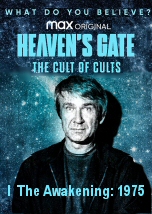
The series is a thorough examination of the infamous UFO cult through the eyes of its former members and loved ones. What started in 1975 with the disappearance of 20 people from a small town in Oregon, ended in 1997 with the largest suicide on US soil and changed the face of modern new age religion forever. In the first episode, Bonnie Nettles and Marshall Applewhite begin to recruit individuals interested in end-of-the-world Christianity, new age religion, and UFOs - but the disappearance of new members soon drives media attention and family concerns.
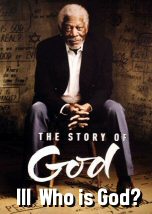
In the third episode of the series, Morgan Freeman examines different faiths' concepts of God, discovering how monotheism began in Egypt and Israel and allowing a neuroscientist to examine his own brain.
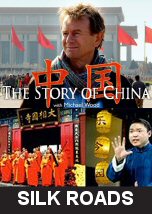
Michael Wood tells the tale of China's first great international age under the Tang Dynasty (618-907). From the picturesque old city of Luoyang, he travels along the Silk Road to the bazaars of central Asia and into India on the track of the Chinese monk who brought Buddhism back to China. This tale is still loved by the Chinese today and is brought to life by storytellers, films and shadow puppet plays. Then in the backstreets and markets of Xi'an, Michael meets descendants of the traders from central Asia and Persia who came into China on the Silk Road. He talks to Chinese Muslims in the Great Mosque and across town hears the amazing story of the first reception of Christianity in 635. Moving south, Michael sees the beginnings of China as an economic giant. On the Grand Canal, a lock built in 605 still handles 800 barges every day! The film tracks the rise of the silk industry and the world's favourite drink - tea. Michael looks too at the spread of Chinese script, language and culture across east Asia. 'China's influence on the East was as profound as Rome on the Latin West', he says, 'and still is today'. Finally, the film tells the intense drama of the fall of the Tang. Among the eyewitnesses were China's greatest poets. In a secondary school in a dusty village, where the Chinese Shakespeare - Du Fu - is buried in the grounds, the pupils take Michael through one famous poem about loss and longing as the dynasty falls. And in that ordinary classroom, there is a sense of the amazing drama and the deep-rooted continuities of Chinese culture.
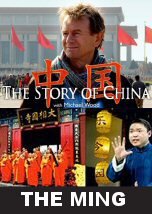
The tale of one of China's most famous dynasties begins with the amazing story of Hongwu, a peasant rebel who founded one of greatest eras in Chinese history. The film takes us to his great capital Nanjing, with its 21 miles of walls, each brick stamped with the name of the village that made it. Following the trail, we go to the Bao family village and see the villagers act a Ming murder story. Like many authoritarian states, the Ming were obsessive about architecture. We see the giant fortifications of the Great Wall, the ritual enclaves of the Forbidden City in Beijing and travel with bargeman Mr Hu down the Grand Canal, China's great artery of commerce right up to the present day. We then hear about Admiral Zheng He's voyages to Africa and the Gulf decades before Columbus, watch the construction of an ocean-going wooden boat 250ft long, and hitch a ride on a replica Ming junk in the South China Sea. As state prosperity grew, so did a rising middle class. Wood looks at Ming culture in Suzhou, the 'Venice of China'. Staying in a merchant's house, he discovers the silk, ceramic and lacquer-making industries, and visits one of the most beautiful gardens in the city. Then on to Macao and the arrival of Jesuit missionary Matteo Ricci, who hoped to convert China to Christianity. In the cathedral in Beijing, we learn more about these fateful exchanges with the west. Finally in Shaoxing, we visit the house of the 'Ming Proust' and at grassroots the Zhao family in Fujian where the film ends in an elegiac mood with the fall of the Ming in 1644.
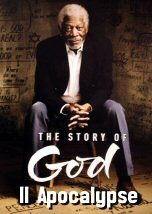
In the second episode of the series, Morgan Freeman looks into prophecies of violent cataclysms, and the strife of ages past, in an attempt to determine how the world will end.












With unprecedented access, Praying for Armageddon explores the alarming intersection of faith, power, and political influence. It reveals how ideology can shape decisions at the highest levels, raising urgent questions about the far-reaching consequences of religious extremism. This is not just a documentary—it’s a wake-up call to understand the forces shaping a precarious future.