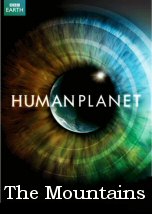
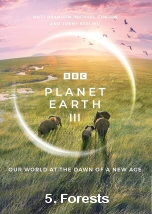
Journey to secret worlds where lives are wrapped in unexpected of ways. The fifth episode of the series takes viewers into the fascinating world of forests, revealing their hidden complexities and the intricate relationships within. Initially perceived as tranquil, forests are in fact bustling with life and intricate ecological interactions. The episode showcases various species, each with its unique lifestyle and survival strategies. Highlights include the Oriental pied hornbills in Borneo, whose extraordinary nesting rituals and partner dynamics are captivating. The Amazon rainforest is explored, introducing the peculiar treehoppers and their unique communication methods, vital for survival amidst numerous predators like ants and assassin bugs. The episode also delves into the intelligent and cooperative hunting techniques of dholes in the forests of India. The narrative takes a turn to China, focusing on the visually stunning courtship displays of Temminck's tragopans and golden pheasants. In the temperate rainforests of Western Canada, the rare spirit bear and its unique relationship with its habitat are examined. The episode concludes with an insightful look at the impact of human activity on forests and their inhabitants, particularly focusing on chimpanzees in Uganda, whose survival is increasingly intertwined with human expansion.
Nathan and Angela accelerate their parenting rehearsal with three-year-old, then six-year-old actors portraying their fake son, 'Adam'. Angela refuses to participate in Halloween due to her belief in Satanic conspiracies. Nathan balances parenting duties with a rehearsal for Patrick, a man who wants to confront his brother over their late grandfather's will, which bans Patrick from inheriting money if he is dating a 'gold digger'. The rehearsal occurs in a replica Raising Cane's restaurant in a warehouse next to the relocated Alligator Lounge. To introduce real emotions to the rehearsal, Nathan stages a scenario to convince Patrick that he could inherit buried gold from the grandfather of Isaac, the actor who plays Patrick's brother. After Patrick has an emotional breakthrough during a rehearsal, he leaves the production and never returns. Nathan narrates that he is envious that self-deception is easy for some people as he ponders his fake family.
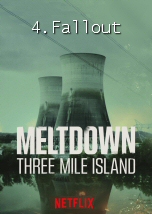
In the last episode, despite disturbing revelations of wrongdoing at Three Mile Island before and after the accident, the utility fights to bring the plant back online. Its Unit 1 had its license temporarily suspended following the incident at Unit 2. Although the citizens of the three counties surrounding the site voted by an overwhelming margin to retire Unit 1 permanently in a non-binding resolution in 1982, it was permitted to resume operations in 1985 following a 4–1 vote by the Nuclear Regulatory Commission. In 2017, it was announced that operations would cease by 2019 due to financial pressure from cheap natural gas, unless lawmakers stepped in to keep it open. Unit 1 shut down on September 20, 2019. Billed as the worst nuclear incident in U.S. history, what’s particularly scary here is how close Three Mile Island incident came to becoming a national disaster. Without giving away the whole story, cost-cutting 'solutions' almost cause a catastrophic disaster.
Will explore the strategy, deception and feats of engineering plants use to thrive in the changing weather of different seasons. In the face of conditions ranging from ice and snow to raging fires, survival is often a question of perfect timing - particularly when contending with intense competition and surprising predators. In this episode, David Attenborough travels to Finland to show one of the most extreme examples of seasonal plant life in the Arctic Circle. He also travels to California to see how climate change is affecting giant sequoias. These ancient trees like all other seasonal plants depend on the predictability of the seasons and our current changing climate threatens their survival.
As the world enters a phase of aggressive competition over untapped ocean floor resources, countries are scrambling to stake their claims. The vast economic potential on offer has made the seabed the ultimate frontier in a new Age of Exploration. China's research vessels in particular have been active in waters right across the globe. Through our exhaustive analysis of huge volumes of Chinese ship tracking data, from sand dredgers to survey vessels, we piece together a puzzle that reveals a new hidden power struggle over increasingly critical submarine resources.
A ground-breaking new trial at Imperial College London sees, for the first time ever under controlled conditions, a psychedelic drug tested head-to-head against a standard antidepressant as a treatment for depression. The film follows a pioneering team of scientists and psychotherapists as they compare the effects of psilocybin (the active ingredient of magic mushrooms) with an antidepressant on a small group of participants with clinical depression. This is scientific research at its most cutting edge. With over seven million people being prescribed antidepressants each year in England alone, this drug trial is an important milestone in understanding a completely different treatment for depression. How do psychedelic drugs measure up against the industry-standard antidepressants that have been popular since the 1990s? The empirical results of the trial are explored alongside the participants’ powerful lived experience.





















The Amazon rainforest is explored, introducing the peculiar treehoppers and their unique communication methods, vital for survival amidst numerous predators like ants and assassin bugs. The episode also delves into the intelligent and cooperative hunting techniques of dholes in the forests of India. The narrative takes a turn to China, focusing on the visually stunning courtship displays of Temminck's tragopans and golden pheasants. In the temperate rainforests of Western Canada, the rare spirit bear and its unique relationship with its habitat are examined.
The episode concludes with an insightful look at the impact of human activity on forests and their inhabitants, particularly focusing on chimpanzees in Uganda, whose survival is increasingly intertwined with human expansion.