How did the Chinese government turn pandemic cover ups in Wuhan into a triumph for the Communist party? Award-winning filmmaker Nanfu Wang recounts the experiences of people on the ground in the earliest days of the novel coronavirus and the way two countries dealt with its initial spread, from the first days of the outbreak in Wuhan to its rampage across the United States. The film explores the early confusion and parallel campaigns by authorities to try to contain the virus as well as shape the public narrative through misinformation, resulting in a devastating impact on citizens of both countries. With emotional first-hand accounts from medical professionals, patients, and grieving family members, and startling, on-the-ground footage from both Wuhan and the U.S., In The Same Breath is a revelatory illustration of the devastating toll that resulted from official missteps at containment of the infection and the widespread phenomenon of social media misinformation, while also highlighting the strength and resilience of the people who risked everything to communicate the truth.
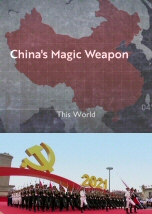
America says eight out of ten industrial espionage cases now involve China. Governments around the world are uncovering secret operations to expand China's influence - the work of a little-known branch of the Chinese Communist Party called the United Front Work Department. President Xi has called it his 'magic weapon'. Jane Corbin investigates this powerful but shadowy organisation. Has influence become interference as China bids to become the most powerful nation on earth?
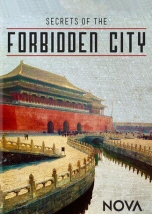
The architectural design of Beijing's ancient complex of palaces and temples enabled it to survive centuries of earthquakes. The Forbidden City is the world’s biggest and most extravagant palace complex ever built. For five centuries, it was the power center of imperial China and survived wars, revolution, fires, and earthquakes. How did the Ming Emperor’s workforce construct its sprawling array of nearly 1,000 buildings and dozens of temples in a little over a decade?
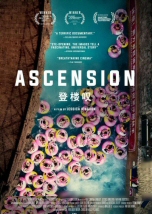
The absorbingly cinematic Ascension explores the pursuit of the 'Chinese Dream.' This observational documentary presents a contemporary vision of China that prioritizes productivity and innovation above all. Behind all, the ideology used in China to acquire acquiescence from the lower class workers in the factories, restaurants, resorts, etc who are sold a dream of one day being able to join the elite classes if they work hard enough. Almost mesmerizing with its cinematography, akin to the dreams of consumerism and the narratives of wealth that are being sold to the underclass workers, the film nicely illustrates the Chinese economy of the present.
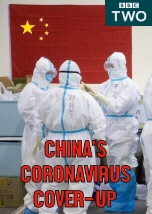
Did China hide crucial information about Covid-19 from the world? What began with a handful of mystery pneumonia cases in Wuhan late last year has now left more than half a million dead worldwide. Beijing says it has been open and transparent throughout, but former BBC China Editor Carrie Gracie investigates how it delayed reporting the initial outbreak and evidence that Covid-19 could be spread by people. It also silenced doctors who tried to speak out. The film also hears from one high-level insider who believes the animal market at the centre of the Wuhan outbreak should have been treated as a 'crime scene' and from experts who warn that this crisis may be a 'dress rehearsal' for an even more deadly pandemic in the future.
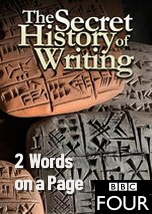
Writing itself is 5,000 years old, and for most of that time words were written by hand using a variety of tools. The Romans were able to run an empire thanks to documents written on papyrus. Scroll books could be made quite cheaply and, as a result, ancient Rome had a thriving written culture. With the fall of the Roman Empire, papyrus became more difficult to obtain. Europeans were forced to turn to a much more expensive surface on which to write: Parchment. Medieval handwritten books could cost as much as a house, they also represent a limitation on literacy and scholarship. No such limitations were felt in China, where paper had been invented in the second century. Paper was the foundation of Chinese culture and power, and for centuries how to make it was kept secret. When the secret was out, paper mills soon sprang up across central Asia. The result was an intellectual flourishing known as the Islamic Golden Age. Muslim scholars made discoveries in biology, geology, astronomy and mathematics. By contrast, Europe was an intellectual backwater. That changed with Gutenberg’s development of movable type printing. The letters of the Latin alphabet have very simple block-like shapes, which made it relatively simple to turn them into type pieces. When printers tried to use movable type to print Arabic texts, they found themselves hampered by the cursive nature of Arabic writing. The success of movable type printing in Europe led to a thousand-fold increase in the availability of information, which produced an explosion of ideas that led directly to the European Scientific Revolution and the Industrial Revolution that followed.



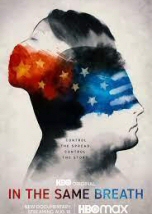


With emotional first-hand accounts from medical professionals, patients, and grieving family members, and startling, on-the-ground footage from both Wuhan and the U.S., In The Same Breath is a revelatory illustration of the devastating toll that resulted from official missteps at containment of the infection and the widespread phenomenon of social media misinformation, while also highlighting the strength and resilience of the people who risked everything to communicate the truth.