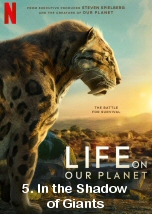
In this captivating final episode of the series we meet some incredible conservation champions on nature's front line, fighting to preserve the future of our beautiful planet. The episode opens with a dramatic rescue operation for the critically endangered black rhino, showcasing the efforts of Dumi Zwane and his team to establish a new breeding colony in a safe haven. The focus then shifts to the Centro Jambatu research center in the Andes, where Jaime Culebras works tirelessly to save the last of certain frog species. The documentary also highlights the efforts of Trang Nguyen, who bravely infiltrates the illegal wildlife trade in West Africa to protect forest elephants from ivory poachers. Meanwhile, in Vienna, Katharina Huchler undertakes a remarkable journey to reintroduce the northern bald ibis to Europe after its extinction 400 years ago. Indigenous leader Alessandra Korap's battle to preserve the Amazon rainforest from exploitation is a key focus, alongside Mohamed Nasheed's fight against climate change to save coral reefs and his country. This episode addresses the broader issue of habitat destruction, emphasizing its role as a primary driver of extinction. It poignantly demonstrates the interconnectivity of life on Earth and the critical importance of conservation efforts.
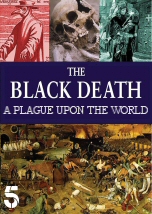
In an enthralling documentary, Dan Snow and archaeologist Raksha Dave delve into the catastrophic impact of the Black Death on Britain 700 years ago, a pandemic that extinguished around half of the population, or three million people. The duo embarks on a journey to trace the origins and merciless spread of the plague, starting from its arrival on Britain's South coast in June 1348, through the bustling trade routes that brought the disease to Melcombe Regis, Dorset. Their investigation takes them to various hotspots of the outbreak, including the Old Operating Theatre in London and Wildwood Animal Sanctuary in Kent, where they explore the role of rats in dispersing the bubonic plague. Through dramatic reconstructions and visits to places like Nottingham University's biomedical laboratories, they uncover the rapid spread and deadly impact of the plague, offering a month-by-month account of how it ravaged the country, decimating cities, towns, and villages alike. The documentary not only showcases the horrific symptoms and desperate attempts at cures through brutal medical practices of the time but also leverages cutting-edge research to explain why the Black Death remains the deadliest pandemic in history. The personal stories of victims, from princes to paupers, are brought to light, revealing the indiscriminate nature of the disease. Dan's visit to Canterbury Cathedral and Raksha's investigation into the recent discovery of mass graves beneath a tranquil London square underline the widespread desperation and devastation. Their journey through the history of the Black Death, culminating in the discovery of its indiscriminate toll and the unveiling of mass graves in London, not only sheds light on the darkest chapters of British history but also ignites a profound understanding of the tragedy, making a compelling case for why this documentary is a must-watch for anyone interested in the profound impacts of pandemics on human society.
The once-quiet suburbs of Sweden's major cities are the epicenter of a vicious turf war between rival gangs competing for the drug trade. The fierce competition has resulted in a series of tit-for-tat killings with almost daily shootings and bombings. More than 45 people have been shot dead so far this year. Paraic O'Brien steps onto the frontline of Sweden's deadly gang war, as the country becomes one of the most lethal for gun crime in the whole of Europe. From the front line of its lethal drug wars, a look at how Sweden has become one of Europe's deadliest hot spots for gun crime, with shootings often committed by children.
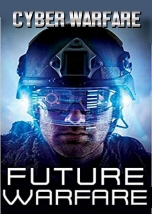
The way that wars are fought is constantly evolving. In the warfare of today and the future, it's the push of a button rather than the pull of a trigger, bringing disorder without a single soldier setting foot on the ground. The real-world battlefield has morphed from the bloody trenches of the front line into an age of cyber warfare. From collapsing all the infrastructure of a country to changing minds for elections, any threat you can imagine can be done.
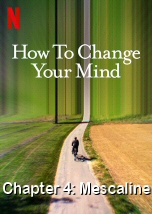
The last episode explores Mescaline, the psychoactive molecule in San Pedro and peyote cacti, a sacred medicine that Native Americans have had to fight for the right to use. At the Indigenous practices there's always an elder, someone who knows the territory very well, who's presiding. There's usually a group, a community is involved, There's always an intention, a purpose to what you're doing, and you're treating it as sacred, in order to achieve altered states of consciousness, which contribute to worship in various ways, or celebration or healing. But maybe all this is not so new to Western culture after all. In the old Greek histories of Eleusis, people who were initiated there got the drink, the kykeon, and then they had the illumination. The precise recipe is a mystery, but we know that the kykeon was a psychoactive brew that was used at the Eleusinian mysteries, a sacred annual ritual of enlightenment practiced by some of the world's greatest minds including Socrates, Plato, and Aristotle. So why did this ritual come to an end more than 1,000 years ago? Was the possibility of illumination or achieving a higher consciousness considered threatening to the powers that be? Have the drug wars been merely an extension of that fear? Psychedelics has a major part in how we can heal as a community, how we can heal as a city, and how we can heal as a country. The current renaissance of psychedelics could not come at a better time as the world confronts a crisis in mental health. But psychedelics have much to offer. The psychedelic experience changes the mind in ways that will help scientists better understand how it works. All these altered states allow us to probe what is the greatest mystery in all of nature. The emergence from mere matter of something as miraculous as consciousness. But an even bigger question is whether psychedelics might help us address the environmental crisis of how we think about our place in nature. One of the greatest gifts of psychedelics is how they reanimate the natural world, allowing us to perceive the subject, the spirit of all species, not just our own. And to feel a deeper sense of interconnectedness with nature.
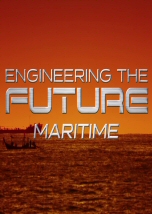
The world's shipping industry is facing a major challenge. If global shipping were a country it would be the sixth largest producer of greenhouse gas emissions. At current growth rates, if we do nothing, those emissions could double or even triple by 2050. But shipping companies and engineers are creating remarkable new machines to make their industry greener, using a resource that has moved man across the world’s oceans for thousands of years…Wind.







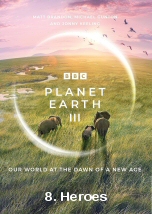







This episode addresses the broader issue of habitat destruction, emphasizing its role as a primary driver of extinction. It poignantly demonstrates the interconnectivity of life on Earth and the critical importance of conservation efforts.