Nancy Silverton describes her life path involving both Los Angeles and Italy, her family and her obsession with bread. She was born in Sherman Oaks, CA in a family where going out to eat was considered a special treat. But when she entered college and found herself 'very attracted by a handsome man' who worked in a kitchen, she landed herself a job and a new passion. These details, which all lead up to her stint at Wolfgang Puck’s celebrated LA restaurant Spago in 1982, are intercut with present-day scenes of Silverton working at Osteria Mozza.
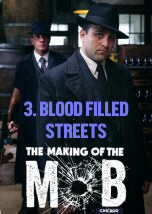
After the murder of his brother Frank, Al Capone is out for revenge against William Dever and the Chicago police. He plots to kill every undercover cop that was in Cicero on the day of Frank’s death. Before he can set his plan in motion, however, Johnny Torrio returns from Italy and reclaims his control of their criminal empire. Torrio forbids Capone from killing cops, fearing it would spark an all-out war. Despite Capone’s personal loss, Torrio returns to a booming business that’s raking in $10 million a month. However, as Torrio and Capone’s empire grows, it becomes harder to keep smaller factions under control. After a small group of Italian mobsters attacks one of Dean O’Banion’s distilleries, O’Banion blames Torrio and decides to end their business partnership. He announces his retirement to Torrio and offers Torrio an opportunity to buy him out. Torrio meets O’Banion at the Seine Brewery on May 19, 1924, with the buyout money. Chicago police raid the brewery and arrest Torrio while letting O’Banion walk free: O’Banion had set the whole thing up. With prior convictions, Torrio serves a mandatory prison sentence but is first released on bail. He vows to kill O’Banion as payback and gives Capone his blessing to kill O’Banion. Capone spends months planning the hit. Capone knows that catching O’Banion off guard is nearly impossible, so he places an order with O’Banion’s flower shop for nearly $20,000 worth of flowers, knowing that O’Banion personally oversees his biggest arrangements. On November 10, 1924, O’Banion works in his shop preparing the flower delivery. Two of Capone’s men enter the shop and fatally gun O’Banion down. Four days later, Chicago’s most powerful Irish gangster is laid to rest in one of the most lavish funerals Chicago has ever seen. More than two dozen cars are required to transport floral arrangements as a crowd of 10,000 mourns the death of the infamous gangster. Torrio and Capone attend the funeral, infuriating O’Banion’s top lieutenants, Hymie Weiss and Bugs Moran. Chaos breaks out as smaller gangs through the city begin a turf war. It’s the beginning of an era of bloodshed in Chicago known as the Beer Wars. Over 300 people are murdered at a rate of 75 to 100 murders a year.
American exchange student Amanda Knox is convicted and eventually acquitted for the 2007 death of another student in Italy. Was she a cold-blooded psychopath who brutally murdered her roommate or a naive student abroad trapped in an endless nightmare? Directors Rod Blackhurst (Tribeca Audience Award-winner Here Alone) and Brian McGinn (IDA Award-winner Chef's Table) and producer Mette Heide (Peabody Award-winner India's Daughter) explore the notorious case that made headlines around the world.
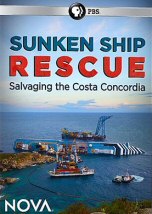
Follows the epic operation to secure, raise, and salvage the Costa Concordia cruise ship, which ran aground and tragically capsized off the coast of Italy on January 13th 2012, killing 32 people. The wreck stretches the length of three football fields, weighs 45,000 tons, and lies half submerged on the site of a protected reef, with a 160-foot-long hole in its hull. Moving it from its precarious perch on the edge of an underwater cliff will be a huge technical and logistical challenge. Joins a team of more than 500 divers and engineers working around the clock as they attempt the biggest ship recovery project in history.
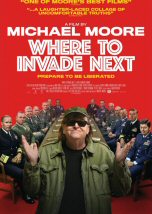
To show what the USA can learn from rest of the world, director Michael Moore playfully visits various nations in Europe and Africa as a one-man "invader" to take their ideas and practices for America. Whether it is Italy with its generous vacation time allotments, France with its gourmet school lunches, German with its industrial policy, Norway and its prison system, Tunisia and its strongly progressive women's policy and Iceland and its strong female presence in government and business among others, Michael Moore discovers there is much that American should emulate
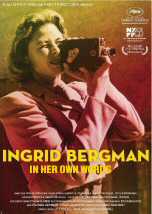
(Click CC for subtitles) Whether headlining films in Sweden, Italy, or Hollywood, Ingrid Bergman always pierced the screen with a singular soulfulness. Seven time Academy Award-nominee and three time Academy Award-winner Bergman was one of the most talented actresses of Hollywood's Golden Age with great performances in films such as Casablanca (1942), Gaslight (1944) and and Autumn Sonata (1978). In spring 2011, director Stig Björkman meets Ingrid Bergman's daughter Isabella Rossellini and she suggests him to 'make a film about Mama'. Through Isabella, Stig is able to tell Ingrid's story through her own words and images. With never-before-seen private footage, notes, letters, diaries and interviews with her children, this documentary presents a personal portrait and captivating look behind the scenes of the remarkable life of a young Swedish girl who became one of the most celebrated actresses of American and World cinema.























These details, which all lead up to her stint at Wolfgang Puck’s celebrated LA restaurant Spago in 1982, are intercut with present-day scenes of Silverton working at Osteria Mozza.