







Last Watched

"Lizard"  Sort by

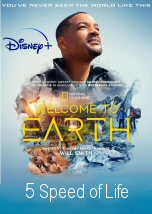
Speed of Life

   2021    Nature
Will Smith discovers hidden worlds of fast and slow in the Earth's oldest desert. Worlds where things go so fast or so slow we don't even know they're happening. This hidden world of speed is everywhere, even 80 feet underwater. Hundreds of tiny anemones, anchored to the rocks, but film them patiently, then speed it up, and this miniature world comes to life. A lizard's tongue is one of the fastest movements in the entire animal kingdom. An orca creates a shock wave by slapping her tail and that pulse can travel through the water at more than a thousand miles an hour. to stuns the herrings she hunts.
Series: Welcome to Earth
Incredible Animal Moments

   2018    Nature    HD
The fiercest, strangest, and wildest creatures in the animal kingdom face off in a countdown of the most incredible animal moments ever recorded. Across arid deserts, through dense rainforests, and into the deepest of oceans, witness remarkable scenes of animal activity, from deadly showdowns to wild romances.

Conquest of the Skies The first to flight

   2015    Nature    3D    HD
David Attenborough embarks on an extraordinary journey to unravel one of nature s most gripping stories the evolution of flying animals. The power of flight is one of the greatest miracles of nature. Over one hundred billion creatures soar through the air today - from nectar-drinking hummingbirds, to armoured airborne beetles; from bats hunting in the black of night, to bizarre winged lizards. The film travels back in time to unravel the astonishing 300-million-year story of how these animals first appeared, and then evolved into the huge variety of aeronauts that fill our skies today. Only now, using the latest scientific analysis, can he reveal the hidden mechanics behind their gravity-defying skills. Ground-breaking 3D cameras, high speed filming and stunning CGI bring the viewer closer than ever to this astounding aerial world.
Series: Conquest of the Skies

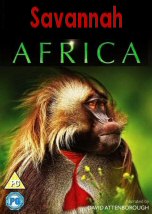
Savannah

   2013    Nature
East Africa is a land which is constantly changing. To survive here, creatures must be able to deal with unpredictable twists and turns - wet turning to dry, feast to famine, cold to hot - no matter how hostile it becomes. From dense forests to snow capped peaks, steamy swamps and endless savannah, this unique and varied land is also a haven for life, supporting large animals in numbers found nowhere else on Earth. But away from the familiar, forever-travelling herds, there are a huge cast of other characters - lizards that steal flies from the faces of lions, vast dinosaur-like birds who stalk catfish through huge wetlands, and an eagle who risks everything on the arrival of ten million bats from a far off rainforest.
Series: Africa with David Attenborough

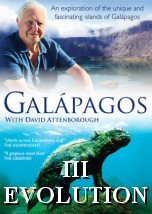
Evolution

   2013    Nature    3D    HD
No two islands in the Galapagos are the same. The imperceptible drift of a continental plate keeps each island biologically isolated. David Attenborough explores this evolutionary crucible, encountering tortoises that weigh up to half a tonne, finches that use tools and lizards that communicate using press-ups; for Darwin, this was all evidence for his theory of evolution. We see the final footage of the world famous tortoise fondly known as Lonesome George, the last survivor of his species. David Attenborough was the last person to have ever filmed with him. Darwin’s famous visit had a downside – the arrival of man. David investigates the impact we’ve had in these islands, as our influence is a double-edged sword. We’ve disrupted the natural balance but he also believes Darwin would be thrilled with the advances we have made in science. We’re also now uncovering evidence that evolution is more rapid than Darwin could ever have imagined. Whatever wonders the Galapagos Islands hold today, they are only a hint of what awaits them in the future.
Series: Galapagos with David Attenborough

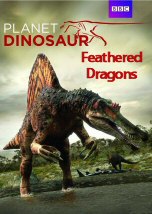
Feathered Dragons

   2011    Culture
In a late Jurassic forest in what is now China, an Epidexipteryx escapes from a juvenile Sinraptor by climbing a tree. It finds a beetle grub in the tree bark, being shown to use its elongated fingers in a similar way to a modern day aye-aye. However, its prey is stolen by another, larger Epidexipteryx, and after a brief bout of posturing, the smaller individual goes to find more food. It drops a second grub to the forest floor, where the other Epidexipteryx retrieves it, only to be killed by the juvenile Sinraptor. The episode then cuts to a desert in late Cretaceous Mongolia, where a Saurornithoides is shown brooding a nest of eggs. When it leaves the nest, an Oviraptor raids it, fleeing when the troodontid returns. The Saurornithoides is suddenly attacked and eaten by a Gigantoraptor, which then heads to compete in a breeding ritual for mates. The males use their feathers for display, a brief fight between two erupting at one point, allowing the females to choose the best suitor. The episode finally cuts to an early Cretaceous forest in China, where a Xianglong is being hunted by a Microraptor, which uses its feathers to pursue the gliding lizard in the air. A Sinornithosaurus attacks it, and after a brief chase the Microraptor manages a lucky escape. The Sinornithosaurus, alongside two other members of its species is then shown hunting a Jeholosaurus and its three young. The group brings down the parent, the narrator explaining that their possibly venomous bite allowed them to tackle animals much larger than themselves. A montage is then shown of the feathered dinosaurs featured in the programme, with the narrator saying that Microraptor not only hints at how flight might have developed, but also that dinosaurs still live amongst us today, as birds.
Series: Planet Dinosaur
Leaving Neverland

Leaving Neverland

2019  Culture
Worst Ex Ever

Worst Ex Ever

2024  Culture
Dynamic Genomes Series

Dynamic Genomes Series

2019  Medicine
Untold

Untold

2021  Culture
Solar System

Solar System

2024  Science
Arnold

Arnold

2023  History
Asia

Asia

2024  Nature