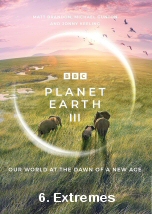
Explore the breathtaking extremes of our planet in this captivating episode. Journey through the vast Hang Son Doong cave in Vietnam, the largest on Earth. Witness the resilience of life in harsh conditions, marvel at the adaptation strategies of species like the blind cave fish and the enduring Arctic wolf pack. In the Arctic, observe the strategic hunt of wolves preying on musk oxen, a dance as old as the Ice Age. In the French Alps, the struggle for mating among common frogs unfolds, showcasing the urgency and challenges faced by cold-blooded animals. Witness the social dynamics of Barbary macaques in the cedar forests of the Atlas Mountains, where survival hinges on social bonds. The forests of Mexico, home to millions of monarch butterflies that huddle for warmth, illustrates the fragility and beauty of nature. Discover how fire shapes ecosystems in South Africa's fynbos and Northern Australia, crucial for the survival of species like the golden-shouldered parrot. The documentary poignantly addresses the impact of changing climates and human intervention on wildlife, from the endangered elephants of Amboseli, Kenya, to the secretive snow leopards of the Gobi Desert. This episode offers a profound glimpse into the extraordinary adaptations and challenges faced by wildlife across the globe, reminding us of the delicate balance and beauty of life on Earth.
In the first episode, Sir David Attenborough reveals the unexpected wildlife riches of the British Isles, showcasing the dramatic and spectacular habitats that rival any across the globe. This journey uncovers the diversity of life in the UK's unique landscapes, from the intricate world of bumblebees to the swift lives of kingfishers. The episode captures extraordinary scenes of nature, including killer whales preying on seals, golden eagles in the Scottish mountains, the cunning tactics of woodland plants, and the perilous life of puffins evading gulls. It highlights Britain's geological diversity as a cornerstone of its natural wealth, contributing to an array of habitats and supporting a wide range of life. Britain's importance extends to being a haven for migratory birds, with our seas feeding 65% of the world's gannets and supporting the largest colony of northern gannets on Scotland's Bass Rock. The west coast of Scotland offers sanctuary to barnacle geese due to its abundant food and mild climate, though they remain vigilant against hunting sea eagles. Despite these natural treasures, Britain faces challenges as one of the most nature-depleted countries globally. Sir David Attenborough emphasizes the need to conserve and restore these wild isles for the enjoyment and benefit of future generations.
David Attenborough explores Britain and Ireland’s grasslands, revealing the creatures that create them and the extraordinary stories they hide. From the coastal flower meadows in the Scottish Outer Hebrides to the rich open landscapes in the mountains of southern Ireland, we enter surprising and dramatic worlds. In southern England, we meet an extraordinary bee that lives in chalk grassland, one of our rarest habitats, laying her eggs in empty snail shells. Meanwhile, in the colourful machair of the Hebrides, ringed plovers and lapwings strive to rear their families of tiny fluffy chicks and to save them for marauding gulls. We travel back in time to explore the vast wild grasslands once found throughout our isles, before meeting herds of semi-wild horses, where males battle fiercely for the females. Today, they are helping to turn some of this land back to wilderness. And in our precious remaining pockets of flower-rich meadow, a remarkable conservation success story plays out. Once extinct in our isles, England now has the largest known populations of large blue butterflies. Their survival relies on a game of deception with red ants, which are tricked into adopting the butterfly’s unassuming but predatory caterpillars. Our story then journeys to the mountains. Each morning in early spring, feisty male black grouse battle for prime position on their frozen breeding grounds. Their sole mission is to impress a female. Meanwhile, on south-facing scree slopes, dozens of adders emerge from hibernation to perform a surprisingly delicate courtship routine. The episode concludes with a mighty battle in the wild mountains of County Kerry. This is the scene of an epic and spectacular rut between the largest land mammals in Britain and Ireland, red deer. The grasslands of Britain and Ireland are under threat. We have lost 97 per cent of our species-rich meadows in the last century, as modern agriculture replaces these precious habitats. This episode shows just how important different types of grassland are to the species which call these islands home.
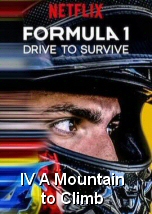
The Haas team looks to reverse its recent fortunes with a new sponsor and two rookie drivers: Nikita Mazepin and Mick Schumacher. Reliable Netflix gang-show entertainers, Guenther Steiner and his motley Haas crew are it again. This time they invited a Russian oligarch to sponsor them and his spoilt son to drive, what could possibly go wrong? It soon turns out Nikita Mazepin can’t make head nor rear diffuser of the VF-21 car, being easily trounced by team-mate Mick Schumacher: 'I don’t know how he drives that thing' says poor Niki. Soon, some rather rude phrases are being exchanged between the team and driver, with the elder Mazepin threatening to withdraw his sponsorship early on in the season. However, what can only be described as a genius tyre call at his home grand prix in Sochi means young Maz rescues the situation and blazes a trail to finish.
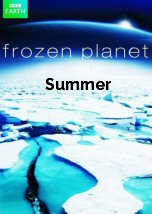
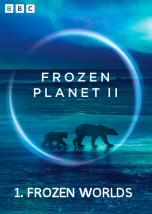
Journeying from pole to pole, The series 'Frozen Planet II' reveals surprising worlds that exist across the planet and the remarkable animals that make them their home. In a fragile world of beauty and hostility, nature finds a way to survive and thrive. David Attenborough explores a planet on the brink of major change. In the first episode, we begin our journey in the far south, in the most hostile place on earth, the frozen continent of Antarctica. After being raised on the ice in winter, emperor penguin chicks find themselves abandoned by their parents in spring. To survive, they must find their own way across the treacherous sea ice to the rich waters of the Southern Ocean. The waters surrounding Antarctica may be the richest of all, but they are also home to an exceptionally sophisticated predator, the killer whale. To reach their favored prey, Weddell seals, a family of killer whales have learnt to generate their own waves, washing the seals off their ice floes. It’s a technique that has been passed down over generations and is coordinated by the family matriarch, who can be over 100 years old. Leaving Antarctica and travelling north, we discover frozen habitats that are created by altitude. The greatest of these is the Himalaya, the tallest mountain range on earth, which contains so much ice and snow it is known as the third pole. In the shadow of the Himalaya lies a vast frozen grassy plain that is home to the fluffiest cat in the world, Pallas’s cat. It may have extremely dense fur, but if it’s to survive the Mongolian winter, it needs to catch lots of gerbils and voles. Easier said than done when you only have short legs and paws that are sensitive to the cold. North of the Great Steppe lies the boreal forest, which encircles the continents of North America, Europe and Asia, and remains frozen for six months of the year. Prowling these forests in the far east of Russia is the Siberian tiger, the largest cat in the world. In winter, it is on the lookout for black bears hibernating in caves, a high-risk strategy that only a cat of this size would attempt. Above the boreal forest, we cross into the Arctic Circle, where conditions become so extreme that trees can no longer grow. This is the tundra. Living here are relics of the last ice age, musk ox. In spring, their calves face a far greater danger than the cold, grizzly bears. Encounters can be brutal, but if just a few calves survive the gauntlet, the herd’s future is secure. To the north of the tundra is the Arctic Ocean, the only ocean that can completely freeze over. Living here is one of the most peculiar animals on earth, the hooded seal. Males have extraordinary inflatable noses, producing a bright red balloon out of their left nostrils. One male hopes this will make him irresistible. All of the frozen habitats share one thing in common: the threat posed by today’s climate change. Travelling to the island of Greenland, home to the largest body of ice in the northern hemisphere, we witness how global warming is melting its ice cap at faster rates than ever before, with profound consequences for global sea levels. Lastly, we visit the Arctic’s most iconic resident, the polar bear, as a mother bear struggles to provide for her cubs in a world of shrinking sea ice.

















Discover how fire shapes ecosystems in South Africa's fynbos and Northern Australia, crucial for the survival of species like the golden-shouldered parrot. The documentary poignantly addresses the impact of changing climates and human intervention on wildlife, from the endangered elephants of Amboseli, Kenya, to the secretive snow leopards of the Gobi Desert. This episode offers a profound glimpse into the extraordinary adaptations and challenges faced by wildlife across the globe, reminding us of the delicate balance and beauty of life on Earth.