By August 1949 the USSR became the world's second superpower, thanks to its spies who had stolen America's atomic secrets. But by March 1953, Stalin is dead and KGB chief, Beria, is executed later the same year. Nikita Kruschev tries to reduce the power of the security service, splitting it into several sections...but it doesn't last and, soon, the KGB is back. In the USSR, countless KGB operatives spied on opponents of the regime at home, guarded the state and party leadership, and abroad tried to find out as much as possible about the intentions of the NATO countries and, if possible, to sabotage them.
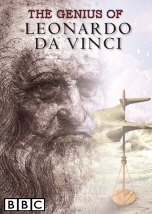
Dr Janina Ramirez embarks on a journey through six decades of the BBC archives to create a television history of one of the most celebrated figures in art - Leonardo Da Vinci. Ramirez shows how experts and art presenters have turned to television to bring Leonardo's artwork out of galleries and into our living rooms. Through television they have explored the origins of Leonardo's boundless curiosity, his pioneering use of light and shade, and his remarkable scientific exploration. Along the way Dr Ramirez discovers Britain's little-known version of The Last Supper, the gruesome ways Leonardo acquired his anatomical knowledge - and even what lies beneath the Mona Lisa.
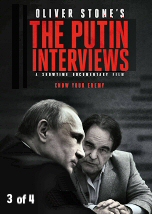
Putin thinks that the West must understand that today's Russia cannot function exactly as the West does, already. Putin also explains his views on NATO, and cannot see any reason to why this military alliance has grown after the fall of Communism in Europe. When Stone asks about Putin's views on Edward Snowden and whether he is a traitor or not, Putin replies, 'No he is not, as he never has worked for any foreign country,' and also claims that Russian intelligence does not know anything more than what Snowden already had leaked before he arrived at Moscow.
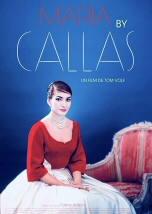
The film depicts the life and work of opera singer Maria Callas in her own words by using performances, TV interviews, home movies, family photographs, private letters and unpublished memoirs nearly all of which have never been shown to the public. Maria by Callas reveals the essence of an extraordinary woman who rose from humble beginnings in New York City to become a glamorous international superstar and one of the greatest artists of all time. Her letters and unpublished memoirs are read by opera singer Joyce DiDonato. (Click CC for subtitles)
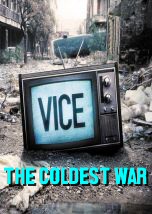
'The Coldest War': With the polar ice caps shrinking due to global warming, new trade routes are being exposed, along with billions of dollars' worth of natural-resource reserves. The five nations bordering the Arctic are readying themselves to fight for it. The problem is that there's one non-NATO country that already considers itself rightful owner of the region: Russia. With Vladimir Putin's recent military annexation of Crimea, there's a definite possibility its aggressions will boil over, returning the international community to precarious Cold War footing. We will head north to witness NATO forces participating in the largest polar military exercise in history. 'Heroin Warfare': Since the U.S. occupation of Afghanistan, heroin production in the region has skyrocketed, making the country the number-one producer by a large margin. Though Iran, Afghanistan's neighbor, is an ultraconservative country, Afghan heroin flowing across the border has actually caused Iran to have the worst heroin use problem in the world. Suroosh Alvi gets a rare look inside Iran to meet the suffering heroin addicts, and see how the country is coping with the illegal drug trade.
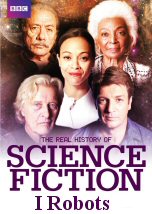
The series heads to the very frontiers of space and science to produce the definitive history of science fiction. What if our creations turn against us? The idea of creating life has fascinated society since the earliest days of science fiction. Robots transports viewers from the first steps of Frankenstein’s monster to the threat provided by the Terminator and the world of Cyberspace. Find out how Rutger Hauer created one of the greatest speeches in all of science fiction for Blade Runner. Discover from Kenny Baker the challenge of acting in Star Wars while inside the body of R2D2, and learn how Anthony Daniels was drawn to the role of C-3PO by concept art modeled closely on the robot from the silent classic Metropolis. The creators of the original Robocop describe how its hidden depths have given it enduring appeal and William Gibson reveals the origins of his seminal novel Neuromancer. From HAL in 2001: A Space Odyssey to the Cylons of the reimagined Battlestar Galactica and the world of The Matrix, this is a journey that asks – what does it mean to be human?



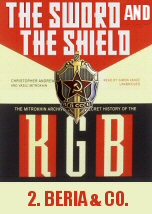




In the USSR, countless KGB operatives spied on opponents of the regime at home, guarded the state and party leadership, and abroad tried to find out as much as possible about the intentions of the NATO countries and, if possible, to sabotage them.