Mind reading might sound like pseudoscientific, but its scientific counterpart, thought identification, is very much a real thing. It's based in neuroimaging and machine learning, and what's really cool is that experiments in mind reading aren't just about spying on what someone is thinking. They're about figuring out what thoughts are even made of. When you think of something, what does that mental picture actually look like? What resolution is it in? How high fidelity is a memory, and how do they change over time? In this episode, we are going to look at how
reading people's minds can help us answer these questions.
The third episode looks at anxiety and explores why it is so common. It talks to neuroscientists who explain the physiological and evolutionary basis of anxiety. Although it can help animals escape predators, anxiety can cause serious problems for human beings. It talks to sufferers of anxiety and examines the different types of anxiety people can feel. It also looks at how social media can cause anxiety.
To help Andrew in his search for love, relationship specialist Jodi Rodgers has come to work with him - on his dating skills. Olivia hasn't given up in her search for love. Today, she's on her way to meet someone new. She's meeting Jackson. Jackson likes origami and the smell of perfume. He hates the sound of nails on a blackboard and people slurping their tea. Jimmy and Sharnae are arriving at the Gold Coast for their first-ever holiday together. And Jimmy has a surprise in store for tomorrow.
The film is a descriptive time-lapse journey about the magical, mysterious and medicinal world of fungi and their power to heal, sustain an contribute to the regeneration of life on Earth that began 3.5 billion years ago. Imagine an organism that feeds you, heals you, reveals secrets of the universe and could help save the planet. You'll see it through the eyes of mycologists, like renowned Paul Stamets, about the unlimited potential of fungi in the fields of food, medicine, expanding consciousness, bioremediation, neurogenesis and treating end-of-life anxiety.
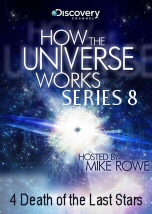
Stars helped create us, building and spreading the ingredients for life to develop. But there will definitely be a point in the future when, in the future when, you look up, you will no longer be able to see stars. For billions of years, stars brought life to the universe. Now, they're dying out in a star apocalypse. What's causing the die-off, and what happens to life when the lights go out?
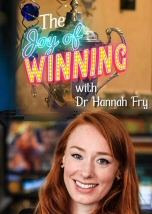
Dr. Hannah Fry takes us on a whistle-stop tour around the mathematics of success, to help us understand how to get more of what we want in our own lives. From the best way to bag a budget dinner or keep the kids quiet, to averting nuclear Armageddon and negotiating global climate change agreements.














When you think of something, what does that mental picture actually look like? What resolution is it in? How high fidelity is a memory, and how do they change over time? In this episode, we are going to look at how reading people's minds can help us answer these questions.