The film tells the story of an overlooked genius: Claude Shannon. In a blockbuster paper in 1948, Claude Shannon introduced the notion of a 'bit' and laid the foundation for the information age. His ideas ripple through nearly every aspect of modern life, influencing such diverse fields as communication, computing, cryptography, neuroscience, artificial intelligence, cosmology, linguistics, and genetics. But when interviewed in the 1980s, Shannon was more interested in showing off the gadgets he'd constructed -- juggling robots, a Rubik's Cube solving machine, a wearable computer to win at roulette, a unicycle without pedals, a flame-throwing trumpet -- than rehashing the past. Mixing contemporary interviews, archival film, animation and dialogue drawn from interviews conducted with Shannon himself, The Bit Player tells the story of an overlooked genius who revolutionized the world, but never lost his childlike curiosity.
The film investigates the inner workings inside the commercial pet food industry, which has went largely unchallenged until now and Pet Fooled is made with an aim to expose its secrets and lack of transparency. Marketed toward humans, but made for consumers who can’t speak, pet food companies have learned how to navigate through verbiage and loopholes. The end result is a product that’s cheap and easy for them to make, while buyers are promised that they’re giving 'quality,' 'healthy,' and 'nutritious' food to their pets. Some veterinary professionals in the film link modern ailments found in pets, such as obesity and allergies, to diet. Insights and knowledge are shared by multiple interviewees, including Dr. Karen Becker of Mercola Healthy Pets, Dr. Barbara Royal, founder of The Royal Treatment Veterinary Center and Oprah Winfrey’s veterinarian, Susan Thixton, founder of Truthaboutpetfood.com.
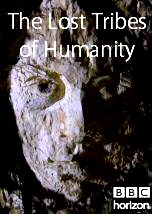
Alice Roberts explores the latest discoveries in the study of human origins, revealing the transformation that has been brought about in this field by genetics. Traditional Palaeoanthropology, based on fossils, is being transformed by advanced genome sequencing techniques. We now know that there were at least four other distinct species of human on the planet at the same time as us - some of them identified from astonishingly well-preserved DNA extracted from 50,000-year-old bones, others hinted at by archaic sections of DNA hidden in our modern genome. What's more, we now know that our ancestors met and interacted with these other humans, in ways that still have ramifications today. Alice uses these revelations to update our picture of the human family tree.
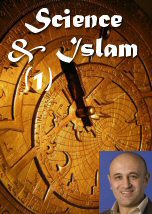
Physicist Jim Al-Khalili travels through Syria, Iran, Tunisia and Spain to tell the story of the great leap in scientific knowledge that took place in the Islamic world between the 8th and 14th centuries. Its legacy is tangible, with terms like algebra, algorithm and alkali all being Arabic in origin and at the very heart of modern science - there would be no modern mathematics or physics without algebra, no computers without algorithms and no chemistry without alkalis. For Baghdad-born Al-Khalili, this is also a personal journey, and on his travels he uncovers a diverse and outward-looking culture, fascinated by learning and obsessed with science. From the great mathematician Al-Khwarizmi, who did much to establish the mathematical tradition we now know as algebra, to Ibn Sina, a pioneer of early medicine whose Canon of Medicine was still in use as recently as the 19th century, Al-Khalili pieces together a remarkable story of the often-overlooked achievements of the early medieval Islamic scientists.
Al-Khalili travels to northern Syria to discover how, a thousand years ago, the great astronomer and mathematician Al-Biruni estimated the size of the earth to within a few hundred miles of the correct figure. He discovers how medieval Islamic scholars helped turn the magical and occult practice of alchemy into modern chemistry. In Cairo, he tells the story of the extraordinary physicist Ibn al-Haytham, who helped establish the modern science of optics and proved one of the most fundamental principles in physics - that light travels in straight lines. Prof Al-Khalili argues that these scholars are among the first people to insist that all scientific theories are backed up by careful experimental observation, bringing a rigour to science that didn't really exist before.
In the last episode, Al-Khalili turns detective, hunting for clues that show how the scientific revolution that took place in the 16th and 17th centuries in Europe had its roots in the earlier world of medieval Islam. He travels across Iran, Syria and Egypt to discover the huge astronomical advances made by Islamic scholars through their obsession with accurate measurement and coherent and rigorous mathematics.He then visits Italy to see how those Islamic ideas permeated into the west and ultimately helped shape the works of the great European astronomer Copernicus, and investigates why science in the Islamic world appeared to go into decline after the 16th and 17th centuries, only for it to re-emerge in the present day. Al-Khalili ends his journey in the Royan Institute in the Iranian capital Tehran, looking at how science is now regarded in the Islamic world









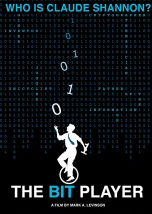





Mixing contemporary interviews, archival film, animation and dialogue drawn from interviews conducted with Shannon himself, The Bit Player tells the story of an overlooked genius who revolutionized the world, but never lost his childlike curiosity.