








Last Watched

"Plant"  Sort by

Galapagos with David Attenborough Origin

   2013    Nature    3D    HD
Sir David Attenborough returns to the Galápagos Islands and travels throughout the archipelago to explain their origins and their unique fauna in evolutionary terms. He has captured a new species of pink iguana on film for the first time. In the first episode, the islands of the Galapagos rose explosively from the ocean four million years ago. Although life would not seem viable in such a remote Pacific outpost, the first arrivals landed as the fires still burned. David Attenborough explores the islands for the animals and plants that descend from these pioneers: from the sea birds carrying the seeds that made a tentative foothold on these rocks, to equator-dwelling penguins and a dancing bird with blue feet. This is a story of treacherous journeys, life-forms that forged unlikely companionships, and surviving against all odds. It is the story of an evolutionary melting pot in which anything and everything is possible.
Series: Galapagos with David Attenborough
Adaptation

   2013    Nature    3D    HD
Once life arrived in the Galapagos, it exploded into unique and spectacular forms. David Attenborough investigates the driving forces behind such evolutionary innovations. We learn that life must be able to adapt quickly in these ever-changing volcanic landscapes. It has resulted in species found nowhere else in the world, such as giant whale sharks and marine iguanas that can spit sea-salt from their noses, dandelion seeds that grow into tree-sized plants and spiders that can blend perfectly into the darkness. Adaptation has been the key to survival in these islands so far, but the story of life in the Galapagos doesn’t end here. The catalyst that triggers these explosions of life remains in place.
Series: Galapagos with David Attenborough
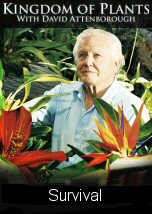
Kingdom of Plants Life in the Wet Zone

   2012    Nature
Written and presented by David Attenborough, who said: 'One of the most wonderful things about filming plants is that you can reveal hidden aspects of their lives, you can capture the moment as one plant strangles another, and as they burst into flower. But whilst time-lapse photography allows you to see things that no human being has ever seen before". David begins his journey inside the magnificent Palm House, a unique global rainforest in London. Here, he explores the extraordinary plants that are so well adapted to wet and humid environments and unravels the intimate relationships between wet zone plants and the animals that depend on them. It was in the wet zones of the world that plants first moved on to land and in the Waterlily House David reveals how flowers first evolved some 140 million years ago. Watching a kaleidoscope of breath-taking time-lapses of these most primitive of flowers swelling and blooming in 3D, he is able to piece together the very first evolutionary steps that plants took to employ a wealth of insects to carry their precious pollen for the first time. David discovers clues to answer a question that even had Charles Darwin stumped: how did flowering plants evolve so fast to go on to colonise the entire planet so successfully?
Series: Kingdom of Plants

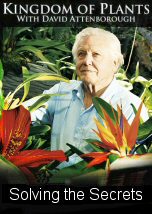
Solving the Secrets

   2012    Nature
Bladderwort utricularia is a pond-dweller that is among the fastest known, its traps snapping shut in less than a millisecond. As the seasons change, David demonstrates how plants operate on a different time scale to us; how they modify their lives according to the time of year. We discover insects’ hidden links with plants, both as pests and pollinators. UV-sensitive 3D cameras reveal the invisible alter-ego of plants and their flowers’ mesmerizing patterns; a parallel-dimension of strange colours and stunning patterns through which plants communicate with them. With the aid of visual effects, David steps among the swirling vortices of plant scent; communication signals with which plants are inextricably plugged in to the natural world. And using a tuning fork, he demonstrates how plants and insects can even communicate with music. As autumn envelopes the Gardens, fungi reveal themselves not as the enemies of plants but their vital allies. In Kew’s atmospheric Fungarium, David discovers a specimen that has the power of mind control and another that lives underground where it has grown to be so big it can be counted as the largest single organism on the planet. It is 6 times bigger than Kew Gardens itself.
Series: Kingdom of Plants

The Survival

   2012    Nature
David Attenborough discovers the plants that have evolved to shed their dependency on water enabling them to survive in the driest environments. The story begins at midnight in midsummer as David steps into the Princess of Wales Conservatory to witness the extraordinary nocturnal blooming of a cactus. The queen of the night, with its giant flowers, is the centre piece of a stunning symphony of cacti blooms that burst open in the desert (and at Kew) at night. In a mesmerizing 3D slow motion sequence, we discover the extraordinary connections between cacti and their natural pollinators: bats. As the sun rises, David meets other amazing plants. Species like the century plant, the Agave franzosini, which grows steadily for over 50 years, only to then flower itself to death with one mighty telegraph pole sized bloom which literally bursts out of the roof of Kew’s green house.
Series: Kingdom of Plants

Off the Scale

   2012    Science
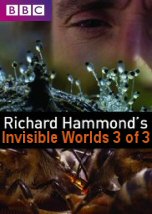
The human eye can see extraordinary detail, but the eye of a needle held at arm's length is pretty much at the limit of our vision. Anything smaller is simply invisible, at least to the naked eye. But what if we could see this hidden world all around us in greater detail and magnification than ever before? How different would our familiar surroundings then seem? Richard Hammond explores the astonishing miniature universe all around us, revealing that small is not only beautiful, it can also be very, very powerful. From seeing the microscopic changes to ice crystals that can trigger an avalanche to watching in horror the invisible aftermath of a sneeze on a commuter train and learning how the surface of an ordinary-looking plant hides an astounding secret that will make walking on the moon safer, Richard harnesses cutting-edge technologies to transport the viewer into a spectacular micro realm.
Series: Invisible Worlds
Cooked

Cooked

2016  Culture
Five Came Back

Five Came Back

2017  Art
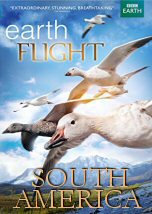
Earthflight

Earthflight

2012  Nature
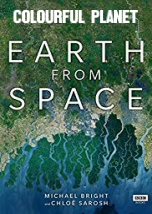
Earth from Space

Earth from Space

2019  Nature
Black Hole Apocalypse

Black Hole Apocalypse

2018  Science
Earth at Night in Color

Earth at Night in Color

2020  Nature