

Last Watched

"Science"  Sort by

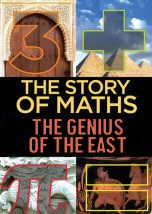
The Story of Maths The Genius of the East

   2008    Science
When ancient Greece fell into decline, mathematical progress stagnated as Europe entered the Dark Ages, but in the East mathematics reached new heights. In the second episode, Du Sautoy explores how maths helped build imperial China and discovers how the symbol for the number zero was invented in India. He also looks at the Middle Eastern invention of algebra and how mathematicians such as Fibonacci spread Eastern knowledge to the West.
Series: The Story of Maths
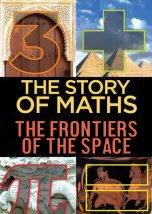
The Story of Maths The Frontiers of Space

   2008    Science
In the third episode we will see Europe by the 17th century taking over from the Middle East as the powerhouse of mathematical ideas. Great strides had been made in understanding the geometry of objects fixed in time and space. The race was on to discover the mathematics to describe objects in motion. This programme explores the work of Rene Descartes, Pierre Fermat, Isaac Newton, Leonard Euler and Carl Friedrich Gauss. Du Sautoy proceeds to describes René Descartes realisation that it was possible to describe curved lines as equations and thus link algebra and geometry. He talks with Henk J. M. Bos about Descartes. He shows how one of Pierre de Fermat’s theorems is now the basis for the codes that protect credit card transactions on the internet. He describes Isaac Newton’s development of math and physics crucial to understanding the behaviour of moving objects in engineering. He covers the Leibniz and Newton calculus controversy and the Bernoulli family. He further covers Leonhard Euler, the father of topology, and Gauss' invention of a new way of handling equations, modular arithmetic. The further contribution of Gauss to our understanding of how prime numbers are distributed is covered thus providing the platform for Bernhard Riemann's theories on prime numbers. In addition Riemann worked on the properties of objects, which he saw as manifolds that could exist in multi-dimensional space.
Series: The Story of Maths

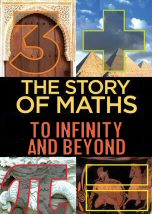
The Story of Maths To Infinity and Beyond

   2008    Science
In the fourth episode, Professor Marcus du Sautoy concludes his investigation into the history of mathematics with a look at some of the great unsolved problems that confronted mathematicians in the 20th century. After exploring Georg Cantor's work on infinity and Henri Poincare's work on chaos theory, he sees how mathematics was itself thrown into chaos by the discoveries of Kurt Godel and Paul Cohen, before completing his journey by considering some unsolved problems of maths today, including the Riemann Hypothesis.
Series: The Story of Maths

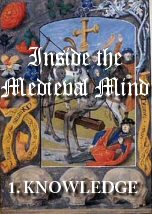
Inside the Medieval Mind: Knowledge

   2008    History
To our medieval forebears the world could appear mysterious, even enchanted. Sightings of green men, dog heads and alien beings were commonplace. The world itself was a book written by God. But as the Middle Ages grew to a close, it became a place to be mastered, even exploited.
Series: Inside the Medieval Mind

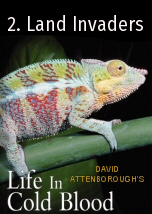
Land Invaders

   2008    Nature
From steamy jungles to dry deserts, amphibians have taken their first footsteps onto land using their bizarre life histories to break their ties with the water and invade the earth.
This episode delves into the extraordinary and intimate lives of the soft skinned amphibians. This includes the marsupial frogs, a peculiar species where the father carries his young in pouches and then gives birth. It also features warring giant salamanders over a metre long and show-off newts that offer displays just like underwater birds of paradise.
Series: Life In Cold Blood

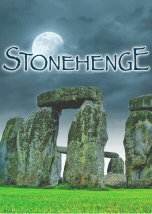
Stonehenge

   2008    History
Stonehenge was shaped over centuries, but to what purpose? Was it a temple to the sun, or the moon, an astronomical calendar, or a shrine to dead ancestors? Now Stonehenge may be about to give up some of its secrets. For the first time in nearly half a century a new archaeological dig the sacred stone circle. And the men who are leading the excavation are well aware of the significance of this moment.
The film exposes an investigation into a radical theory that Stonehenge, far from being a place of burial as is commonly assumed, was in fact a place of healing. The investigation takes in forensic testing of bones excavated over the past decades and hard-won permission for the first dig in 50 years at the Henge, watched live online by millions of viewers around the world. Does the theory of the healing stones bear up to modern-day forensic science?
Zeitgeist

Zeitgeist

2007  Culture
Leaving Neverland

Leaving Neverland

2019  Culture
Life In Cold Blood

Life In Cold Blood

2008  Nature
Dangerous knowledge

Dangerous knowledge

2007  Science
Empire of the Tsars

Empire of the Tsars

2017  History
The Making of the Mob

The Making of the Mob

2016  History
Senna

Senna

2010  Culture