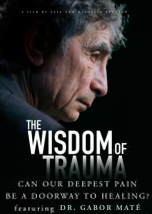
Trauma is the invisible force that shapes our lives. It shapes the way we live, the way we love and the way we make sense of the world. It is the root of our deepest wounds. Dr. Maté gives us a new vision: a trauma-informed society in which parents, teachers, physicians, policy-makers and legal personnel are not concerned with fixing behaviors, making diagnoses, suppressing symptoms and judging, but seek instead to understand the sources from which troubling behaviors and diseases spring in the wounded human soul. The interconnected epidemics of anxiety, chronic illness and substance abuse are, according to Dr Gabor Maté, normal. But not in the way you might think.
One in five Americans are diagnosed with mental illness in any given year. Suicide is the second most common cause of death in the US for youth aged 15-24, and kills over 700,000 people a year globally and 48,300 in the USA . Drug overdose kills 81,000 in the USA annually. The autoimmunity epidemic affects 24 million people in the USA. What is going on? “So much of what we call abnormality in this culture is actually normal responses to an abnormal culture. The abnormality does not reside in the pathology of individuals, but in the very culture that drives people into suffering and dysfunction.” — Gabor Maté
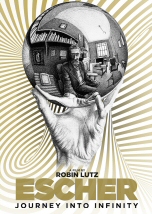
Explore the intriguing world of M.C. Escher in this captivating documentary, which delves deep into his life and artistic journey through his own words. Narrated with excerpts from his writings, the film is visually enriched with archival footage of Escher himself and showcases his iconic drawings. Gain unique insights from interviews with his surviving family members who illuminate aspects of his personal and professional life. Escher, who often described his work as straddling the realms of art and mathematics, admitted to not excelling in either yet found profound expression in geometry-infused art. Choosing to work in stark black and white, he embraced the challenge of conveying complex ideas without the use of color. The film explores pivotal phases in his career, including his mesmerizing explorations of the human eye and his ultimate obsession with the concept of infinity—depicted in real forms like circles and through visual illusions such as his famous never-ending staircase. The documentary also features perspectives from admirers such as musician Graham Nash, who argues that Escher's genius remains underappreciated. This film promises not only to shed light on Escher’s innovative work but also to inspire a deeper appreciation for his unique blend of visual storytelling and mathematical precision.
Was the famous wooden structure a clever war tactic—or pure invention? This documentary dives into ancient clues, archaeological digs, and expert theories to uncover the truth behind this iconic tale. It challenges long-held beliefs about the fall of Troy. With vivid reenactments and insights from leading historians, it blurs the line between legend and reality, revealing a story more intriguing than we ever imagined.
Embark on a breathtaking journey through time as the cradle of civilization is brought to life like never before. With stunning visuals and immersive storytelling, this documentary follows Iraqi-born writer Jawad Bashara as he returns to his homeland after decades in exile, determined to preserve the rich cultural legacy of ancient Mesopotamia—now under threat from war and destruction. Guided by cutting-edge archaeology and heartfelt personal reflection, the film explores the wonders of Sumer, Babylon, and Assyria while asking a profound question: how can understanding our ancient past help shape a better future? A visually spectacular and emotionally powerful experience that connects history, identity, and resilience—this is more than a documentary; it’s a rediscovery of who we are.
A kaleidoscopic immersion into the underground art and music scene of 1960s New York, this documentary eschews conventional rock biographies in favor of a sensory-rich, cinematic experience. Through a vibrant mosaic of avant-garde films, rare archival footage, and personal testimonies, it paints the Velvet Underground not just as a band—but as the beating heart of a creative explosion. By interweaving interviews with John Cale and Maureen Tucker alongside voices from their cultural milieu, the film evokes the fraught, fragile energy of a time when music intersected with performance, queerness, and counterculture. More than a story about a band, it is a journey into a cultural explosion that still resonates today.
France, 17th Century. For more than three decades, a mysterious prisoner was moved from fortress to fortress under extraordinary secrecy, his identity concealed behind a mask and known only to a handful of powerful men. Ordered into confinement by the minister of Louis XIV in 1669, he would remain locked away until his death in 1703 — alive, but erased. Why was he hidden so carefully? What secret was so dangerous that it demanded absolute silence? Drawing on archival research, expert analysis, and the turbulent politics of the Sun King’s reign, this gripping historical investigation revisits one of France’s greatest unsolved enigmas. From theories of royal bloodlines and forbidden romances to diplomatic conspiracies and mistaken identities, the film explores the many faces behind the mask and the fragile power structures of absolutist France. A tale of intrigue, paranoia, and state secrecy that continues to fascinate more than 350 years later.




















The interconnected epidemics of anxiety, chronic illness and substance abuse are, according to Dr Gabor Maté, normal. But not in the way you might think. One in five Americans are diagnosed with mental illness in any given year. Suicide is the second most common cause of death in the US for youth aged 15-24, and kills over 700,000 people a year globally and 48,300 in the USA . Drug overdose kills 81,000 in the USA annually. The autoimmunity epidemic affects 24 million people in the USA. What is going on?
“So much of what we call abnormality in this culture is actually normal responses to an abnormal culture. The abnormality does not reside in the pathology of individuals, but in the very culture that drives people into suffering and dysfunction.” — Gabor Maté