Join us on a journey into the mysterious depths of the human psyche as we investigate the strange and surprising terrain of the Mind Field. Chimps and Humans can be traced biologically back to a common ancestor. The Cognitive Tradeoff Hypothesis theorizes about the two different paths of development - particularly cognitive development - that occurred in these two species after the split. Chimps stayed in the trees and developed some extraordinary cognitive capabilities which are shown by the research work of Japanese scientists, while humans came down into the savanna and developed social capabilities and language. The hypothesis is that humans 'traded' some aspects of cognitive capabilities by re-purposing areas of the brain that had evolved in the context of other uses. Those capabilities are kept in chimps and are far surpassing that of normal humans. This is shown by the research work of scientists at the Primate Research Center connected with Kyoto University.
This film reveals the work and wisdom of some of the most influential advertising creatives of our time -- people who've profoundly impacted our culture, yet are virtually unknown outside their industry. Exploding forth from advertising's 'creative revolution' of the 1960s, these artists and writers all brought a surprisingly rebellious spirit to their work in a business more often associated with mediocrity or manipulation: George Lois, Mary Wells, Dan Wieden, Lee Clow, Hal Riney and others featured in ART & COPY were responsible for 'Just Do It,' 'I Love NY,' 'Where's the Beef?,' 'Got Milk,' 'Think Different,' and brilliant campaigns for everything from cars to presidents. They managed to grab the attention of millions and truly move them. Art & Copy is a powerful film about advertising and inspiration.
From fears about work and privacy to a rivalry between the U.S. and China, the series explores the promise and perils of AI. It traces a new industrial revolution that will reshape and disrupt our lives, our jobs and our world, and allow the emergence of the surveillance society. Today, China leads the world in e-commerce and is a society that bypassed credit cards. Now shops in stores are without cashiers, where the currency is facial recognition. No country has ever moved that fast. And in a short two-and-a-half years, China's A.I. implementation really went from minimal amount to probably about 17 or 18 unicorns, that is, billion-dollar companies. The progress was powered by a new generation of ambitious young techs pouring out of Chinese universities, competing with each other for new ideas, and financed by a new cadre of Chinese venture capitalists.
The third episode looks at anxiety and explores why it is so common. It talks to neuroscientists who explain the physiological and evolutionary basis of anxiety. Although it can help animals escape predators, anxiety can cause serious problems for human beings. It talks to sufferers of anxiety and examines the different types of anxiety people can feel. It also looks at how social media can cause anxiety.
This acclaimed docudrama is a chronicled look at the fall of the Romanov dynasty in Russia. When social upheaval sweeps Russia in the early 20th century, Czar Nicholas II resists change, sparking a revolution and ending his reign. In the first episode, Czar Nicholas II takes the Russian throne in 1894 and rejects modern ideas to embrace a pure autocracy. Tragedy marks his coronation day.
Rasputin is gone, but Nicholas II continues his catastrophic policies in war and at home. When Nicholas goes back to military headquarters, he is in fact leaving control of government, exactly when Russia needed to be held together by its Czar. The war by this time is deeply unpopular. It's not only unpopular, it's also arguably the engine that's causing enormous economic crisis, that's causing general unrest. Deprivation pushes the population from unrest to revolution.















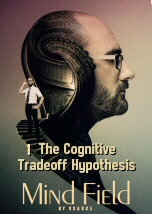










Chimps and Humans can be traced biologically back to a common ancestor. The Cognitive Tradeoff Hypothesis theorizes about the two different paths of development - particularly cognitive development - that occurred in these two species after the split. Chimps stayed in the trees and developed some extraordinary cognitive capabilities which are shown by the research work of Japanese scientists, while humans came down into the savanna and developed social capabilities and language.
The hypothesis is that humans 'traded' some aspects of cognitive capabilities by re-purposing areas of the brain that had evolved in the context of other uses. Those capabilities are kept in chimps and are far surpassing that of normal humans. This is shown by the research work of scientists at the Primate Research Center connected with Kyoto University.