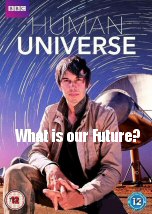
Professor Brian Cox concludes his exploration of our place in the universe by asking what next for the ape that went to space. Our future is far from certain. In Florida, Brian joins the latest efforts to protect Earth from potential catastrophic events. He joins a team of Nasa astronauts who are training for a future mission to an asteroid - should we ever discover one coming our way - under 30 feet of water in a submerged laboratory that simulates space. It is just one example of how, for our long-term survival, space exploration may well be vital. It is a view shared by Apollo 16 astronaut Charlie Duke, who tells Brian what it was like to escape the confines of the planet. It is a dream that both Nasa and now commercial companies share as they race to get humans back into deep space. But space travel, like every leap our civilisation has ever made, requires energy. Here too, scientists are hard at work attempting to safeguard our future. At the National Ignition Facility in California, Brian witnesses the world's most successful fusion experiment in action. He believes that if their mission succeeds, our civilisation will have unlocked a way to the stars that will not destroy the planet in the process. Brian concludes by returning to the top of the world in Svalbard, where he gains access to our civilisation's greatest treasure, locked away in a vault buried deep in the permafrost.
Discover the story behind the scenes of the band's fifth studio album Hotel California, one of the best-selling albums of all time. Henley said about this work: 'They are the same themes that run through all of our work: loss of innocence, the cost of naiveté, the perils of fame, of excess; exploration of the dark underbelly of the American dream, idealism realized and idealism thwarted, illusion versus reality, the difficulties of balancing loving relationships and work, trying to square the conflicting relationship between business and art; the corruption in politics, the fading away of the Sixties dream of peace, love and understanding.
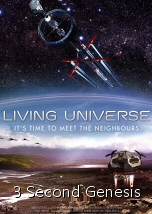
The Pythagorian philosopher Plato hinted enigmatically that there was a golden key that unified all of the mysteries of the universe. It is this golden key that we will return to time and again throughout our exploration. The golden key is the intelligence of the logos, the source of the primordial om. One could say that it is the mind of God. With our limited senses we are observing only the outer manifestation of the hidden mechanics of self similarity. The source of this divine symmetry is the
greatest mystery of our existence.
An exploration of Earth's cosmic neighbourhood. Looking beyond the borders of our solar system, what's nearby in our galaxy? How do the other objects in our local area influence life on Earth? And, how did Earth's place in the galaxy make it the perfect place for the development of advanced life? Now that the Voyagers have visited the outer planets of the solar system they are heading for new adventures in places astronomers call the Oort Cloud, the heliopause, heliosheath and eventually they may encounter double stars and exoplanets, some of which may pay a visit to the solar system one day or explode showering us with radiation. If the Voyagers live so long they will experience the local fluff, local bubble and other parts of the habitable zone of the galaxy.
It's a voyage of exploration like no other - to Titan, Saturn's largest moon and thought to resemble our own early Earth. For a small team of British scientists this would be the culmination of a lifetime's endeavour - the flight alone, some 2 billion miles, would take a full seven years. This is the story of the space probe they built, the sacrifices they made and their hopes for the landing. Would their ambitions survive the descent into the unknown on Titan's surface?
Morgan Freeman produces hosts and narrates this exploration of the greatest mysteries of the universe. The four forces governing our universe are phenomenally finely tuned, so finely that it had led many to the conclusion that someone, or something, must have calibrated them: an alien gameseter who's created our world as the ultimate SIM game for his own amusement.









But space travel, like every leap our civilisation has ever made, requires energy. Here too, scientists are hard at work attempting to safeguard our future. At the National Ignition Facility in California, Brian witnesses the world's most successful fusion experiment in action. He believes that if their mission succeeds, our civilisation will have unlocked a way to the stars that will not destroy the planet in the process. Brian concludes by returning to the top of the world in Svalbard, where he gains access to our civilisation's greatest treasure, locked away in a vault buried deep in the permafrost.