


Last Watched

"Owl"  Sort by

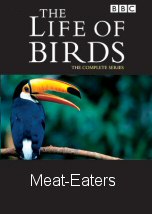
Meat-Eaters

   1998    Nature
This episode examines those birds whose sustenance comes from flesh and their methods of hunting. In New Zealand, Sir Attenborough observes Keas, parrots that do not eat meat exclusively, raiding a shearwater's burrow for a chick. However, it is the dedicated birds of prey, such as owls, buzzards, eagles, falcons and vultures, to which much of the programme is devoted. In order to spot and pursue their victims, senses of sight and hearing are very acute. Vultures are the exception, in that they eat what others have left, and once a carcass is found, so many birds descend on it that the carrion seems submerged beneath them. The Turkey Vulture is an anomaly within its group, as it also has a keen sense of smell. Eagles defend their territory vigorously, and a pair of sea eagles are shown engaging in an aerial battle. The Galápagos Hawk hunts Marine Iguanas, but can only do so when its quarry is vulnerable, during the breeding season. The African Harrier Hawk has adapted to extracting burrowing animals by virtue of an especially long, double-jointed pair of legs. By contrast, a shrike is not equipped with the requisite sharp beak and talons needed for butchery, and so dismembers its kill by impaling it on the thorns of acacias. The Lammergeier eats bones, and will drop them on to rocks from a great height in order to break them down to a digestible size. Also featured are the Eurasian Sparrowhawk, Goshawk and Peregrine Falcon.
Series: The Life of Birds
The Knowledge of Healing

   1998    Medicine
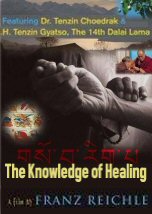
The documentary 'The Knowledge of Healing' is an illuminating examination of Tibetan medicine, a practice which has developed over two millennia into a modern day successful method of healing that rivals western medical practices. Unlike Western medicine, based on biochemistry, Tibetan medical thinking (which is strongly rooted in Buddhist principles) views the human body as governed by an elaborately organized system of energies flowing through a network of channels. In the 12th century, the Gyüshi (Knowledge of Healing) was created, a text codifying this intricate system. The medications used comprise herbs, roots, minerals, etc. After flourishing for centuries, most Tibetan medical schools were destroyed by the Chinese in the 1950's and 1960's, and many physicians were executed. Speaking from exile, the Dalai Lama argues for the value of Tibetan medicine, while his personal physician Dr. Tenzin Choedrak describes the principles behind it. We follow physicians in India and Siberia treating patients for a variety of ailments from paralysis to heart disease, and meet researchers in Israel and Switzerland to see how western clinical studies are testing the effectiveness of Tibetan medicine.

The Wall

   1982    Art
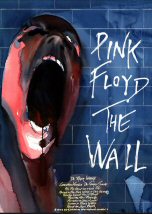
the story of rock singer "Pink" who is sitting in his hotel room in Los Angeles, burnt out from the music business and only able to perform on stage with the help of drugs. Based on the 1979 double album "The Wall" by Pink Floyd, the film begins in Pink's youth where he is crushed by the love of his mother. Several years later, he is punished by the teachers in school because he is starting to write poems. He slowly begins to build a wall around himself to be protected from the world outside. The film shows all this in massive and epic pictures until the very end where he tears down the wall and breaks free. Directed by Alan Parker

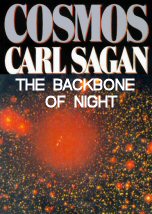
The Backbone of Night

   1980    Science
Carl Sagan teaches students in a classroom in his childhood home in Brooklyn, New York, which leads into a history of the different mythologies about stars and the gradual revelation of their true nature. In ancient Greece, some philosophers (Aristarchus of Samos, Thales of Miletus, Anaximander, Theodorus of Samos, Empedocles, Democritus) freely pursue scientific knowledge, while others (Plato, Aristotle, and the Pythagoreans) advocate slavery and epistemic secrecy.
Series: Cosmos

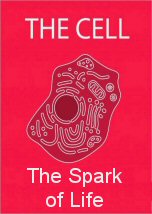
The Spark of Life

       Science
The final part reveals how our knowledge of cells has brought us to the brink of one of the most important moments in history. Scientists are close to repeating what has happened only once in four billion years - the creation of a new life form.
Series: The Cell

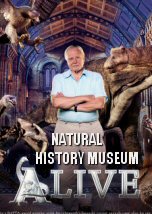
Natural History Museum Alive

       Science    3D    HD
In this ground-breaking film, Sir David Attenborough takes us on a journey through the world-famous Natural History Museum in London in a captivating tale of discovery, adventure, and magic, where state-of-the-art CGI, science, and research combine to bring the museum's now long-extinct inhabitants to life to discover how these animals once roamed the planet. As the doors are locked and night falls, Attenborough stays behind and meets some of the most fascinating extinct creatures which come alive in front of his eyes; dinosaurs, ice age beasts, and giant reptiles.
The film fulfils a lifelong dream of him, who said: 'I have been coming to the Natural History Museum since I was a boy. It's one of the great places to come to learn about natural history. In this film we have the technology to bring back to life some of the most romantic and extraordinary extinct creatures that can be conceived; some are relatively recent animals like the dodo, others older like the dinosaurs, and some we only know through fossil evidence. Using our current scientific knowledge, this film brings these creatures alive, allowing me to look at some of the biggest questions surrounding them.'
Wonders Of The Universe

Wonders Of The Universe

2011  Science
Rome

Rome

  History
Universe

Universe

2021  Science
Ancient Rome

Ancient Rome

2006  History
Untold

Untold

2021  Culture