The season 8 of Space Deepest Secrets shares the stories of deep-space explorers who are risking their careers, and even their lives, to lead humanity to worlds yet to be seen. In the first episode, astronomers are laying the groundwork to locate a new planet for the human race to inhabit, and the more alien worlds they discover and encounter, the more they unmask the mysterious and truly destructive nature of the cosmos.
Uranus and Neptune, two of the largest, farthest and strangest planets in our solar system. These two planets break all the rules. Of all the big planets, Uranus and Neptune remain the biggest enigmas. Today, astronomers are finally unlocking why these supersized snowballs are so weird. Can an ancient mega-collision reveal what knocked Uranus onto its side? Can a missing twin world unlock why one of Neptune's moons orbits the wrong way? And what is the energy that drives the fastest winds in the solar system?
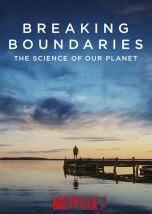
David Attenborough and the world-renowned scientist Johan Rockström examine Earth's biodiversity collapse. The film explains how humanity has pushed our planet beyond the boundaries that have kept it stable since the dawn of life, but also that this crisis can still be averted, thinking and acting with one unified purpose to ensure that Earth forever remains healthy and resilient.
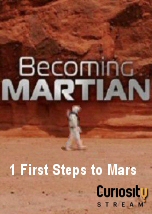
In this series, we will explore how we can survive Mars. Our species will need to evolve how we eat, drink, and build our homes. In the first episode, humans seem to be on the cusp of reaching Mars, but how did we get to this point? Our journey to our neighboring planet traces a path connecting Nikola Tesla, Nazi weapons of war, a Cold War space race, and a string of blockbuster discoveries made by some of NASA’s most talented robots.
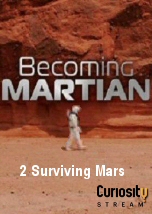
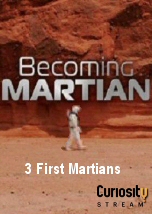
To survive Mars, our species will need to evolve how we eat, drink, and build our homes. Will we need our genes to evolve as well? Sometime in the future humans will leave Earth to colonize Mars, and in doing so will begin to adapt to life on another planet in surprising ways. Evolutionary biologist Dr. Scott Solomon foresees a series of changes to our species from the size of our hearts and heads to the pigments in our skin.
Science may soon make the dream of traveling to Mars a reality, but how will we live once we get there? How will we manage our basic human needs of food, water, and shelter on a planet known for its barren surface conditions, high radiation levels, and toxic dirt?























In the first episode, astronomers are laying the groundwork to locate a new planet for the human race to inhabit, and the more alien worlds they discover and encounter, the more they unmask the mysterious and truly destructive nature of the cosmos.