Political humorist and author Bill Maher travels around the globe interviewing people about God and religion. Known for his analytical skills, wit and commitment to never pulling a punch, Maher brings his characteristic honesty to an unusual spiritual journey. Muslims, Jews and Christians of many kinds pass before his jaundiced eye. He goes to a Creationist Museum in Kentucky, which shows that dinosaurs and people lived at the same time 5000 years ago. Maher speaks to a rabbi in league with Holocaust deniers. He talks to a Muslim musician who preaches hatred of Jews. Maher finds the unlikeliest of believers and, in a certain Vatican priest, he even finds an unlikely skeptic.
The rise of alternative rock in the USA. From its early underground days where bands like Black Flag drew inspiration from the DIY ethos of punk. We explore why the bands that emerged from the underground offered an alternative both to the established music industry and the prevailing politics. Bands like R.E.M., The Pixies and Husker Du, REM breaking into the mainstream charts with 'Losing My Religion', Seattle 'grunge' scene, culminating in the success of Nirvana's 'Nevermind'
Michael Wood charts the coming of Islam to the subcontinent and one of the greatest ages of world civilisation: the Mughals. He visits Sufi shrines in Old Delhi, desert fortresses in Rajasthan and the cities of Lahore and Agra, where he offers a new theory on the design of the Taj Mahal. He also looks at the life of Akbar, a Muslim emperor who decreed that no one religion could hold the ultimate truth, but whose dream of unity ended in civil war.
In the fourth episode of the series, Clovis was the first Frankish king to acknowledge the Christian faith. This changed the direction of Europe's history.
Zeitgeist was created as a non-profit filmic expression to inspire people to start looking at the world from a more critical perspective and to understand that very often things are not what the population at large think they are. The film gathers information from many sources and puts it together in a way that shows it is possible for people to be manipulated by large institutions, governments and economic powers.
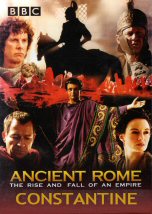
This episode tells the story of how the Emperor Constantine brought Christianity to the western world. In AD 312, Rome was in crisis. The empire had been divided into four parts, each with its own emperor who fought one another. Constantine intervened and united Rome, using military might and a new religion - Christianity.












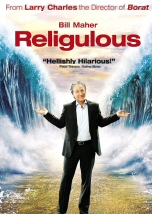






Muslims, Jews and Christians of many kinds pass before his jaundiced eye. He goes to a Creationist Museum in Kentucky, which shows that dinosaurs and people lived at the same time 5000 years ago. Maher speaks to a rabbi in league with Holocaust deniers. He talks to a Muslim musician who preaches hatred of Jews. Maher finds the unlikeliest of believers and, in a certain Vatican priest, he even finds an unlikely skeptic.