


Last Watched

"NES"  Sort by

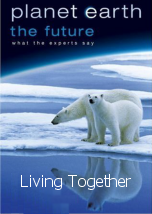
Living Together

   2006    Nature
The documentary deals with the future of conservation. It begins by looking at previous efforts. The 'Save The Whales' campaign, which started in the 1960s, is seen to have had a limited effect, as whaling continues and fish stocks also decline. In the 1990s, as head of the Kenya Wildlife Service, Richard Leakey took on the poachers by employing armed units. Although it was successful in saving elephants, the policy was detrimental to the Maasai people, who were forced from their land. The need for "fortress" areas is questioned, and the recently highlighted Raja Ampat coral reef in Indonesia is an example. The more tourism it generates, the greater the potential for damage — and inevitable coastal construction. Sustainable development is viewed as controversial, and one contributor perceives it to currently be a "contradiction in terms". Trophy hunting is also contentious. Those that support it argue that it generates wealth for local economies, while its opponents point to the reducing numbers of species such as the markhor. Ecotourism is shown to be beneficial, as it is in the interests of its providers to protect their environments. However, in some areas, such as the Borneo rainforests, the great diversity of species is being replaced by monocultures. The role of both religion and the media in conservation is argued to be extremely important. Contributors to the programme admit a degree of worry about the future, but also optimism.
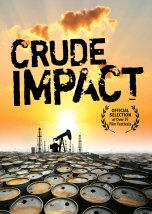
Crude Impact

   2006    Science
The documentary is about the effect of fossil fuels on issues such as global warming, the environmental crisis, society and the questionable practices of oil companies. It examines the interconnection of human domination of the planet and the use of petroleum, and offers solutions for how we can stop our progression down this destructive path. Written and directed by James Jandak Wood. The film has several awards and nominations

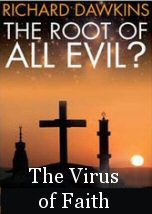
The Virus of Faith

   2006    Culture
Dawkins opines that the moral framework of religions is warped, and argues against the religious indoctrination of children. He discusses specifically the idea of religion seen as a virus in the sense of a meme. He begins by explaining how a child is genetically programmed to believe without questioning the word of authority figures, especially parents – the evolutionary imperative being that no child would survive by adopting a sceptical attitude towards everything their elders said. But this same imperative, he claims, leaves children open to infection by religion.
Series: The Root of All Evil

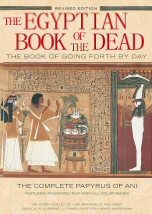
The Egyptian Book of the Dead

   2006    History    HD
Step into a time when the boundary between life and death was guided by magic, faith, and the written word. This documentary unearths an extraordinary artifact dating back to about 1880 BCE—a scroll known as potentially the oldest document in human history, lost for centuries and rediscovered in 1887. Through expert interviews, archeological evidence, and stunning visuals, viewers are taken on a journey across ancient Egypt: exploring how this manuscript shaped funerary beliefs, mortuary rituals, and the very concept of the afterlife.
Witness the power of this papyrus as it reveals secrets of gods and judgment, spells to navigate dangerous gates, and the yearning for immortality. For anyone fascinated by history, spirituality, or mysteries from the distant past, this film brings alive a document that influenced civilization itself.

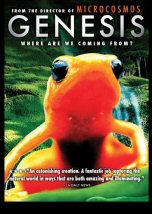
Genesis. Where Are We Coming From

   2005    Nature
The cycle of life of a handful of different animals is captured on film in a whole new way in this documentary. Using special motion-control photography equipment, Genesis allows filmgoers to view animal behaviors which are too small, too slow, or too difficult to normally be seen with the naked eye, including a chick hatching its way out from inside an egg, jellyfish drying into nothing under the heat of the sun, or a snake slowly swallowing prey bigger than itself. This footage is accompanied by narration from Sotigui Kouyate, who uses simple props and easily understandable analogies to explain the science behind what its shown on screen. Genesis was directed by Claude Nuridsany and Marie Perennou, who previously created another acclaimed scientific documentary, Microcosmos.

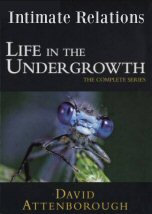
Intimate Relations

   2005    Nature
The world of invertebrates exists in a web of relationships with plants and other animals. Unique footage of the world's smallest insect (a fairy wasp only quarter of a millimetre long) shows it flying underwater to find the eggs of water beetles in which to lay its own brood. Some ants 'farm' the trees that give them shelter, creating areas known as 'Devil's gardens'. To make sure these grow without competition, they kill off other seedlings in the surrounding vegetation. The blister beetle's larvae huddle together on the end of a piece of grass and mimic a female bee. When a male bee tries to mate with the 'female', the larvae grab on to his belly. Confused, he flies away and searches for a real female. When he eventually finds her and mates with her, the beetle larvae hurriedly swap from his front on to her back, and hence get carried back to her nest where they eat her pollen supplies.
Series: Life in the Undergrowth
High Score

High Score

2020  Technology
Mammals

Mammals

2024  Nature
Space Race

Space Race

2005  Technology
Leaving Neverland

Leaving Neverland

2019  Culture
How to Change Your Mind

How to Change Your Mind

2022  Medicine
How Earth Made Us

How Earth Made Us

2010  Science