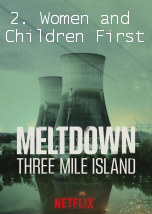
In the second episode, panic strikes the community as a full-blown catastrophe looms. Locals mobilize to confront the authorities and protest the nuclear power industry. Twenty-eight hours after the accident began, the lieutenant governor appeared at a news briefing to say that the plant's owner had assured the state that 'everything is under control'. Later that day, Scranton changed his statement, saying that the situation was 'more complex than the company first led us to believe'. There were conflicting statements about radioactivity releases. Schools were closed and residents were urged to stay indoors. Farmers were told to keep their animals under cover and on stored feed.
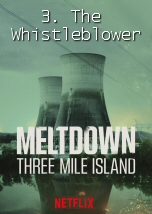
In the third episode, during cleanup at the plant, insiders claim that cost-cutting measures and intimidation tactics create a danger war force than the accident itself. Several state and federal government agencies mounted investigations into the crisis, the most prominent of which was the President's Commission on the Accident at Three Mile Island, headed by chairman John G. Kemeny. The investigation strongly criticized Babcock & Wilcox, Met Ed, Graphics processing unit, and the Nuclear Regulatory Commission for lapses in quality assurance and maintenance, inadequate operator training, lack of communication of important safety information, poor management, and complacency. Kemeny said that the procedures and that the control room were greatly inadequate for managing an accident.
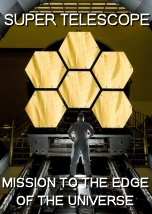
As NASA releases the first images from the James Webb Space Telescope, this film tells the inside story of the telescope's construction and the astronomers taking its first picture of distant stars and galaxies. Will it be the deepest image of our universe ever taken? The successor to Hubble, and 100 times more powerful, the James Webb is the most technically advanced telescope ever built. It will look further back in time than Hubble to an era around 200 million years after the Big Bang, when the first stars and galaxies appeared. Webb's primary mission is to capture the faint light from these objects on the edge of our visible universe so that scientists can learn how they formed, but its instruments are so sensitive it could also be the first telescope to detect signs of life on a distant planet. The James Webb Telescope is an £8 billion gamble on the skills of its engineering team. It’s the first telescope designed to unfold in space – a complicated two-week operation in which 178 release devices must all work - 107 of them on the telescope's sun shield alone. If just one fails, the expensive telescope could become a giant piece of space junk. From its conception in the late 1980s, the construction of Webb has posed a huge technical challenge. The team must build a mirror six times larger than Hubble’s and construct a vast sun shield the size of a tennis court, fold them up so they fit into an Ariane 5 rocket, then find a way to unfold them in space. This film tells the inside story of the James Webb Space Telescope in the words of the engineers who built it and the astronomers who will use it.
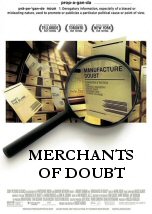
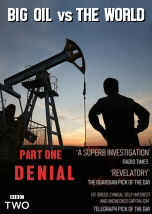
The most important story of our time. 2022 is set to be a year of unprecedented climate chaos across the planet. As the world’s leading climate scientists issue new warnings about climate change and the soaring cost of fuel highlights the world’s ongoing dependence on fossil fuels – how did we get here? The first part tells The story of what the fossil fuel industry knew about climate change more than four decades ago. Scientists who worked for the biggest oil company in the world, Exxon, reveal the warnings they sounded in the 1970s and early 1980s about how fossil fuels would cause climate change – with potentially catastrophic effects. Drawing on thousands of newly discovered documents, the film goes on to chart in revelatory and forensic detail how the oil industry went on to mount a campaign to sow doubt about the science of climate change, the consequences of which we are living through today
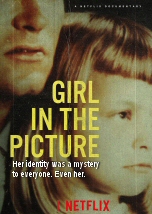
A young mother's mysterious death and her son's subsequent kidnapping blow open a decades-long mystery about the woman's true identity and the murderous federal fugitive at the center of it all. It's late at night in Oklahoma City, in April of 1990. Two or three guys are in a truck driving along the road and they see some kind of debris. And then they see off to the side, there's a body. It appears to be a young woman, a blonde-haired woman and they call an ambulance. She's rushed to the hospital, and her husband, Clarence, eventually shows up. He says her name is Tonya Hughes, that she's a stripper in Tulsa, and that they have a young son named Michael. And he's much older and he's just kind of this weird guy. So, the doctors, as they continue to examine her, they see old bruises and old injuries. There's something wrong with this picture. Ultimately, she passes away. The girls Tonya danced with want to find her family. So they call this woman and they tell her that her daughter died. And she says, 'What are you talking about? My daughter died 20 years ago, she was only 18 months old.' They realize that who they just buried was not Tonya Hughes, so now they're asking, 'What happened?'.
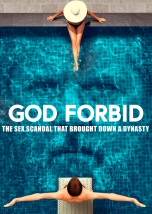
In this revealing documentary, Giancarlo Granda, former pool attendant at the Fontainebleau Hotel, shares the intimate details of his 7-year relationship with a charming older woman, Becki Falwell, and her husband, the Evangelical Trump stalwart Jerry Falwell Jr. Directed by Billy Corben, the film outlines Granda's entanglement with the Falwell's seemingly perfect lives and the overarching influence this affair had on a presidential election. The life of Jerry Falwell — the late Moral Majority televangelist who for decades helped catalyze the rightward shift of American evangelicals before his death in 2007 — is a quintessentially American story. But it’s in the next generation that the Falwell narrative becomes at once soap opera and morality tale. The film covers the graceless fall of Jerry Falwell Jr., who after the death of his father was placed in the presidency of the family’s conservative organ Liberty University. There, he seemed to remain painfully in thrall to his appetites. We hear testimony about his alleged tendency to drink on the job and discomfiting, slurry interviews between him and sympathetic media — but most crucially, we receive the testimony of Giancarlo Granda. Granda was a pool attendant at a Miami hotel when he met Falwell and his wife, Becki, in 2012. Today, he alleges that he was persuaded to have sex with Becki while Falwell watched, and that the pair engaged in an ongoing campaign of communication with him that could be described as coercive. His energies were consumed with managing their tempers and occasionally threatening behavior, and he blames the swirl of scandal around them for derailing his professional future. Plainspoken and only occasionally visibly emotional, Granda is his own best advocate as he describes a couple who, he says, craved his body and were willing to discard the rest of him.






Twenty-eight hours after the accident began, the lieutenant governor appeared at a news briefing to say that the plant's owner had assured the state that 'everything is under control'. Later that day, Scranton changed his statement, saying that the situation was 'more complex than the company first led us to believe'. There were conflicting statements about radioactivity releases. Schools were closed and residents were urged to stay indoors. Farmers were told to keep their animals under cover and on stored feed.