David Attenborough explores Britain and Ireland’s grasslands, revealing the creatures that create them and the extraordinary stories they hide. From the coastal flower meadows in the Scottish Outer Hebrides to the rich open landscapes in the mountains of southern Ireland, we enter surprising and dramatic worlds. In southern England, we meet an extraordinary bee that lives in chalk grassland, one of our rarest habitats, laying her eggs in empty snail shells. Meanwhile, in the colourful machair of the Hebrides, ringed plovers and lapwings strive to rear their families of tiny fluffy chicks and to save them for marauding gulls. We travel back in time to explore the vast wild grasslands once found throughout our isles, before meeting herds of semi-wild horses, where males battle fiercely for the females. Today, they are helping to turn some of this land back to wilderness. And in our precious remaining pockets of flower-rich meadow, a remarkable conservation success story plays out. Once extinct in our isles, England now has the largest known populations of large blue butterflies. Their survival relies on a game of deception with red ants, which are tricked into adopting the butterfly’s unassuming but predatory caterpillars. Our story then journeys to the mountains. Each morning in early spring, feisty male black grouse battle for prime position on their frozen breeding grounds. Their sole mission is to impress a female. Meanwhile, on south-facing scree slopes, dozens of adders emerge from hibernation to perform a surprisingly delicate courtship routine. The episode concludes with a mighty battle in the wild mountains of County Kerry. This is the scene of an epic and spectacular rut between the largest land mammals in Britain and Ireland, red deer. The grasslands of Britain and Ireland are under threat. We have lost 97 per cent of our species-rich meadows in the last century, as modern agriculture replaces these precious habitats. This episode shows just how important different types of grassland are to the species which call these islands home.
Step into a gripping political thriller that uncovers the unsettling power of Christian fundamentalists in the United States. Backed by millions of dollars and direct ties to government corridors, this movement is not just preaching—they are mobilizing for what they call The Holy War, determined to bring about the prophesied Armageddon. The film takes viewers behind the scenes of their world, exposing the powerful megachurch leaders who rally their followers toward a "final battle" they believe will trigger the Second Coming of Christ. With unprecedented access, Praying for Armageddon explores the alarming intersection of faith, power, and political influence. It reveals how ideology can shape decisions at the highest levels, raising urgent questions about the far-reaching consequences of religious extremism. This is not just a documentary—it’s a wake-up call to understand the forces shaping a precarious future.
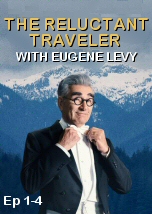
Eugene Levy, a celebrated actor and self-confessed travel skeptic forces himself into the discomfort of jetting across the globe, visiting dazzling destinations he would normally avoid. With his trademark wit and unease, he peels back the gloss of travel, dipping toes into local customs, natural wonders, and cultural rituals, transforming each journey into a quietly emotional reckoning with what it means to explore, to connect, and to grow. In episodes 1 through 4, the adventure starts in the Arctic north of Finland, where he tries ice fishing, feeds reindeer, rides in a husky sled and chases the aurora borealis. Then he plunges into the Costa Rican jungle, sleeping high among trees and confronting wild creatures. In Venice he lounges at a historic palazzo, bonds with a gondolier and reflects on his life and family. Finally, a helicopter drops him into the stark desert at Amangiri in Utah, where he absorbs breathtaking landscapes and engages with the Navajo Nation while battling his own nerves.
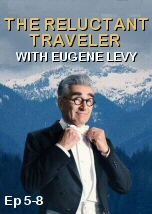
In the last four episodes, Eugene Levy’s journey turns into a celebration of contrast and courage. In the Maldives, he tries to find his sea legs at a luxurious private island resort that promises anything, anytime, anywhere. In South Africa, he experiences a powerful encounter with an elephant that changes the way he sees connection and empathy. In Portugal, he delights in rich Iberian cuisine, uncovering the soul of local traditions. Finally, in Tokyo, he steps into the ring as a sumo referee, embracing the balance between discipline, culture, and humor in a city bursting with life.
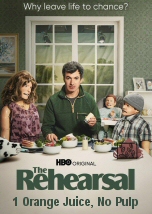
In a world where nothing seems to ever work out as you had hoped, The Rehearsal features Nathan Fielder helping ordinary people rehearse difficult conversations or life events through the use of sets and actors hired to recreate real situations. The situations can be trivial, like confessing to a lie about educational history, or more complex, like raising a child. Fielder commissions extravagant sets with every detail recreated. He hires actors to inhabit these sets and practice different dialogue trees with his clients dozens of times. Information used to train the actors and build the sets is often collected without the subjects' knowledge. In the firs episode, Nathan Fielder helps Kor Skeete, a Brooklyn-based trivia aficionado who wants to confess to his bar trivia team that he lied about having a master's degree. Nathan reveals an elaborate method of rehearsals involving an actor (K. Todd Freeman) playing a 'fake Kor'. To help Kor rehearse the difficult conversation with his teammate Tricia to clean this long-held lie, Nathan creates simulations of trivia night with a fake Tricia in a full-scale replica of the Alligator Lounge, a Brooklyn bar. Kor overcomes his fears and makes his confession to the real Tricia.
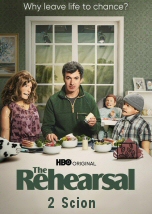
In the second episode, Nathan develops a rehearsal for Angela, a woman considering motherhood. Nathan hires child actors to simulate adopting and caring for a baby and sets her up in a rented farmhouse in rural Oregon. Due to Oregon child protection laws, Nathan's team must covertly switch out the baby every four hours and replace it with a robot baby at night. Seeking a simulated husband, Angela dates Robbin, a numerology-obsessed man who wants to have sex with Angela despite her devout Christian beliefs against premarital sex. When Robbin quits the project due to the robot baby's incessant crying, Nathan inserts himself into the experiment as Angela's non-romantic co-parent.





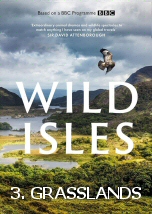






In southern England, we meet an extraordinary bee that lives in chalk grassland, one of our rarest habitats, laying her eggs in empty snail shells. Meanwhile, in the colourful machair of the Hebrides, ringed plovers and lapwings strive to rear their families of tiny fluffy chicks and to save them for marauding gulls.
We travel back in time to explore the vast wild grasslands once found throughout our isles, before meeting herds of semi-wild horses, where males battle fiercely for the females. Today, they are helping to turn some of this land back to wilderness. And in our precious remaining pockets of flower-rich meadow, a remarkable conservation success story plays out. Once extinct in our isles, England now has the largest known populations of large blue butterflies. Their survival relies on a game of deception with red ants, which are tricked into adopting the butterfly’s unassuming but predatory caterpillars.
Our story then journeys to the mountains. Each morning in early spring, feisty male black grouse battle for prime position on their frozen breeding grounds. Their sole mission is to impress a female. Meanwhile, on south-facing scree slopes, dozens of adders emerge from hibernation to perform a surprisingly delicate courtship routine.
The episode concludes with a mighty battle in the wild mountains of County Kerry. This is the scene of an epic and spectacular rut between the largest land mammals in Britain and Ireland, red deer.
The grasslands of Britain and Ireland are under threat. We have lost 97 per cent of our species-rich meadows in the last century, as modern agriculture replaces these precious habitats. This episode shows just how important different types of grassland are to the species which call these islands home.