







Last Watched

"Roma"  Sort by

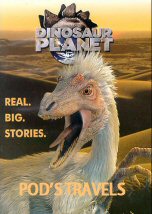
Dinosaur Planet: Pod Travels

   2003    Science
SETTING: 70 million years ago in Europe, near present-day Romania. Pod, a male pyroraptor, is alone in the world after his sisters die in a tidal wave that sweeps him out to sea. After landing on an island populated with dwarf-sized dinosaurs, Pod discovers that he's become the apex predator. But, Pod learns it's lonely at the top.
Series: Dinosaur Planet
Flowering

   1995    Nature
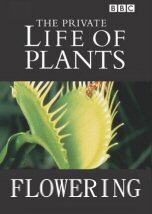
The third episode is devoted to the ways in which plants reproduce. Pollen and a stigma are the two components needed for fertilisation. Most plants carry both these within their flowers and rely on animals to transport the pollen from one to the stigma of another. To do this, they attract their couriers with colour, scent and nectar. It isn't just birds that help pollination: some mammals and reptiles also do so. However, it is mostly insects that are recruited to carry out the task. To ensure that pollen is not wasted by being delivered to the wrong flower, some species of plant have developed exclusive relationships with their visitors, and the gentian and its attendant carpenter bees is one example. Since pollen can be expensive to produce in terms of calories, some plants, such as orchids, ration it by means of pollinia and a strategically placed landing platform. Other orchids offer no reward for pollination, but instead mislead their guests by mimicking their markings and aroma, thus enticing males to 'mate' with them (Pseudocopulation). The most extreme fertilisation method is one of imprisonment, and one plant that uses it is the dead horse arum. It is often found near gull colonies, and mimics the appearance and smell of rotting flesh. Blow-flies are attracted to it, and are forced to stay the night before being allowed to depart in the morning, laden with pollen. Finally, Attenborough introduces the world's largest inflorescence: that of the titan arum.
Series: The Private Life of Plants

Natural History Museum Alive

       Science    3D    HD
In this ground-breaking film, Sir David Attenborough takes us on a journey through the world-famous Natural History Museum in London in a captivating tale of discovery, adventure, and magic, where state-of-the-art CGI, science, and research combine to bring the museum's now long-extinct inhabitants to life to discover how these animals once roamed the planet. As the doors are locked and night falls, Attenborough stays behind and meets some of the most fascinating extinct creatures which come alive in front of his eyes; dinosaurs, ice age beasts, and giant reptiles.
The film fulfils a lifelong dream of him, who said: 'I have been coming to the Natural History Museum since I was a boy. It's one of the great places to come to learn about natural history. In this film we have the technology to bring back to life some of the most romantic and extraordinary extinct creatures that can be conceived; some are relatively recent animals like the dodo, others older like the dinosaurs, and some we only know through fossil evidence. Using our current scientific knowledge, this film brings these creatures alive, allowing me to look at some of the biggest questions surrounding them.'

The Stolen Eagle

       History
In this historical drama, the turbulent transition from Roman republic to autocratic empire, which changed world history through civil war and wars of conquest, is sketched both from the aristocratic viewpoint of Julius Caesar, his family, his adopted successor Octavian Augustus, and their political allies and adversaries, and from the politically naive viewpoint of a few ordinary Romans, notably the soldiers Lucius Vorenus and Titus Pullo and their families.
'The Stolen Eagle.' In Gaul in 52 B.C., two Roman soldiers, Legionary Titus Pullo and Centurion Lucius Vorenus, are tasked with recovering Julius Caesar's personal Eagle, stolen from his camp in the dead of night. With his campaign in Gaul coming to a successful conclusion, Caesar's popularity is continuing to grow. He's saddened however when he receives news from his good friend Pompey Magnus that his daughter, Pompey's wife, has died in childbirth. In the Senate, Pompey must defend the prolonged absence of his friend and co-Consul Caesar against charges of corruption.
Series: Rome

How Titus Pullo Brought Down the Republic

       History
Caesar winters his army in Gaul near the Italian border while his enemies in Rome fear that he will do something no Roman General has done: cross the Rubicon with his army. To counter-balance his opponents, Caesar puts his friend Mark Antony up for office as the people's Consul. Vorenus and Pullo accompany Mark Antony and Octavian to Rome. For Pullo, it's an opportunity to get drunk and ravish every woman in sight.
Series: Rome

Stealing from Saturn

       History
Pompey wants to find out what happened to the gold from the Roman Treasury and sends his son Quintus to Rome to find out what happened. Atia and her family have stayed behind when Pompey and others fled and she now throws a party for her triumphant uncle, Julius Caesar. She clearly has her sights set on the great leader and is puzzled when he sends her a guest list that includes Servilia of the Junii. She soon finds out why.
Series: Rome