There is a battle playing out inside your body right now. It started billions of years ago and it is still being fought in every one of us every minute of every day. This is the story of a viral infection - the battle for the cell. This film reveals the exquisite machinery of the human cell system from within the inner world of the cell itself - from the frenetic membrane surface that acts as a security system for everything passing in and out of the cell, the dynamic highways that transport cargo across the cell and the remarkable turbines that power the whole cellular world to the amazing nucleus housing DNA and the construction of thousands of different proteins all with unique tasks. The virus intends to commandeer this system to one selfish end: to make more viruses. And they will stop at nothing to achieve their goal. Exploring the very latest ideas about the evolution of life on earth and the bio-chemical processes at the heart of every one of us, and revealing a world smaller than it is possible to comprehend, in a story large enough to fill the biggest imaginations.
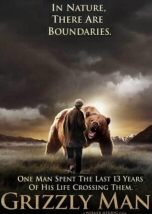
Timothy Treadwell's death was as sensational as his life: Having presumed he could live safely among the grizzly bears of the Alaskan wilderness, the outdoorsman and author (Among Grizzlies)--along with his partner, Amie Huguenard--was eventually killed and devoured by one of the very animals to whom he had devoted years of study. In telling this story, Werner Herzog relies considerably on Treadwell's own video footage, shot during his time in the wild. The famed German director takes Treadwell's story into unexpected emotional frontiers and startling landscapes of the mind. Treadwell is an intriguing, infuriating, perhaps even tragic figure. But Herzog himself is equally compelling, and this brilliant film is just one reason why.
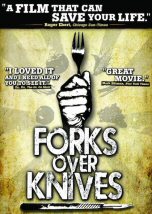
The film examines the profound claim that most, if not all, of the degenerative diseases that afflict us can be controlled, or even reversed, by rejecting our present menu of animal-based and processed foods. Despite the most advanced medical technology in the world, we are sicker than ever by nearly every measure. Cases of diabetes are exploding, especially amongst our younger population. About half of us are taking at least one prescription drug and major medical operations have become routine. Heart disease, cancer and stroke are the country's three leading causes of death, even though billions are spent each year to 'battle' these very conditions. Millions suffer from a host of other degenerative diseases. Could it be there's a single solution to all of these problems?
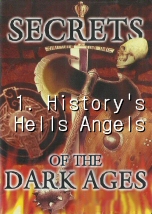
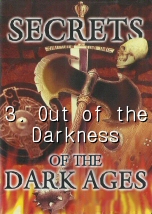
Richard Rudgley goes in search of evidence of the barbarians of the dark ages, people whose names have for 1500 years been bywords for mindless brutality. The real truth about the barbarians who marched across Europe during the Dark Ages is more shocking than what you may know. Where did they come from? Who are their descendants? Are any of their techniques and inventions still used? Richard discovers the secrets of forgotten empires, and of mighty clashes throughout Europe. The art, society and cultural legacy of the barbarians are shown to have shaped and moulded the destiny of Europe even more than the Roman Empire. In the first part of the journey through the Dark Ages we will be tracing the legacies of the Huns, Vandals and Goths, to ask whether the 'dark ages' represent a resurfacing of much older tribal lines. Sites in Austria show how sophisticated pre-Roman communities had become with evidence of stunning craftsmanship and sophisticated farming techniques which defy the image of a mindless rabble we have come to accept without challenge.
The third assault on the tattered remains of Roman civilization came from even further North, where the melting glacial ice had created immense sheltered fjords, leaving its inhabitants little choice but the sea. These fearless navigators understood that dominion over the oceans was the key to their ambitions. Where the Romans expanded incrementally, the Vikings adopted a bolder, more aggressive approach. So was it the Dark Age which failed Europe, or the stifling uniformity of the great Roman experiment? Were the lost tribes more victim than failure? Richard Rudgley will hope to shed new light on the real secrets of the so-called Dark Age.
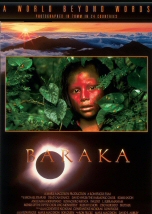
Without words, Ron Fricke shows us the world, with an emphasis not on 'where,' but on 'what's there.' It begins with morning, natural landscapes and people at prayer: volcanoes, water falls, veldts, and forests; several hundred Balinese Hindu men perform kecak, the monkey chant. Indigenous peoples apply body paint; whole villages dance. The film moves to destruction of nature via logging, blasting, and strip mining. Images of poverty, rapid urban life, and factories give way to war, concentration camps, and mass graves. Ancient ruins come into view, and then a sacred river where pilgrims bathe and funeral pyres burn. Prayer and nature return. A monk rings a huge bell; stars wheel across the sky. (Click CC for places description)


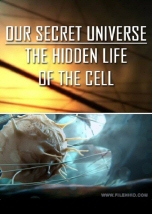



This film reveals the exquisite machinery of the human cell system from within the inner world of the cell itself - from the frenetic membrane surface that acts as a security system for everything passing in and out of the cell, the dynamic highways that transport cargo across the cell and the remarkable turbines that power the whole cellular world to the amazing nucleus housing DNA and the construction of thousands of different proteins all with unique tasks. The virus intends to commandeer this system to one selfish end: to make more viruses. And they will stop at nothing to achieve their goal. Exploring the very latest ideas about the evolution of life on earth and the bio-chemical processes at the heart of every one of us, and revealing a world smaller than it is possible to comprehend, in a story large enough to fill the biggest imaginations.