A definitive account of Putin's power and how it changed the modern world. The series is an exploration of how Vladimir Putin brought his knowledge of spy-craft to bear on his leadership of Russia, how his personal experiences have influenced his politics and how modern Russia has been created through an acute sense of betrayal, pride and anger. The first episode takes viewers on a journey into the mind of one of the 21st century's most influential leaders, offering a portrait of a politician who modelled himself on the Russian James Bond and whose presidency reads like a spy thriller. We will see how Putin escapes poverty by joining the KGB, his reinvention as a political fixer in the aftermath of the collapse of the Soviet Union and how he gets into position to take over from President Yeltsin.
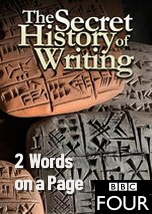
Writing itself is 5,000 years old, and for most of that time words were written by hand using a variety of tools. The Romans were able to run an empire thanks to documents written on papyrus. Scroll books could be made quite cheaply and, as a result, ancient Rome had a thriving written culture. With the fall of the Roman Empire, papyrus became more difficult to obtain. Europeans were forced to turn to a much more expensive surface on which to write: Parchment. Medieval handwritten books could cost as much as a house, they also represent a limitation on literacy and scholarship. No such limitations were felt in China, where paper had been invented in the second century. Paper was the foundation of Chinese culture and power, and for centuries how to make it was kept secret. When the secret was out, paper mills soon sprang up across central Asia. The result was an intellectual flourishing known as the Islamic Golden Age. Muslim scholars made discoveries in biology, geology, astronomy and mathematics. By contrast, Europe was an intellectual backwater. That changed with Gutenberg’s development of movable type printing. The letters of the Latin alphabet have very simple block-like shapes, which made it relatively simple to turn them into type pieces. When printers tried to use movable type to print Arabic texts, they found themselves hampered by the cursive nature of Arabic writing. The success of movable type printing in Europe led to a thousand-fold increase in the availability of information, which produced an explosion of ideas that led directly to the European Scientific Revolution and the Industrial Revolution that followed.
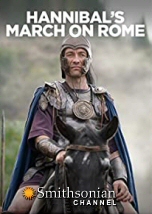
Even 2,000 years after his death, General Hannibal's battle strategies are still studied today. But of all his military feats, perhaps his greatest was leading his massive Carthaginian army of men and three-dozen elephants across the Alps and into the heartland of Rome in 218 B.C. Until now, the route they took has been a matter of dispute, but thanks to modern-day technology, geomorphologist Bill Mahaney and microbiologist Chris Allen believe they've accurately traced this ancient journey.
From the first transistor to deep learning networks, the rise of computing power over the last 50 years has been so phenomenal it's changed everything from the way we communicate to how our appliances interact. Fuelled by giant leaps forward in computer technology, the race is on. As the progress of machines continues to accelerate, so will the pace of change.
Laurent Ballesta has yet again challenged himself to a new world record: spend 28 days at a depth of 100 meters to reveal the luxuriant and unknown depths of the Mediterranean. Because people have been travelling there for thousands of years, this sea is believed to be without secrets. And yet, far below its surface, lie vast unexplored territories, luxurious gardens worthy of the finest tropical coral reefs. These natural wonders are inaccessible to the traditional diver, in a twilight zone, between 60 and 120 m, where there’s less than 1% of sunlight. If diving at such depths is always a challenge, staying there is a fantasy, a utopia that becomes reality in 'The Deep Med'.
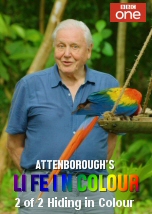
With a million species at risk of extinction, Sir David Attenborough explores how this crisis of biodiversity has consequences for us all, threatening food and water security, undermining our ability to control our climate and even putting us at greater risk of pandemic diseases. Everything in the natural world is connected in networks that support the whole of life on earth, and we are losing many of the benefits that nature provides to us. The loss of insects is threatening the pollination of crops, while the loss of biodiversity in the soil also threatens plants growth. Last year, a UN report identified the key drivers of biodiversity loss, including overfishing, climate change and pollution. But the single biggest driver of biodiversity loss is the destruction of natural habitats. Seventy-five per cent of Earth's land surface (where not covered by ice) has been changed by humans, much of it for agriculture, and as consumers we may unwittingly be contributing towards the loss of species through what we buy in the supermarket. Human activities like the trade in animals and the destruction of habitats drive the emergence of diseases. Disease ecologists believe that if we continue on this pathway, this year’s pandemic will not be a one-off event.
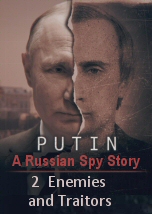

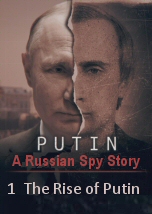



The first episode takes viewers on a journey into the mind of one of the 21st century's most influential leaders, offering a portrait of a politician who modelled himself on the Russian James Bond and whose presidency reads like a spy thriller. We will see how Putin escapes poverty by joining the KGB, his reinvention as a political fixer in the aftermath of the collapse of the Soviet Union and how he gets into position to take over from President Yeltsin.