










Last Watched

"Solar"  Sort by

Dark Future of the Sun

   2010    Science
Our Sun has served Earth well for almost five billion years. It's bathed us with heat and energy. But like humans, our home star is mortal. In five billion years, it will stop nurturing its planetary offspring. The aging star will bloat out beyond the orbit of our planet incinerating all living things--including humans if we're still around.
Series: The Universe
Venus and Mercury

   2010    Science
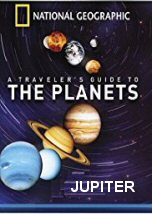
It is the ultimate in adventure travel, but it is not for the faint of heart. But the sights — from Jupiter’s churning red eye to Saturn’s glittering rings — are out of this world. The series takes viewers on a breath-taking journey through the planets in our Solar System. See stunning images of each planet including highly detailed images captured by today’s ultra high-tech telescopes. Advanced animation takes you up close and personal with these distant worlds, as we plunge through space to get a better look at the neighbours.
Series: A Traveler Guide to the Planets

Mars

   2010    Science
Mars is filled with mysteries, Volcanoes 77 000 feet tall, Huge canyons, 3000 miles across and 6 miles deep, all kinds of interesting features. Awaiting you is some of the greatest scenery in our Solar System, on a world where water once ruled, then vanished into thin air. Where lost microbe empires may still survive underground. We've seen the postcards, and we do wish we were there.
Series: A Traveler Guide to the Planets

Jupiter

   2010    Science
Head beyond the Asteroid Belt for an out of this world experience. Welcome to Jupiter, home of high adrenaline adventure. Plunge into its mysterious depths. When you drop through the clouds it would get darker and hotter. At the center the temperatures are hotter than the surface of the sun and the pressures are unimaginably high.
Series: A Traveler Guide to the Planets

Deadly Comets and Meteors

   2009    Science
Right now cosmic forces prowl the universe and threaten man's very existence. They're asteroids and comets; they've left their imprint on planet Earth, literally. Initially helping to build planets through violent collisions, during this fiery bombardment period they may have even seeded Earth with water and the building blocks for life. Since the turbulent formation of the solar system, these space rocks have continued to impact Earth. Some have been so violent that they've led to mass extinctions, including one that wiped out the dinosaur. New theories suggest that asteroid and comet dust harbour deadly viruses that may have triggered some of our worst pandemics. The possibility of future collisions remains a legitimate threat yet despite their dangers, asteroids and comets may hold vital natural resources, which could actually preserve
Series: The Universe

Cosmic Phenomena

   2009    Nature
A variety of cosmic events have both helpful and harmful effects on life on Earth. From the beauty of the Aurora Borealis and rainbows to the dangers of UV radiation and cosmic rays, from the miracle of photosynthesis to the thrill of a meteor shower, this episode explores how the effects generated by the sun and other extra-solar sources can literally get under our skin, scramble our technology, make life possible and threaten our existence all at the same time
Series: The Universe