Last Watched

"City"  Sort by

Are We All Bigots

   2015    Culture
If you had less than one second to make a life-or-death decision to shoot a man who might be armed with a lethal weapon, what would you do? Would the ethnicity of the man affect your decision? Are you sure? The outcome – whatever your race – will surprise you. Brain imaging studies are showing that negative cultural stereotypes hijack everyone’s subconscious decision-making. But some science says we can overcome bigotry through exposure, self-awareness and flexible social networks… and, most controversially of all, ultra-violent video games!
Series: Through the Wormhole Season 6
The Day they Dropped the Bomb

   2015    History
August 6th 1945 marked the start of a terrifying new episode in human history. This documentary marks the 70th anniversary of the day when the world's first atomic bomb was dropped on the Japanese city of Hiroshima by a Boeing B-29 USAF Superfortress bomber, nicknamed Enola Gay after the pilot's mother". Up to 80,000 people - 30 per cent of the population - were killed by the blast and resulting firestorm and over 70,000 were injured. This documentary gives a minute-by-minute account of what happened on that fateful day, through the testimony of people who were there and rarely-seen archive footage from the time. Made on location in Hiroshima and the USA, it features unique interviews with eyewitnesses who have seldom, if ever, spoken about the experience. Several of them are no longer alive, they include the last surviving member of the crew of the Enola Gay - navigator Dutch Van Kirk who died in July 2014.

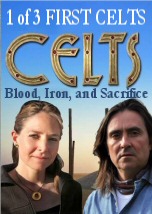
First Celts

   2015    History
The Celts - one of the world's most mysterious ancient people. In Britain and Ireland, we are never far from our Celtic past but in this series Prof. Alice Roberts and archaeologist Neil Oliver travel much further afield, discovering the origins and beliefs of these Iron Age people in artefacts and human remains right across Europe, from Turkey to Portugal. What emerges is not a wild people on the western fringes of Europe, but a highly sophisticated tribal culture that influenced vast areas of the ancient world - and even Rome". Rich with vivid drama reconstruction, we recreate this pivotal time and meet some of our most famous ancient leaders - from Queen Boudicca to Julius Caesar - and relive the battles they fought for the heart and soul of Europe. Alice and Neil discover that these key battles between the Celts and the Romans over the best part of 500 years constituted a fight for two very different forms of civilisation - a fight that came to define the world we live in today. In the first episode, we see the origins of the Celts in the Alps of central Europe and relive the moment of first contact with the Romans in a pitched battle just north of Rome - a battle that the Celts won and that left the imperial city devastated.
Series: The Celts: Blood, Iron, and Sacrifice

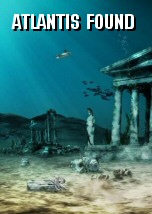
Atlantis Found

   2015    History
This documentary attempts to make history by finding the lost city of Atlantis once and for all. Adventurer-geologist Dr. Martin Pepper sets out to prove his theory – that the true Atlantis existed on the Greek island of Santorini, and was destroyed in the biggest volcanic eruption in human history". In order to achieve his goal, Pepper will use new scientific evidence gathered using state-of-the-art sonar scans of the sea bed and microscopic analysis of the ancient landscape. One of the challenges he faces is that he must also match Santorini to a series of key clues embedded in the first ever description of Atlantis by the Greek philosopher Plato – from the lost city’s strange ring-shaped design, to the role Egyptian priests played in recording the legend in the first place. His journey will take him across the Mediterranean and out into the Atlantic Ocean. By the end of the program, he reveals the stunning findings which may pinpoint the city and show exactly what it looked like.

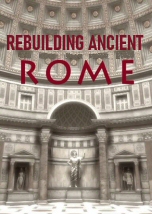
Rebuilding Ancient Rome

   2015    History    HD
Beneath the modern streets of Rome lies a city of breathtaking scale and ambition, once the heart of an empire that shaped the world. In this 15-part journey, archaeologist Dr. Darius Arya becomes your guide into a vivid time machine, where stunning CGI reconstructions resurrect the capital in all its glory. From the steamy elegance of vast bath complexes to the roar of chariot races, from awe-inspiring temples to political halls where history was forged, each episode reveals how engineering brilliance, artistic mastery, and human will transformed humble hills into the Eternal City. This is not just a tour of ruins—it’s Rome as its citizens once knew it.

The Electric Boy

   2014    Science
This episode provides an overview of the nature of electromagnetism, as discovered through the work of Michael Faraday. Tyson explains how the idea of another force of nature, similar to gravitational forces, had been postulated by Isaac Newton before. Tyson continues on Faraday, coming from poor beginnings, would end up becoming interested in studying electricity after reading books and seeing lectures by Humphry Davy at the Royal Institution. Davy would hire Faraday after seeing extensive notes he had taken to act as his secretary and lab assistant. After Davy and chemist William Hyde Wollaston unsuccessfully tried to build on Hans Christian Ørsted's discovery of the electromagnetic phenomena to harness the ability to create motion from electricity, Faraday was able to create his own device to create the first electric motor by applying electricity aligned along a magnet. Davy, bitter over Faraday's breakthrough, put Faraday on the task of improving the quality of high-quality optical glass, preventing Faraday from continuing his research. Faraday, undeterred, continued to work in the Royal Institution, and created the Christmas Lectures designed to teach science to children. Following Davy's death, Faraday returned to full time efforts studying electromagnetism, creating the first electrical generator by inserting a magnet in a coil of wires. Tyson continues to note that despite losing some of his mental capacity, Faraday concluded that electricity and magnetism were connected by unseen fields, and postulated that light may also be tied to these forces. Using a sample of the optical glass that Davy had him make, Faraday discovered that an applied magnetic field could affect the polarization of light passing through the glass sample (a dielectric material), leading to what is called the Faraday effect and connecting these three forces. Faraday postulated that these fields existed across the planet, which would later by called Earth's magnetic field generated by the rotating molten iron inner core, as well as the phenomena that caused the planets to rotate around the sun. Faraday's work was initially rejected by the scientific community due to his lack of mathematical support, but James Clerk Maxwell would later come to rework Faraday's theories into the Maxwell's equations that validated Faraday's theories. Their combined efforts created the basis of science that drives the principles of modern communications today.
Series: Cosmos: A Spacetime Odyssey
Planet Earth III

Planet Earth III

2023  Nature
Prehistoric America

Prehistoric America

2003  Nature
The Human Body

The Human Body

1998  Medicine
The Sky at Night

The Sky at Night

2024  Science
The Sky at Night

The Sky at Night

2025  Science
The Last Narc

The Last Narc

2020  Culture