






Last Watched

"Hunt"  Sort by

Planet Earth II Jungles

   2016    Nature    HD
Jungles provide the richest habitats on the planet - mysterious worlds of high drama where extraordinary animals attempt to survive in the most competitive place on earth. Flooded forests are home to caiman-hunting jaguars and strange dolphins that swim amongst the tree tops, while in the dense underworld, ninja frogs fight off wasps and flying dragons soar between trees. Acrobatic indri leap through the forests of Madagascar, while the jungle night conceals strange fungi and glow-in-the-dark creatures never filmed before.
Series: Planet Earth II
Planet Earth II Deserts

   2016    Nature    HD
The world's deserts are lands of extremes that force animals to come up with ingenious ways of coping with hostile conditions, giving rise to the most incredible survival stories on earth. A pride of desert lions are so hungry they risk hunting a giraffe several times their size, while male sandgrouse fly 120 miles each day to the nearest waterhole and dice with death to collect water for their chicks. Filmed for the first time, a tiny bat does battle with one of the world's deadliest scorpions, and in Madagascar, a locust swarm of biblical proportions is seen as never before.
Series: Planet Earth II

Planet Earth II Cities

   2016    Nature    HD
Cities are growing at a faster rate than any other habitat on Earth. They may seem an unlikely place for animals to thrive, but they can be a world of surprising opportunity. Leopards prowl the streets of Mumbai, peregrine falcons hunt amongst New York's skyscrapers, and a million starlings perform spectacular aerial dances over Rome. In Jodhpur, langurs are revered as religious deities and in Harar, locals live in harmony with wild hyenas. Many animals, however, struggle to cope in the urban jungle. As the architects of this environment, can humans choose to build cities that are homes for both them and wildlife?
Series: Planet Earth II

Playful Creatures

   2015    Nature
Spy in the Huddle use innovative techniques to reveal the incredible secrets of your pets' behaviour in ways never seen before. As astonishing photography explores the wild side of our playful pets, find out why hamsters love to run in a wheel, how dogs pick up the rules of the pack and how kittens learn to be solitary hunters. Featuring incredible views of plunge-diving dogs, babysitting cats, acrobatic hamsters and a playful cat outwitted by his prey" - you'll never look at your favourite companions in quite the same way again. The latest science also reveals why budgies talk, how a cat scales a vertical wall with the help of a special claw, why hamsters stuff their faces with more food than they can eat and the real meaning behind a rabbit's hop. Our pets are also given a chance to explore their wild side as we join the free-roaming pet dogs of Cusco Peru, pet rabbits living in a natural warren and the wild-living inhabitants of Cat Island, Japan. A range of innovative techniques such as moving X-rays, thermal imagery, minicam-carrying dogs and revelatory slow-motion photography shows why our pets play and how their true wild nature is just a whisker away.
Series: Pets: Wild at Heart

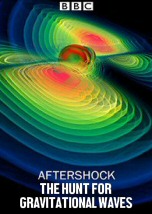
The Hunt for Gravitational Waves

   2015    Science
Travel to the South Pole to discover the inside story of the greatest scientific quest of our time. In March 2014, a team of astronomers stunned the scientific world when they announced that their BICEP2 telescope at the South Pole had possibly detected a signal of 'gravitational waves' from the early universe. This is the inside story of the hunt for gravitational waves from the beginning of time. How the BICEP2 team came close to making one of the greatest discoveries of the century – and what happened when it all began to unravel...

Boko Haram and Unnatural Selection

   2015    Culture
The terrorist group Boko Haram is responsible for thousands of deaths in Nigeria. Now, the government is determined to drive these militants from the country. But is the hunt for insurgents causing as much harm as it's preventing? Former Navy SEAL and new VICE correspondent Kaj Larsen travels to Nigeria to see what this cat-and-mouse game means for the people caught in the middle of the fight. 'Unnatural Selection': For centuries, scientists have been working to change the genetic traits of plants and animals. Now, the new gene-editing method CRISPR has made that process astonishingly simple - so simple it could easily be used on humans. Isobel Yeung reports from Brazil, Scotland, China and the U.S. on the technological advances that could reshape evolution as we know it.