



Last Watched

"research"  Sort by

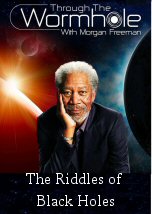
The Riddles of Black Holes

   2011    Science
They are the most powerful objects in the universe. Nothing, not even light, can escape the gravitational pull of a black hole. Astronomers now think there are billions of them out in the cosmos, swallowing up planets, even entire stars in violent feeding frenzies. New theoretical research into the twisted reality of black holes suggests that three-dimensional space could be an illusion. That reality actually takes place on a two-dimensional hologram at the edge of the universe.
Series: Through the Wormhole
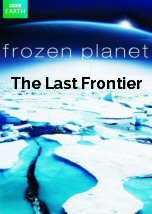
Frozen Planet: The Last Frontier

   2011    Culture
The documentary series reveals the extraordinary riches and wonders of the Polar Regions that have kept people visiting them for thousands of years. Today, their survival relies on a combination of ancient wisdom and cutting-edge science. Most Arctic people live in Siberia, either in cities like Norilsk - the coldest city on earth - or out on the tundra, where tribes like the Dogan survive by herding reindeer, using them to drag their homes behind them. On the coast, traditional people still hunt walrus from open boats - it is dangerous work, but one big walrus will feed a family for weeks. Settlers are drawn to the Arctic by its abundant minerals; the Danish Armed Forces maintain their claim to Greenland's mineral wealth with an epic dog sled patrol, covering 2,000 miles through the winter. Above, the spectacular northern lights can disrupt power supplies so scientists monitor it constantly, firing rockets into it to release a cloud of glowing smoke 100 kilometres high. In contrast, Antarctica is so remote and cold that it was only a century ago that the first people explored the continent. Captain Scott's hut still stands as a memorial to these men. Science is now the only significant human activity allowed; robot submarines are sent deep beneath the ice in search of new life-forms, which may also be found in a labyrinth of ice caves high up on an active volcano. Above, colossal balloons are launched into the purest air on earth to detect cosmic rays. At the South Pole there is a research base designed to withstand the world's most extreme winters. Cut off from the outside world for six months, the base is totally self-sufficient, even boasting a greenhouse.
Series: Frozen Planet

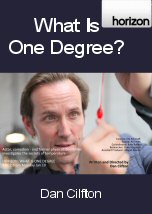
What is One Degree

   2011    Science
Comedian Ben Miller returns to his roots as a physicist to try to answer a deceptively simple question: what is one degree of temperature? His quest takes him to the frontiers of current science as he meets researchers working on the hottest and coldest temperatures in the universe, and to a lab where he experiences some of the strangest effects of quantum physics - a place where super-cooled liquids simply pass through solid glass. Plus, Ben installs his very own Met office weather station at home. Ben's investigations in this personal and passionate film highlight the importance of measurement and accuracy in the 21st century.

The Last Lions

   2011    Nature
Fifty years ago there were close to half-a-million lions in Africa. Today there are around 20,000. To make matters worse, lions, unlike elephants, which are far more numerous, have virtually no protection under government mandate or through international accords. This is the jumping-off point for a disturbing, well-researched and beautifully made cri de coeur from husband and wife team Dereck and Beverly Joubert, award-winning filmmakers from Botswana who have been Explorers-in-Residence at National Geographic for more than four years. Pointing to poaching as a primary threat while noting the lion's pride of place on the list for eco-tourists-an industry that brings in 200 billion dollars per year worldwide-the Jouberts build a solid case for both the moral duty we have to protect lions (as well as other threatened "big cats," tigers among them) and the economic sense such protection would make. And when one takes into account the fact that big cats are at the very top of the food chain-and that their elimination would wreak havoc on all species below them, causing a complete ecosystem collapse-the need takes on a supreme urgency.

Why Do Viruses Kill

   2010    Medicine
The world stood in fear of an emerging new disease that threatened to kill millions. A new flu variant H1N1 had arrived. If this latest pandemic has taught anything, it is just how little is understood about the invisible world of viruses. But that has not stopped scientists trying. Horizon follows the leading researchers from across the world, who are attempting to unravel the many secrets of viruses to understand when and why they kill.

Miracle Cure: A Decade of the Human Genome

   2010    Medicine
More than a decade ago, scientists announced that they had produced the first draft of the human genome, the 3.6 billion letters of our genetic code. It was seen as one of the greatest scientific achievements of our age, a breakthrough that would usher in a new age of medicine. Find out how close we are to developing the life-changing treatments that were hoped for". Follow three people, each with a genetic disease, as they go behind the scenes at some of Britain's leading research labs to find out what the sequencing of the human genome has done for them - and the hope this remarkable project offers all of us.
Frozen Planet

Frozen Planet

2011  Nature
Frozen Planet II

Frozen Planet II

2022  Nature
Tiger

Tiger

2020  History
Chef's Table

Chef's Table

2017  Art
Zeitgeist

Zeitgeist

2007  Culture
Sonic Highways

Sonic Highways

2014  Art
Myths and Heroes

Myths and Heroes

2005  History