The film brings viewers all the amazing news-breaking advances in science in technology from 2021, unfolding around the globe. Shattering barriers and questioning assumptions and turning ideas on their head. Stories that take a leap into the future or follow footprints to the past. Startling discoveries from a prehistoric nursery to a magic bullet that could contain the pandemic. Accomplishments like harnessing a star in a bottle or mapping invisible parts of the universe. Join us for an exclusive hyper-tour from earth to space.
Physicist Dr Helen Czerski journeys to the extremes of the temperature scale, where the everyday laws of physics break down and a new world of scientific possibilities begins. In the first part, Frozen Solid, Helen reveals how cold has shaped the world around us and why frozen doesn't mean what you think it does. She meets scientists pushing temperature to the limits of cold, driving technologies such as superconductors. The second part, A Temperature for Life, explores the narrow band of temperature that has led to life on Earth, how life began where hot meets cold and how every living creature depends on temperature for survival. In the last part, Playing with Fire, Helen Czerski explores the science of heat. She reveals how heat is the hidden energy contained within matter with the power to transform it from state to state.
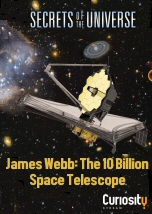
Following engineers and scientists on a groundbreaking mission as they build, test and launch the James Webb Space Telescope, the most powerful observatory ever constructed, and discovers the astonishing cosmological enigmas it will investigate. Using the latest CGI animation technology, the film will follow the journey and share the incredible cosmological images and mysteries that scientists believe the telescope will capture. This super-telescope is the next generation successor to the Hubble Space Telescope, with a mirror 6 times bigger. It will also be able to peer back in time. For the first time in space exploration, scientists will be able to explore the formation of the first stars and galaxies and search for planets that can support life.
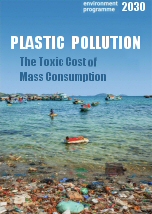
This featured film investigates the emerging threats posed by plastic pollution to life on Earth. The hyper-convenience of our modern way of living produces staggering volumes of plastic waste daily. Scientists now know that this waste breaks down into ever tinier pieces, spreading right across the globe and posing direct health risks, including through bioamplification of toxic additives moving up the food chain. We explore the drastic changes it will take to deliver a sustainable future for our planet.
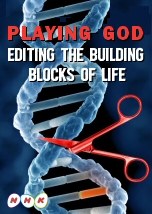
The film explores the revolutionary gene-editing tech now giving humankind the freedom to redraw the blueprint of biological life itself. We investigate not only the tremendous potential the technology holds, whether in the fight to eliminate diseases or in transforming agriculture to adapt to unprecedented climate extremes, but also probe the inherent risks involved and the potential for widespread abuse, dangers that could take our future down a very dark, dystopian path.
The James Webb Space Telescope, a flagship observatory developed by NASA, the European Space Agency, and the Canadian Space Agency, is the largest space telescope ever built, with a deployable mirror measuring 21.3 feet (6.5 meters) in diameter and four scientific instruments to observe the universe in infrared wavelengths. The mission will study the formation of galaxies, stars, and planets. JWST was launched December 25, 2021 on an Ariane 5 ECA rocket. This is the story of the James Webb Space Telescope, told by the people who have devoted their lives to it. It is the world’s most advanced and most expensive telescope, and building it has been fraught with challenges. But it will all be worth it if the mission is successful.

















Startling discoveries from a prehistoric nursery to a magic bullet that could contain the pandemic. Accomplishments like harnessing a star in a bottle or mapping invisible parts of the universe. Join us for an exclusive hyper-tour from earth to space.