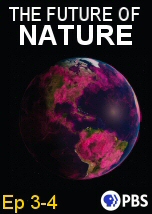
In the final two episodes, the focus shifts to forests and humanity’s defining role in the planet’s future. Ancient woodlands emerge as powerful engines of climate balance, storing vast amounts of carbon while sustaining intricate webs of life. Through striking visuals and frontline science, the documentary reveals how the health of the world’s forests is inseparable from the stability of Earth’s climate—and how their decline accelerates global risk. The story then turns inward, asking what responsibility humans bear in shaping what comes next. From indigenous stewardship to bold restoration projects, these episodes explore how human choices can either deepen the crisis or unlock nature’s capacity to heal. It’s a compelling conclusion that reframes our relationship with the natural world, showing that the future of nature is, ultimately, the future of humanity itself.
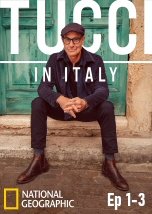
Guided by Stanley Tucci, this documentary journeys into the heart of Italy to reveal the country as it truly is, complex, contradictory, and deeply rooted in its culinary traditions. Through food, Tucci uncovers stories of history, identity, and innovation, showing how every dish reflects centuries of culture, migration, and local pride. What emerges is not a postcard Italy, but a living, evolving nation where cuisine is a language spoken by everyone. In the first three episodes, Tucci immerses himself in Tuscany, savoring the artistry of its cuisine while exploring Florence and Siena, where Renaissance creativity still shapes the table. He then heads north to Italy’s industrial regions, discovering cutting-edge gastronomy and futuristic farming, from high-tech agricultural labs to unexpected gourmet food found at service stations. Finally, in the German-speaking Alpine north, he explores a dual cultural identity through mountain dishes, skiing traditions, and glacial river fishing, revealing how history, borders, and landscape have forged a cuisine unlike any other in Italy.
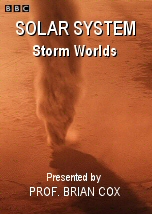
In Episode 3, embark on a breathtaking journey with Professor Brian Cox as he ventures into the storm worlds of our solar system. This chapter uncovers colossal tempests that have raged for centuries, metallic frost blanketing alien mountains, and monsoon rains falling a billion kilometers from Earth. A visually stunning exploration of the most extreme weather in the cosmos — a chapter that will forever change how we view planetary atmospheres.
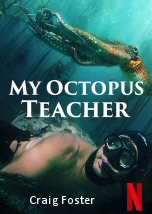
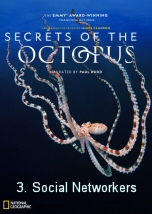
The third episode unveils the enigmatic world of octopuses, long believed solitary creatures, revealing their unexpected social behaviors. Follow Dr. Alex Schnell as she forms a unique bond with Scarlett, a shy female day octopus, challenging the long-held belief that these creatures are ultimate loners. Witness intense interactions, from rival confrontations to cooperative hunting with other species, shedding light on the complex social dynamics of these intelligent beings. The film also takes you deep beneath the ocean to octopus nurseries and an extraordinary octopus oasis where multiple species coexist. Discover how octopuses use their remarkable problem-solving abilities and sophisticated communication to navigate their environments and form selective social interactions. ‘Social Networkers’ redefines our understanding of these ancient, intelligent marine animals and their secret social lives, making it a must-watch for nature enthusiasts and curious minds alike.
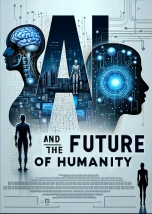
In this captivating film hosted by Anderson Cooper, viewers are presented with an insightful exploration of artificial intelligence (AI), its profound implications, and the ethical dilemmas it poses. The documentary begins with a startling revelation: what appeared to be Anderson Cooper was actually an AI-generated version, raising questions about the authenticity of what we see and hear. The narrative then shifts to broader concerns about AI replacing human roles across industries and its capability to outperform humans in tasks ranging from driving to creating art. Viewers are taken on a journey through various facets of AI, from the streets of San Francisco, where robot taxis hint at a future dominated by AI, to the insights of Yoshua Bengio, a pioneer in deep learning. The film also addresses the darker side of AI, including the potential for misuse and the challenges in distinguishing between reality and AI-generated content. The climax of the documentary presents a critical question: Can AI save humanity, or does it pose a threat to our existence? This thought-provoking exploration of AI's impact on our world is a must-watch for anyone curious about technology and its intersection with human life.
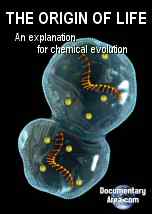
The film, marking our first own production, embarks on an awe-inspiring journey, shedding light on one of science's most profound questions: How did life emerge from the non-living? With a focus on the intricate mechanisms that may have transformed simple molecules into the first microorganisms, this film explores the concept of a chemical evolution that meticulously selected increasingly complex molecules, eventually leading to the genesis of life. By delving into the pivotal role of RNA, viewers are invited to contemplate the plausibility of life spontaneously arising from the basic elements of the universe. The documentary meticulously illustrates a potential pathway for the emergence of life, emphasizing the significance of ribozymes—RNA molecules with catalytic abilities—and their role in a prebiotic chemical evolution. The film posits a compelling argument for the natural processes that might have led to the formation of the first complex lipid vesicles, a critical step towards cellular life. By presenting a theory that bridges gaps in our understanding with scientific ingenuity, ‘The Origin of Life’ invites viewers on an intellectual adventure to discover the origins of existence itself. More information on https://www.javier-serrano.blog/Evolucion/el_origen_de_la_vida_parteI.php














The story then turns inward, asking what responsibility humans bear in shaping what comes next. From indigenous stewardship to bold restoration projects, these episodes explore how human choices can either deepen the crisis or unlock nature’s capacity to heal. It’s a compelling conclusion that reframes our relationship with the natural world, showing that the future of nature is, ultimately, the future of humanity itself.