Professor Jerry Brotton reveals that maps are far more than neutral guides to places: they are expressions of the societies that create them and powerful instruments for shaping territory, belief and authority. Beginning with some of the earliest known maps, he traces how cartography evolved from marking land and ownership to serving kings, empires, scientists and governments. From Henry VIII’s coastal surveys and the Cassini family’s scientific breakthroughs to the drawing of modern national borders, the series shows how maps can define who controls land, who belongs where and even how entire peoples understand the world around them. Across the three episodes, presented here together in a single uninterrupted video, the journey moves from ancient and medieval worldviews to imperial expansion and the digital age. Brotton explores religious maps, Aztec symbolism, Victorian attempts to classify societies, the politics behind projections of the globe, and the rise of Google Earth and data-driven mapping. He then follows the mapmakers and explorers who turned distant lands into targets for conquest and profit, from Ptolemy and Columbus to Walter Raleigh and the trading empires that followed. The story ends in the Arctic, where new maps are once again being used to stake claims over oil, gas and minerals, proving that even in the twenty-first century, cartography remains inseparable from power, plunder and possession.
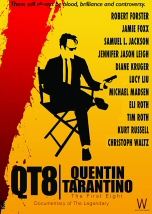
The film chronicles the life of Quentin Tarantino, from his start at Video Archives up to the releasing of Once Upon a Time in Hollywood. The documentary features interviews from his frequent collaborators of his films. The filmmaker Richard Linklater explores Quentin Tarantino from his trendsetting work on Reservoir Dogs and examines how his films have changed the movie making landscape forever.
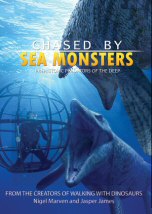
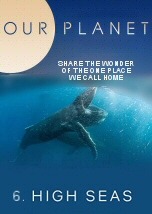
Far from land, where few of us ever venture, is the ocean beyond the boundary of any country. Largely ungoverned, wild, and lawless. Venture into the deep, dark and desolate oceans that are home to an abundance of beautiful - and downright strange - creatures.
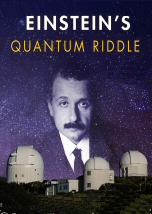
Join scientists as they grab light from across the universe to prove quantum entanglement is real. Einstein called it 'spooky action at a distance,' but today quantum entanglement is poised to revolutionize technology from computers to cryptography. Physicists have gradually become convinced that the phenomenontwo subatomic particles that mirror changes in each other instantaneously over any distance is real. But a few doubts remain. The film follows a ground-breaking experiment in the Canary Islands to use quasars at opposite ends of the universe to once and for all settle remaining questions.
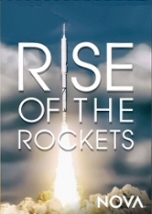
New technologies are making rockets cheaper and more powerful than ever before. As companies like SpaceX and Virgin Galactic make space more accessible, and NASA returns to crewed spaceflight, a new era of space exploration may be on the horizon.
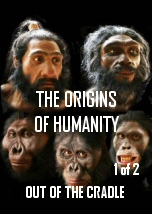
How did humanity's earliest ancestors evolve into one of the most successful species on Earth? An extraordinary journey tracing the footsteps of early hominids. Using the latest palaeoanthropological findings mixed with the latest CGI from Square Enix, this story is finally told.





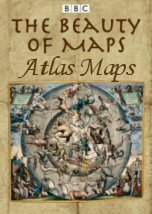

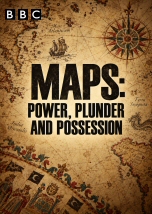

Across the three episodes, presented here together in a single uninterrupted video, the journey moves from ancient and medieval worldviews to imperial expansion and the digital age. Brotton explores religious maps, Aztec symbolism, Victorian attempts to classify societies, the politics behind projections of the globe, and the rise of Google Earth and data-driven mapping. He then follows the mapmakers and explorers who turned distant lands into targets for conquest and profit, from Ptolemy and Columbus to Walter Raleigh and the trading empires that followed. The story ends in the Arctic, where new maps are once again being used to stake claims over oil, gas and minerals, proving that even in the twenty-first century, cartography remains inseparable from power, plunder and possession.