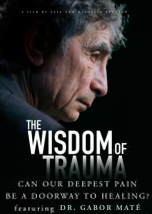
Trauma is the invisible force that shapes our lives. It shapes the way we live, the way we love and the way we make sense of the world. It is the root of our deepest wounds. Dr. Maté gives us a new vision: a trauma-informed society in which parents, teachers, physicians, policy-makers and legal personnel are not concerned with fixing behaviors, making diagnoses, suppressing symptoms and judging, but seek instead to understand the sources from which troubling behaviors and diseases spring in the wounded human soul. The interconnected epidemics of anxiety, chronic illness and substance abuse are, according to Dr Gabor Maté, normal. But not in the way you might think.
One in five Americans are diagnosed with mental illness in any given year. Suicide is the second most common cause of death in the US for youth aged 15-24, and kills over 700,000 people a year globally and 48,300 in the USA . Drug overdose kills 81,000 in the USA annually. The autoimmunity epidemic affects 24 million people in the USA. What is going on? “So much of what we call abnormality in this culture is actually normal responses to an abnormal culture. The abnormality does not reside in the pathology of individuals, but in the very culture that drives people into suffering and dysfunction.” — Gabor Maté
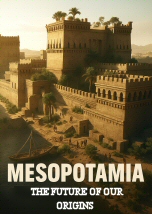
Embark on a breathtaking journey through time as the cradle of civilization is brought to life like never before. With stunning visuals and immersive storytelling, this documentary follows Iraqi-born writer Jawad Bashara as he returns to his homeland after decades in exile, determined to preserve the rich cultural legacy of ancient Mesopotamia—now under threat from war and destruction. Guided by cutting-edge archaeology and heartfelt personal reflection, the film explores the wonders of Sumer, Babylon, and Assyria while asking a profound question: how can understanding our ancient past help shape a better future? A visually spectacular and emotionally powerful experience that connects history, identity, and resilience—this is more than a documentary; it’s a rediscovery of who we are.
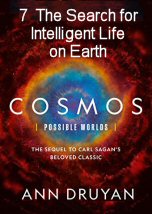
Episode 7 focuses specifically on first contact and the search for intelligent life in the vastness of the cosmos. Are humans ready to make first contact with other intelligent beings? Is our technology even sophisticated enough to detect communication signals from another world? Who are we to search for alien intelligence when we can't even recognize or respect the consciousness all around us, or even beneath our feet. Neil deGrasse Tyson reveals the hidden underground network that is a collaboration of four kingdoms of life, and a true first contact story between humans and beings who communicate in a symbolic language and have maintained a representative democracy for many tens of millions of years.
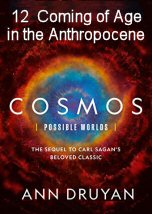
At 11 o'clock on New Year's Eve of the Cosmic Calendar, Homo erectus stood up for the first time, freeing its hands and earning the species its name. They began to move around, to explore, daring to risk everything to get to unknown places. Our Neanderthal relatives lived much as we did and did many of the things we consider to be 'human.' More restless than their cousins the Neanderthals and Denisovans, our Homo sapiens ancestors crossed seas and unforgiving landscapes, changing the land, ocean and atmosphere, leading to mass extinction. The scientific community gave our age a new name, 'Anthropocene.' Since the first civilizations we've wondered if there's something about human nature that contains the seeds of our destruction. Syukuro Manabe was born in rural Japan and took an intense interest in Earth's average global temperature. In the 1960's, he would assemble the evidence he needed to predict the increase of Earth's temperature due to greenhouse gases until it becomes an uninhabitable and toxic environment, leading to our extinction. 'This doesn't have to be,' says Neil deGrasse Tyson, 'it's not too late. There's another hallway, another future we can still have; we'll find a way.'
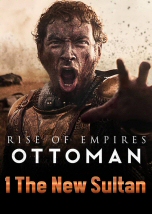
Ottoman Sultan Mehmed II wages an epic campaign to take the Byzantine capital of Constantinople. Twenty-three armies have tried to take the legendary city and all have failed. Out of the carnage, one ruler will emerge victorious and shapes the course of history for centuries. For one empire to rise, another must fall. The Ottomans, former Anatolian warlords and nomads who've built a burgeoning empire are the biggest threat to the Romans' 1100-year reign. The death of Ottoman Sultan Murad II in 1451 unleashes a chain of events that will soon bring the Ottomans and Romans to the brink of war. After claiming the Ottoman throne, Mehmed II sends an unmistakable signal to Byzantine emperor Constantine XI.
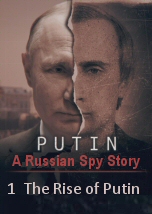
A definitive account of Putin's power and how it changed the modern world. The series is an exploration of how Vladimir Putin brought his knowledge of spy-craft to bear on his leadership of Russia, how his personal experiences have influenced his politics and how modern Russia has been created through an acute sense of betrayal, pride and anger. The first episode takes viewers on a journey into the mind of one of the 21st century's most influential leaders, offering a portrait of a politician who modelled himself on the Russian James Bond and whose presidency reads like a spy thriller. We will see how Putin escapes poverty by joining the KGB, his reinvention as a political fixer in the aftermath of the collapse of the Soviet Union and how he gets into position to take over from President Yeltsin.
















The interconnected epidemics of anxiety, chronic illness and substance abuse are, according to Dr Gabor Maté, normal. But not in the way you might think. One in five Americans are diagnosed with mental illness in any given year. Suicide is the second most common cause of death in the US for youth aged 15-24, and kills over 700,000 people a year globally and 48,300 in the USA . Drug overdose kills 81,000 in the USA annually. The autoimmunity epidemic affects 24 million people in the USA. What is going on?
“So much of what we call abnormality in this culture is actually normal responses to an abnormal culture. The abnormality does not reside in the pathology of individuals, but in the very culture that drives people into suffering and dysfunction.” — Gabor Maté