


Last Watched

"Modern"  Sort by

Free for All

   2013    Art
Part 2 examines how the freewheeling modernism that had shocked audiences in the first two decades of the century came under state control. Initially, many practitioners thought the totalitarian regimes would be good for music and the arts. What followed in Germany was a ban on music written by Jews, African-Americans and communists, while in the Soviet Union there was a prohibition on music the workers were unable to hum. After the cataclysm of the 1940s, a new generation of composers - Boulez, Stockhausen, Xenakis, Nono, Ligeti - turned their back on what they saw as the discredited music of the past and tried to reinvent it from scratch. Or, at least, from serialism, which became as much of a straitjacket as totalitarianism's strictures had been. But from this period of avant-garde experimentation, which many listeners found baffling and terrifying, came some of the most influential and radical musical innovations of the century.
Series: The Sound and the Fury
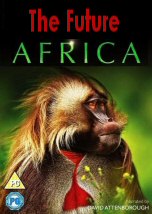
The Future

   2013    Nature
David Attenborough comes face-to-face with a baby rhino and asks what the future holds for this little one. He meets the local people who are standing side-by-side with the wildlife at this pivotal moment in their history. We discover what it takes to save a species, hold back a desert and even resurrect an entire wilderness - revealing what the world was like before modern man.
Series: Africa with David Attenborough

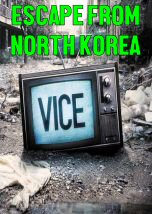
Escape from North Korea

   2013    Culture
North Koreans cross the border into China illegally every year, some via a modern-day underground railroad to freedom and eventual citizenship in South Korea. VICE visits the most dangerous place in the world: Kashmir's line of control, which partially occupies the Indian state and separates India from Pakistan.
Series: Vice

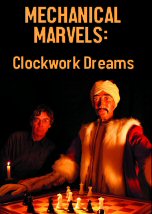
Mechanical Marvels: Clockwork Dreams

   2013    Technology
Professor Simon Schaffer presents the amazing and untold story of automata - extraordinary clockwork machines designed hundreds of years ago to mimic and recreate life. The film brings the past to life in vivid detail as we see how and why these masterpieces were built. Travelling around Europe, Simon uncovers the history of these machines and shows us some of the most spectacular examples, from an entire working automaton city to a small boy who can be programmed to write and even a device that can play chess". All the machines Simon visits show a level of technical sophistication and ambition that still amazes today. As well as the automata, Simon explains in great detail the world in which they were made - the hardship of the workers who built them, their role in global trade and the industrial revolution and the eccentric designers who dreamt them up. Finally, Simon reveals that to us that these long-forgotten marriages of art and engineering are actually the ancestors of many of our most loved modern technologies, from recorded music to the cinema and much of the digital world.

A Leap of Faith

   2013    History
With optional Hebrew subtitles. This episode explores how the spread of the Enlightenment brought ghetto walls around Europe crashing down and allowed Jews to join the wider fabric of modern life in Europe in unprecedented ways. This Jewish renaissance saw Giacomo Meyerbeer and Felix Mendelssohn to establish the enduring tradition for Jewish musical prodigies. However the integration of Jewish talent into the mainstream of European culture and commerce eventually stirred up ancient prejudice, expressed in the new fashion of Romantic nationalism and the pseudo-science of anti-semitism.
Series: The Story of the Jews

Over the Rainbow

   2013    Culture
With optional Hebrew subtitles. Simon Schama's history of the Jewish experience plunges into the lost world of the shtetl, the Jewish towns and villages sewn across the hinterlands of Eastern Europe which became the seedbed of a uniquely Jewish culture. Shtetl culture would make its mark on the modern world, from the revolutionary politics of the Soviet Union to the mass culture of Tin Pan Alley and Hollywood. It was also the birthplaces of Hasidism, the most visible, iconic and, arguably, most misunderstood expression of Jewish faith and fervour. This chapter of the story travels from the forests of Lithuania, where Simon's own family logged wood and fought wolves, to the streets of the Lower East Side where the sons of shtetl immigrants wrote the American songbook. With grim inevitability, the story returns to Eastern Europe in 1940 - where the genocidal mechanisms of the 'final solution' were beginning to grind the shtetl world into dust and ash.
Series: The Story of the Jews