






Last Watched

"AI"  Sort by

Homo Interneticus

   2010    Technology
Dr Aleks Krotoski concludes her investigation of how the World Wide Web is transforming almost every aspect of our lives. Joined by Facebook founder Mark Zuckerberg, Bill Gates, Al Gore and the neuroscientist Susan Greenfield, Aleks examines the popularity of social networks such as Facebook and asks how they are changing our relationships. And, in a ground-breaking test at University College London, Aleks investigates how the Web may be distracting and overloading our brains.
Series: The Virtual Revolution
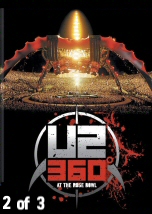
U2 Live at the Rose Bowl 2of3

   2010    Art
The tour was designed by Willie Williams, who has worked on every U2 tour since 1982. Williams had been toying with ideas for 360-degree stadium staging for U2 for a number of years, and presented sketches of a four-legged design to the group near the end of their Vertigo Tour in 2006. The inspiration for the 'spaceship-on-four-legs' design, nicknamed 'the Claw', came from the landmark Theme Building at Los Angeles International Airport.
Series: U2 Live at the Rose Bowl

Restrepo

   2010    History
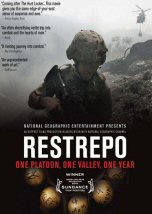
It is fairly extraordinary that this film exists. The level of access attained by Tim Hetherington and Sebastian Junger over their 15-month period embedded with the Second Platoon, Battle Company, 173rd Airborne Brigade allows for an incredibly unvarnished account -- including footage of deaths both civilian and military. It's perhaps the most intimate and unflinching examination yet of the processes of modern warfare -- and an exhilarating, heartrending, profoundly moving film in its own right.

Miracle Cure: A Decade of the Human Genome

   2010    Medicine
More than a decade ago, scientists announced that they had produced the first draft of the human genome, the 3.6 billion letters of our genetic code. It was seen as one of the greatest scientific achievements of our age, a breakthrough that would usher in a new age of medicine. Find out how close we are to developing the life-changing treatments that were hoped for". Follow three people, each with a genetic disease, as they go behind the scenes at some of Britain's leading research labs to find out what the sequencing of the human genome has done for them - and the hope this remarkable project offers all of us.

Adoration in the Forest

   2010    Art
Painted over five centuries ago, Filippo Lippi's nativity is like none other: it shows the birth of Christ in a dark, wooded wilderness. There are no shepherds, kings, ox, ass – there is no Joseph. Its beauty inspired Michelangelo, Leonardo da Vinci and Botticelli. But it also conceals a deeply personal story. It was painted for Cosimo de Medici, a wealthy banker who feared that his money was dragging him straight to hell. The artist's life was equally surprising. One of the most celebrated painters of his day, Filippo Lippi was also a Carmelite friar, but he was no stranger to the temptations of the flesh, to which he frequently yielded. Shortly before painting his Adoration, he caused uproar by seducing a twenty year-old nun. His paintings rejoice not only in divine beauty, but in the beauty of women. In later times, the Adoration's history was interwoven with that of rulers and dictators. It became a bargaining chip after Napoleon's allies seized twenty merchant ships. And in the 20th century, it was hidden by the Nazis in a potassium mine, where specialist american officers, known as Monuments Men, stumbled upon it. they were now told to get it ready to be shipped out. In an unprecedented turn of events they refused. This is the only known case in the whole of the Second World War of American officers refusing an order. It was sent to the National Gallery of Art, but in 1949 Lippi's Adoration was returned to Germany.
Series: The Private Life of a Masterpiece

Dream and Machine

   2010    Art
Andrew Graham-Dixon continues his exploration of German art by looking at the tumultuous 19th and early 20th centuries, and how artists were at the forefront of Germany's drive to become a single nation. Andrew travels to the north and the coastal town of Griefswald, the birthplace of Caspar David Friedrich, the most influential of the German Romantics, to discover how the Baltic coast impacted his mysterious paintings of the German landscape. He also visits Berlin and explores the art of the powerful Prussian state, which would spearhead the unification of Germany in 1871. The episode ends with the outbreak of World War I and the attempts of the artists Franz Marc and Otto Dix to rationalise the catastrophic experiences of the world's first technological war, a war driven by the Prussian innovations.
Series: The Art of Germany