







Last Watched

"Rock"  Sort by

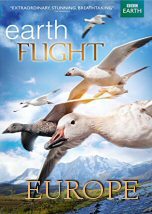
Earthflight Europe

   2012    Nature
Earthflight departs on its grand European tour, using a host of techniques including taking extraordinary footage from microlites as they fly alongside imprinted birds. Among other wonders, cameras soar with cranes and geese over Venice, the white cliffs of Dover and Edinburgh. White storks leave Africa and struggle to reach Istanbul, the gateway to Europe, while cranes take an easier route over the monkey-guarded Rock of Gibraltar. In France, the white horses of the Camargue make a splash around the new arrivals. In Rome, the heat of the city lures 20 million starlings that perform nature's greatest aerial display to outwit peregrines. In Hungary, sand martins grab mayflies from the air; and at Bass Rock, gannets create Britain's greatest natural spectacle as they dive in exquisite slow-motion. The story takes an emotional turn as storks and swallows wait for their partners to return and indulge in a spot of DIY to impress. Finally, geese touch down in Svalbard to raise a family. To protect their young, a squadron of birds assemble to see off polar bears. With views of birds flying over the Loire Valley, London docklands and the bulb fieds of Holland, this is Europe as never before.
Series: Earthflight
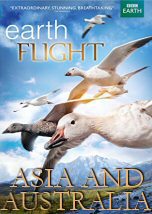

Asia and Australia

   2012    Nature
In this bird's-eye view of two continents, demoiselle cranes negotiate a dangerous Himalayan pass on their way to India while high-flying bar-headed geese take the fast track five miles above. In Rajasthan, vultures watch hunting tigers hoping for a meal and pigeons visit a temple dedicated solely to sacred rats. Pigeons are also our guide to the greatest gatherings of camels on Earth and learn to dodge buzzards around the battlements of Jodhpur Fort. 9,000 cranes overwinter in the most unlikely of spots - a barbed wire compound in the centre of a desert town. In Australia, rainbow lorikeets drop in on Sydney and patrol Australia's Gold Coast. In the outback, white cockatoos swirl in thousands and budgerigars pass Uluru (Ayers Rock) and gather in the biggest flocks ever recorded. In China, swallows and swifts visit the Great Wall and the Forbidden City of Beijing. In Japan, the country's most revered birds - Japanese cranes are fed fish by appreciative locals and are joined in strange, momentary harmony by hungry red foxes, white-tailed eagles and Steller's eagles. As peace descends, Japanese cranes dance beautifully in the snow.
Series: Earthflight

Coldplay Live 2of2

   2012    Art
'Every show is different. When the lights go down that's 30,000 people's lives colliding... for that one moment. Everyone that's there working or watching is there for that moment. It's when you're all kind of in agreement about what you're all doing at that time... so it's a wonderful feeling of togetherness and possibility Then I start getting real adrenaline... and start doing 'Rocky' shadow boxing and all that kind of stuff.
So I get as excited as anyone else. And I still get that excitement when I go and see anyone else's concert. I love that moment. And then it's about trying to hold that energy for an hour and a half... because it can go if you're not careful Whilst it might not be perceived as cool to be really enthused by the fact that people show up to hear your music... we don't really give a f***, we really love that and it's exciting, you know?'
Series: Coldplay Live

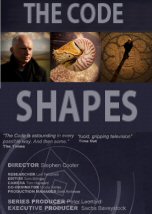
The Code: Shapes

   2011    Science
Marcus du Sautoy uncovers the patterns that explain the shape of the world around us. Starting at the hexagonal columns of Northern Ireland's Giant's Causeway, he discovers the code underpinning the extraordinary order found in nature - from rock formations to honeycomb and from salt crystals to soap bubbles. Marcus also reveals the mysterious code that governs the apparent randomness of mountains, clouds and trees and explores how this not only could be the key to Jackson Pollock's success, but has also helped breathe life into hugely successful movie animations.

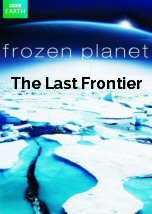
Frozen Planet: The Last Frontier

   2011    Culture
The documentary series reveals the extraordinary riches and wonders of the Polar Regions that have kept people visiting them for thousands of years. Today, their survival relies on a combination of ancient wisdom and cutting-edge science. Most Arctic people live in Siberia, either in cities like Norilsk - the coldest city on earth - or out on the tundra, where tribes like the Dogan survive by herding reindeer, using them to drag their homes behind them. On the coast, traditional people still hunt walrus from open boats - it is dangerous work, but one big walrus will feed a family for weeks. Settlers are drawn to the Arctic by its abundant minerals; the Danish Armed Forces maintain their claim to Greenland's mineral wealth with an epic dog sled patrol, covering 2,000 miles through the winter. Above, the spectacular northern lights can disrupt power supplies so scientists monitor it constantly, firing rockets into it to release a cloud of glowing smoke 100 kilometres high. In contrast, Antarctica is so remote and cold that it was only a century ago that the first people explored the continent. Captain Scott's hut still stands as a memorial to these men. Science is now the only significant human activity allowed; robot submarines are sent deep beneath the ice in search of new life-forms, which may also be found in a labyrinth of ice caves high up on an active volcano. Above, colossal balloons are launched into the purest air on earth to detect cosmic rays. At the South Pole there is a research base designed to withstand the world's most extreme winters. Cut off from the outside world for six months, the base is totally self-sufficient, even boasting a greenhouse.
Series: Frozen Planet

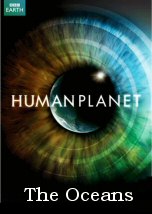
Human Planet: The Oceans

   2011    Culture
Human Planet is a majestic portrait of humankind and the power of nature in extraordinary symbiosis, struggle and strife. For the first time, the camera has turned on ourselves. In doing so, we see how amazing human beings can be and how we adapt to any habitat, anywhere. Human Planet is epic in ambition, extreme in content, intimate in effect. It explores how we have devised ways of surviving in every corner of Earth – from the remotest deserts to the busiest urban metropolis. Each episode focuses on an iconic environment and reveals how we have adapted to the challenges of the landscape and the endless diversity of animals and plants we live with. Discover how our remarkable intelligence, tool use, and close-knit social lives have enabled us to cope with just about anything nature can throw at us". As an air-breathing animal, the human is not built to survive in water. But people have found ways to live an almost aquatic life so they can exploit the sea's riches. From a 'shark-whisperer' in the Pacific to Brazilian fishermen collaborating with dolphins to catch mullet, this journey into the blue reveals astonishing tales of ingenuity and bravery. Daredevil Galician barnacle-collectors defy death on the rocks for a catch worth 200 pounds per kilo. In Indonesia an epic whale-hunt, using traditional hand-made boats and harpoons, brings in a sperm whale. The Bajau 'sea gypsies' of the Sulu Sea spend so much time on water they get 'land sick' when they set foot on the land! We dive 40 metres down to the dangerous world of the Pa-aling fishermen, where dozens of young men, breathing air through a tangled web of pipes attached to a diesel engine, capture thousands of fish in a vast net. We see how surfing has its origins in the ancient beliefs of the ocean-loving Polynesians, and we join a Borneo free-diving spear-fisherman on a breath-taking journey 20 metres down in search of supper.
Series: Human Planet
Five Came Back

Five Came Back

2017  Art
Heavens Gate

Heavens Gate

2020  Culture
Ancient Aliens

Ancient Aliens

2014  Culture
Dirty Money

Dirty Money

2018  Culture
The Sky at Night

The Sky at Night

2020  Science
Tiger

Tiger

2020  History