







Last Watched

"Animal"  Sort by

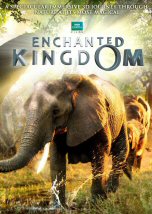
Enchanted Kingdom

   2013    Nature    3D    HD
This absolutely beautiful documentary on our World, its mystical beauty and miracles including slow motion footage of nature, animals, seasons, new life and daily beauties I've never seen nor imagined existed. The photography is sensational. The animal behaviour shown is incredible, beautiful and humorous. Even if you never have been a fan of nature documentaries, this blew you away
Hidden Worlds 3D Caves of the Dead

   2013    History    3D    HD
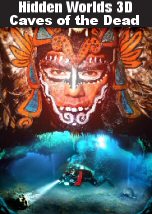
In the days of the Mayas, cenotes – deep, natural pits on the Yucatan peninsula - provided the only means of obtaining drinking water. But in the mythology of this advanced civilisation, these waterholes and caves were also the entrance to Xibalba – the underworld. All deceased were obliged to pass through Xibalba and wait there until they were called into heaven. It was a place in which one made sacrifices to the gods – objects of daily life, as well as bloody, human sacrifices. To this day, the relics of these acts are still in place preserved underwater for more than a thousand years. The entrance to the underworld begins at a dirty waterhole in the middle of the Mexican jungle overgrown and barely recognisable. But immediately after entry, a hall of breath-taking dimensions and beauty is revealed. As if they were sculptures, stalactites and stalagmites lend the underwater cave an almost sacred ambience. By now, one has succumbed to the fascination emanated by the world’s largest underwater cave system. We accompany four professional research divers to Yucatan – a team of specialists, able to squeeze their bodies through crevices and holes, barely larger than their bodies and who master dives that would push even the most experienced divers to their limits. With them, we penetrate worlds only a few people have ever ventured into. We encounter the remains of human victims, prehistoric fireplaces and primeval animal skeletons and undertake a dive, which takes us from the primeval forest to the open sea. We then enter Xibalba – the place of myths and the dead. In the days of the Mayas - a voyage of no return. Today, this is one of the greatest challenges one can face as a diver – the hidden world of the underwater caves of Yucatan – all filmed in 3D.

Galapagos with David Attenborough Origin

   2013    Nature    3D    HD
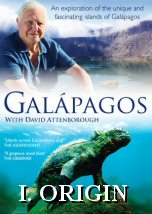
Sir David Attenborough returns to the Galápagos Islands and travels throughout the archipelago to explain their origins and their unique fauna in evolutionary terms. He has captured a new species of pink iguana on film for the first time. In the first episode, the islands of the Galapagos rose explosively from the ocean four million years ago. Although life would not seem viable in such a remote Pacific outpost, the first arrivals landed as the fires still burned. David Attenborough explores the islands for the animals and plants that descend from these pioneers: from the sea birds carrying the seeds that made a tentative foothold on these rocks, to equator-dwelling penguins and a dancing bird with blue feet. This is a story of treacherous journeys, life-forms that forged unlikely companionships, and surviving against all odds. It is the story of an evolutionary melting pot in which anything and everything is possible.
Series: Galapagos with David Attenborough

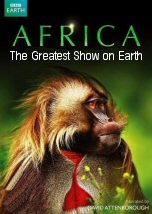
Africa the Greatest Show on Earth

   2013    Nature
Sir David Attenborough takes a breath-taking journey through the vast and diverse continent of Africa as it's never been seen before. From the richness of the Cape of Good Hope to blizzards in the high Atlas Mountains, from the brooding jungles of the Congo to the steaming swamps and misty savannahs, Africa explores the whole continent. An astonishing array of previously unknown places are revealed along with bizarre new creatures and extraordinary behaviours. Using the latest in filming technology including remote HD cameras, BBC One takes an animal's eye view of the action. The journey begins in the Kalahari, Africa's ancient southwest corner, where two extraordinary deserts sit side by side and even the most familiar of its creatures have developed ingenious survival techniques. Black rhinos reveal a lighter side to their character as they gather around a secret waterhole. Springbok celebrate the arrival of rains with a display of 'pronking'. Bull desert giraffes endure ferocious battles for territory in a dry river bed.
Series: Africa with David Attenborough

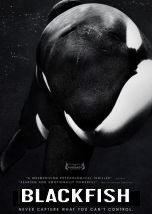
Black Fish

   2013    Nature
The story of Tilikum, a captive killer whale that has taken the lives of several people , including a top killer whale trainer, underscores the consequences of keeping these powerful animals in captivity, the problems within the sea-park industry, the man's relationship to nature, and how little has been learned about these highly intelligent and sentient mammals.
Tilikum was captured in the northern Atlantic Ocean in 1983 and taken to Sealand of the Pacific, a now-shuttered park near Victoria, British Columbia. Former Sealand trainers interviewed in 'Blackfish' say the park’s female killer whales would aggressively gang up on Tilikum, particularly when they were confined in a 20-foot-by- 30-foot pool overnight.

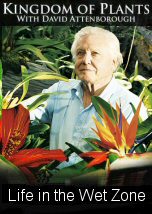
Kingdom of Plants Life in the Wet Zone

   2012    Nature
Written and presented by David Attenborough, who said: 'One of the most wonderful things about filming plants is that you can reveal hidden aspects of their lives, you can capture the moment as one plant strangles another, and as they burst into flower. But whilst time-lapse photography allows you to see things that no human being has ever seen before". David begins his journey inside the magnificent Palm House, a unique global rainforest in London. Here, he explores the extraordinary plants that are so well adapted to wet and humid environments and unravels the intimate relationships between wet zone plants and the animals that depend on them. It was in the wet zones of the world that plants first moved on to land and in the Waterlily House David reveals how flowers first evolved some 140 million years ago. Watching a kaleidoscope of breath-taking time-lapses of these most primitive of flowers swelling and blooming in 3D, he is able to piece together the very first evolutionary steps that plants took to employ a wealth of insects to carry their precious pollen for the first time. David discovers clues to answer a question that even had Charles Darwin stumped: how did flowering plants evolve so fast to go on to colonise the entire planet so successfully?
Series: Kingdom of Plants
How to Grow a Planet

How to Grow a Planet

2012  Science
The Jinx

The Jinx

2015  History
The Germanic Tribes

The Germanic Tribes

2007  History
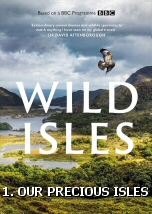
Wild Isles

Wild Isles

2023  Nature
The Last Dance

The Last Dance

2020  Culture