





Last Watched

" The Universe"  Sort by

Stephen Hawking: A Brief History of Mine

   2013    History
This new feature-length biographical film tells the extraordinary and dramatic story of the planet's most famous living scientist, told for the first time in his own words and by those closest to him. Made with unique access to his private life, this is an intimate and moving journey into Stephen Hawking's past and present. Interviewees include Stephen Hawking's sister Mary, his ex-wife Jane, carers and students, as well as colleagues such as Roger Penrose, plus Apollo astronaut Buzz Aldrin, actors Benedict Cumberbatch and Jim Carrey, and Sir Richard Branson This inspirational portrait of an iconic figure relates Hawking's incredible personal journey from boyhood underachiever to scientific genius and multi-million-selling author. And it charts how he overcame being diagnosed with motor neurone disease - and being given just two years to live - to make amazing scientific discoveries and become a symbol of triumph over adversity. Born exactly 300 years after the death of Galileo, Hawking grew up in a family some regarded as eccentric. Always asking questions, he was nicknamed 'Einstein' at school. Hawking blossomed at Oxford, although he only spent an hour a day studying. He noticed that he was becoming clumsy and fell over for no apparent reason. He was diagnosed with motor neurone disease, but nevertheless started a family and embarked on his academic career, finding himself at the heart of a searing scientific debate about the origins of the universe. And as he lost the use of his body, Hawking had to find new ways to think. He went on to write the huge bestseller A Brief History of Time, and the film reveals the high and lows of his resulting fame and fortune.
Swallowed by a Black Hole

   2013    Science
The black hole at the centre of the Milky Way is getting ready to feast. A gas cloud three times the size of our planet has strayed within the gravitational reach of our nearest supermassive black hole. And across the globe, telescopes are being trained on the heart of our Milky Way galaxy, some 27,000 light years from Earth, in the expectation of observing this unique cosmic spectacle. For cosmic detectives across the Earth, it is a unique opportunity. For the first time in the history of science, they hope to observe in action the awesome spectacle of a feeding supermassive black hole.

What is Life

   2013    Science
From the Philippines to the US, Madagascar and Mexico, Professor Brian Cox explores the globe to reveal how a few fundamental laws of science gave birth to the most complex and unique feature of the universe - life. In the first episode, Brian journeys to the volcanic landscapes of South-East Asia, seeking to understand how life first began and how that spark has endured to this day.
Series: Wonders of Life

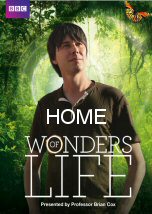
Wonders of Life: Home

   2013    Nature
Brian considers what it is about our world that makes it a home for life and asks what ingredients were necessary to transform this once barren planet into the Earth we know today? He reveals that it was a rare chain of events combined with the power of life itself that have made Earth unique amongst the cosmos.
Series: Wonders of Life

Precision the Measure of All Things

   2013    Science
Professor Marcus du Sautoy explores why we are driven to measure and quantify the world around us and why we have reduced the universe to just a handful of fundamental units of measurement. He tells the story of the metre and the second - how an astonishing journey across revolutionary France gave birth to the metre, and how scientists today are continuing to redefine the measurement of time and length, with extraordinary results.

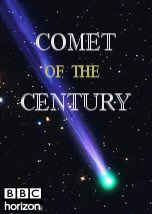
Comet of the Century

   2013    Science
Comet ISON can well be the brightest and most spectacular comet for a generation. It appeared above the eastern horizon from December 2013 as a glorious streak across the sky. ISON has been travelling towards the sun for ten thousand years and will make only one orbit through its corona before disappearing off into the outer solar system.
But as well as providing a great spectacle, ISON's tail of vaporised gas and water, hundreds of millions of kilometres long, will give insights into some of the greatest mysteries of science; it will help explain the origins of the solar system, whether earth's water was delivered on comets and even whether we are alone in the universe.