









Last Watched

"Space"  Sort by

The Vikings Uncovered

   2016    History
Dan Snow uncovers the lost Vikings in America with space archaeologist Dr Sarah Parcak. Sarah uses satellites 383 miles above the earth to spot ruins as small as 30cm buried beneath the surface. As Sarah searches for Viking sites from Britain to America, Dan explores how they voyaged thousands of miles when most ships never left the shoreline. He also tracks their expansion west, first as raiders and then as settlers and traders throughout Britain and beyond to Iceland and Greenland. In North America they excavate what could be the most westerly Viking settlement ever discovered.
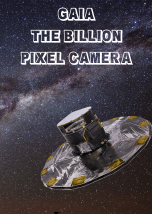
Gaia The Billion Pixel Camera

   2015    Technology
The Milky Way, our galaxy, is a magnificent sight in the night sky, but we know surprisingly little about it for certain. What is its shape? How many stars does it actually contain? What lies at its centre? The Gaia space telescope will answer these questions, being armed with the most advanced camera to leave our planet, and it will allow us to see our galaxy as we've never seen it before. The Sky at Night visits the factory in Chelmsford that made the astonishing sensor at the heart of the mission.
Series: The Sky at Night

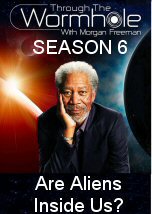
Are Aliens Inside Us

   2015    Culture
Odds are excellent that extraterrestrial life exists. So why haven’t we found aliens out in the galaxy? Are we looking in the wrong places? New research shows we should look closer to home, even inside our bodies. It turns out that a lot of our DNA is from a mysterious, nonhuman source. Theoretically, alien microbial life can make the journey to Earth from distant worlds, and scientists are finding some unearthly microbes in our upper atmosphere. Could it be from outer space? Could we be part alien? It’s even possible alien life is already here as digital life forms, hiding inside our technology.
Series: Through the Wormhole Season 6

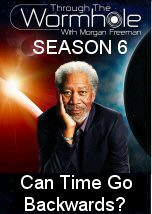
Can Time Go Backwards

   2015    Science
We move around in space, but we are stuck in a prison of time moving ever forwards. Einstein said, 'The distinction between past, present and future is only a stubbornly persistent illusion.' Is our experience of the ticking clock merely a trick of the mind? Could science ever make the clock move backwards? Experiments in quantum physics are showing that the future influences the present: what happens later limits the choices we think we have now. The laws of physics say visiting or talking to ourselves in the past is possible – but changing history once we get there is not.
Series: Through the Wormhole Season 6

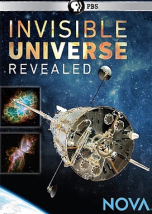
Invisible Universe Revealed 25 years of Hubble

   2015    Technology
25 years ago, NASA launched one of the most ambitious experiments in the history of astronomy: the Hubble Space Telescope. In honor of Hubble's landmark anniversary, know the remarkable story of the telescope that forever changed our understanding of the cosmos and our place in it". But amazingly, when the telescope first sent images back to earth, it seemed that the entire project was a massive failure; a one-millimeter engineering blunder had turned the billion-dollar telescope into an object of ridicule. It fell to five heroic astronauts in a daring mission to return Hubble to the cutting edge of science. Hear from the scientists and engineers on the front line who tell the amazing Hubble story as never before. This single telescope has helped astronomers pinpoint the age of the universe, revealed the birthplace of stars and planets, advanced our understanding of dark energy and cosmic expansion, and uncovered black holes lurking at the heart of galaxies. For more than a generation, Hubble's stunning images have brought the beauty of the heavens to millions, revealing a cosmos richer and more wondrous than we ever imagined. Join us for the story of this magnificent machine and its astonishing discoveries.

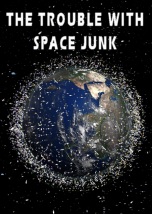
The Trouble with Space Junk

   2015    Technology
In 2014, the International Space Station had to move three times to avoid lethal chunks of space debris and there is an increasing problem of satellites mysteriously breaking down. With first-hand accounts from astronauts and experts, know the scale of the problem of space junk. Our planet is surrounded by hundreds of millions of pieces of junk moving at 17,000 miles per hour. Now the US government is investing a billion dollars to track them, and companies around the world are developing ways to clear up their mess - from robot arms to nets and harpoons. Learn the science behind the hit film Gravity and discovers the reality is far more worrying than the Hollywood fiction.