



Last Watched

"Nim"  Sort by

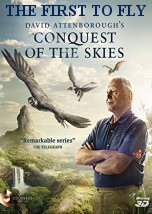
Conquest of the Skies The first to flight

   2015    Nature    3D    HD
David Attenborough embarks on an extraordinary journey to unravel one of nature s most gripping stories the evolution of flying animals. The power of flight is one of the greatest miracles of nature. Over one hundred billion creatures soar through the air today - from nectar-drinking hummingbirds, to armoured airborne beetles; from bats hunting in the black of night, to bizarre winged lizards. The film travels back in time to unravel the astonishing 300-million-year story of how these animals first appeared, and then evolved into the huge variety of aeronauts that fill our skies today. Only now, using the latest scientific analysis, can he reveal the hidden mechanics behind their gravity-defying skills. Ground-breaking 3D cameras, high speed filming and stunning CGI bring the viewer closer than ever to this astounding aerial world.
Series: Conquest of the Skies

Rivals

   2015    Science    3D    HD
David Attenborough continues his search for the origins of flying animals, as he charts the rise of new, larger creatures – extinct reptiles that flew on wings of skin, dinosaurs that sprouted feathers to become the ancestors of birds, and gliding mammals that emerged from a life in the trees to dominate the night as bats. His journey spans the globe – from the rainforests of Borneo to see bizarre gliding animals, to China and its new discoveries of dinosaur fossils. Stunning CGI brings to life creatures that disappeared over 200 million years ago, and new filming techniques bring us closer than ever to the secrets of flight itself.
Series: Conquest of the Skies
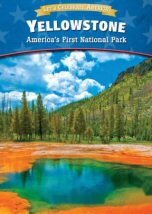
Yellowstone: America first National Park

   2015    Nature
On a vast plateau cradled in the heart of the rocky mountain range lies two million acres of unspoiled wilderness, never farmed and never fenced. Canyons, lakes, rivers and mountains, a refuge for magnificent animals and a spiritual sanctuary for generations of Americans, all resting on the largest super volcano in North America. This is Yellowstone, America's first national park, a raw and powerful beauty that truly comes to life through immersive 3D.

Minimalism: A Documentary About the Important Things

   2015    Culture
How might your life be better with less? The film examines the many flavors of minimalism by taking the audience inside the lives of minimalists from all walks of life -- families, entrepreneurs, architects, artists, journalists, scientists, and even a former Wall Street broker -- all of whom are striving to live a meaningful life with less.
Series: Minimalism

Some of the Things That Molecules Do

   2014    Science    HD
The story begins with Tyson sitting at a campfire, and telling how the wolf changed through artificial selection, and selective breeding into the dog breeds around today. He then enters the Ship of Imagination, and explains natural selection with the process that helped to create the polar bears. Along the way he talks about DNA, genes and mutation. Next he goes to a forest and describes the Tree of life, this leads him to discussing the evolution of the eye. He then discusses extinction, by going to a monument called the Halls of Extinction, dedicated to the broken branches of the tree of life. Explaining the five great Extinction events. He then tells how some life has survived, and then focuses on the tardigrade. From there he talks about what other kinds of life might have been created on other worlds. He then goes to Saturn's moon Titan. From there he speculates about life and how it first began. He then returns to Earth and tells about abiogenesis and how life changed and evolved. The show ends with an animated sequence from the original series of life's evolution from one cell to humans.
Series: Cosmos: A Spacetime Odyssey

When Knowledge Conquered Fear

   2014    Science
The episode begins with Tyson describing how pattern recognition manifested in early civilization as using astronomy and astrology to predict the passing of the seasons, including how the passage of a comet was often taken as an omen. Tyson continues to explain that the origin of comets only became known in the 20th century due to the work of Jan Oort and his hypothesis of the Oort cloud. Tyson then continues to relate the collaboration between Edmond Halley and Isaac Newton in the last part of the 17th century in Cambridge. The collaboration would result in the publication of Philosophiæ Naturalis Principia Mathematica, the first major work to describe the laws of physics in mathematical terms, despite objections and claims of plagiarism from Robert Hooke and financial difficulties of the Royal Society of London. Tyson explains how this work challenged the prevailing notion that God had planned out the heavens, but would end up influencing many factors of modern life, including space flight. Tyson further describes Halley's contributions including determining Earth's distance to the sun, the motion of stars and predicting the orbit of then-unnamed Halley's Comet using Newton's laws. Tyson contrasts these scientific approaches to understanding the galaxy compared to what earlier civilizations had done, and considers this advancement as mankind's first steps into exploring the universe. The episode ends with an animation of the Milky Way and Andromeda galaxies' merging based on the principles of Newton's laws.
Series: Cosmos: A Spacetime Odyssey
Prehistoric Planet

Prehistoric Planet

2022  Science
The Sky at Night

The Sky at Night

2023  Science
Earthflight

Earthflight

2012  Nature
The Story of Maths

The Story of Maths

2008  Science
Trainwreck

Trainwreck

2025  History
Through the Wormhole

Through the Wormhole

2011  Science
Myths and Heroes

Myths and Heroes

2005  History
The Last Czars

The Last Czars

2019  History