In the final three episodes, the investigation takes a decisive turn when the Frankfurt luggage records and bomb-damaged clothing recovered from the wreckage lead Scottish detectives to Malta. A small clothes shop and the memory of a mysterious customer begin to connect the bomb to a wider international network, while cooperation between Scottish police, the FBI and the CIA becomes increasingly strained. As investigators follow the trail toward Libya, a secret CIA source and similarities with another aircraft bombing appear to offer the breakthrough they have been searching for. More than a decade after Pan Am Flight 103 was destroyed, the case finally reaches the courtroom. Following years of political negotiation, two Libyan suspects stand trial under Scottish law at Camp Zeist in the Netherlands. But the prosecution still depends on fragile witness testimony and painstaking forensic evidence assembled across several countries. As key witnesses are challenged and doubts emerge, the series builds toward a tense question that has haunted the victims’ families since 1988: will the investigation finally deliver justice?
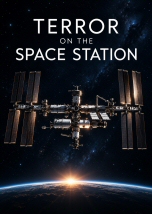
Orbiting Earth at around 27.000 km/h, the International Space Station is one of humanity’s greatest engineering achievements, but also one of the most unforgiving places ever built. Astronauts and mission controllers recount moments when routine work suddenly became a fight for survival: a spacesuit filling with water, toxic ammonia spraying across a spacewalker, dangerous temperature extremes, radiation, fire, contamination and the constant threat of collision. The series reveals how every mission depends on training, improvisation and split-second decisions in an environment where even a small failure can become fatal. Across the two episodes, presented here together in a single uninterrupted video, the danger escalates from the hazardous construction and maintenance of the station to the growing risks of life aboard it. Astronauts face micrometeoroids and space debris travelling at lethal speeds, docking emergencies and system failures, culminating in the extraordinary 2021 incident when the newly arrived Nauka module unexpectedly fired its thrusters and sent the entire ISS rotating out of control. With communications at risk and the structure under immense strain, crews in orbit and controllers on Earth must work together to regain control. The result is a gripping story of courage, science and survival inside a machine that has kept humans continuously living in space for more than two decades.
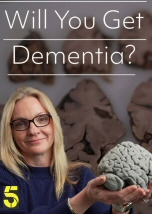
Dementia is one of the fastest-growing health conditions in the UK, yet its earliest warning signs can be difficult to recognise. NHS GP Dr Claire Taylor meets people living with Alzheimer’s and other forms of dementia, explores how the disease changes the brain, and puts herself through innovative tests designed to detect subtle problems with memory, hearing and cognition before more obvious symptoms appear. Along the way, she investigates why some people develop dementia at a younger age, how lifestyle and social isolation may influence risk, and what the latest research says about prevention and treatment. With moving personal stories and access to scientists working at the cutting edge of dementia research, the documentary asks a question that concerns millions: how much can we really know about our own future brain health?
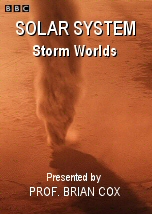
In Episode 3, embark on a breathtaking journey with Professor Brian Cox as he ventures into the storm worlds of our solar system. This chapter uncovers colossal tempests that have raged for centuries, metallic frost blanketing alien mountains, and monsoon rains falling a billion kilometers from Earth. A visually stunning exploration of the most extreme weather in the cosmos — a chapter that will forever change how we view planetary atmospheres.
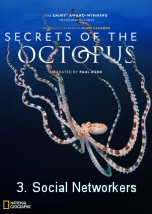
The third episode unveils the enigmatic world of octopuses, long believed solitary creatures, revealing their unexpected social behaviors. Follow Dr. Alex Schnell as she forms a unique bond with Scarlett, a shy female day octopus, challenging the long-held belief that these creatures are ultimate loners. Witness intense interactions, from rival confrontations to cooperative hunting with other species, shedding light on the complex social dynamics of these intelligent beings. The film also takes you deep beneath the ocean to octopus nurseries and an extraordinary octopus oasis where multiple species coexist. Discover how octopuses use their remarkable problem-solving abilities and sophisticated communication to navigate their environments and form selective social interactions. ‘Social Networkers’ redefines our understanding of these ancient, intelligent marine animals and their secret social lives, making it a must-watch for nature enthusiasts and curious minds alike.
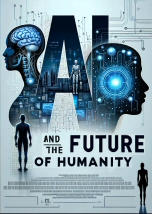
In this captivating film hosted by Anderson Cooper, viewers are presented with an insightful exploration of artificial intelligence (AI), its profound implications, and the ethical dilemmas it poses. The documentary begins with a startling revelation: what appeared to be Anderson Cooper was actually an AI-generated version, raising questions about the authenticity of what we see and hear. The narrative then shifts to broader concerns about AI replacing human roles across industries and its capability to outperform humans in tasks ranging from driving to creating art. Viewers are taken on a journey through various facets of AI, from the streets of San Francisco, where robot taxis hint at a future dominated by AI, to the insights of Yoshua Bengio, a pioneer in deep learning. The film also addresses the darker side of AI, including the potential for misuse and the challenges in distinguishing between reality and AI-generated content. The climax of the documentary presents a critical question: Can AI save humanity, or does it pose a threat to our existence? This thought-provoking exploration of AI's impact on our world is a must-watch for anyone curious about technology and its intersection with human life.







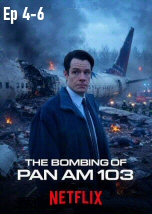
More than a decade after Pan Am Flight 103 was destroyed, the case finally reaches the courtroom. Following years of political negotiation, two Libyan suspects stand trial under Scottish law at Camp Zeist in the Netherlands. But the prosecution still depends on fragile witness testimony and painstaking forensic evidence assembled across several countries. As key witnesses are challenged and doubts emerge, the series builds toward a tense question that has haunted the victims’ families since 1988: will the investigation finally deliver justice?