A third of the population regularly struggle with our sleep, which rose to one in two during the pandemic - the highest it's ever been. However, as more and more people seek help, an explosion in sleep science is enabling the study of sleep in ways not possible before. What's more, recent breakthroughs are uncovering what's happening in our brains and bodies while we're asleep, getting us closer than ever to understanding the importance of sleep for our health. Michael Mosley shows why cutting our sleep short can be linked to a host of illnesses, including serious diseases like Alzheimer's. Revealing the very latest science breakthroughs and packed with personal anecdotes, this programme is a useful guide to anyone looking for tips and insights on how to get the benefits from learning how to sleep well.
Eric C. Conn became a local celebrity and maybe even became heroic in the eyes of the people they were helping. He put up billboards all over the county and his parties were legendary. Conn took monthly vacations to exotic locations as a sex tourist and his 16 marriages were the talk of the town. In the third episode, a new U.S. attorney begins working the case. Things take a dark turn when several of Conn's former clients share their experiences. Wanted by the FBI, chased by the authorities, the story soon spirals into a twisty-turny thriller. That’s no coincidence either, given Conn mentions numerous times that he likens himself to James Bond. James Bond with a dash of Robin Hood.
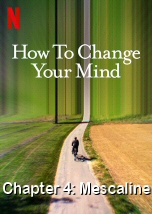
The last episode explores Mescaline, the psychoactive molecule in San Pedro and peyote cacti, a sacred medicine that Native Americans have had to fight for the right to use. At the Indigenous practices there's always an elder, someone who knows the territory very well, who's presiding. There's usually a group, a community is involved, There's always an intention, a purpose to what you're doing, and you're treating it as sacred, in order to achieve altered states of consciousness, which contribute to worship in various ways, or celebration or healing. But maybe all this is not so new to Western culture after all. In the old Greek histories of Eleusis, people who were initiated there got the drink, the kykeon, and then they had the illumination. The precise recipe is a mystery, but we know that the kykeon was a psychoactive brew that was used at the Eleusinian mysteries, a sacred annual ritual of enlightenment practiced by some of the world's greatest minds including Socrates, Plato, and Aristotle. So why did this ritual come to an end more than 1,000 years ago? Was the possibility of illumination or achieving a higher consciousness considered threatening to the powers that be? Have the drug wars been merely an extension of that fear? Psychedelics has a major part in how we can heal as a community, how we can heal as a city, and how we can heal as a country. The current renaissance of psychedelics could not come at a better time as the world confronts a crisis in mental health. But psychedelics have much to offer. The psychedelic experience changes the mind in ways that will help scientists better understand how it works. All these altered states allow us to probe what is the greatest mystery in all of nature. The emergence from mere matter of something as miraculous as consciousness. But an even bigger question is whether psychedelics might help us address the environmental crisis of how we think about our place in nature. One of the greatest gifts of psychedelics is how they reanimate the natural world, allowing us to perceive the subject, the spirit of all species, not just our own. And to feel a deeper sense of interconnectedness with nature.
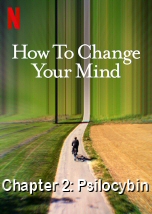
Magic mushrooms, long considered sacred by the Indigenous Mazatec in Mexico, become the subject of scientific studies measuring the intense effects of its Psilocybin and its potential therapeutic use. In the second episode, we are introduced to Ben, who’s battled with crippling Obsessive-Compulsive Disorder (OCD) his entire life. When he had his firstborn, Ben’s life became full of panic attacks regarding his son’s safety, and he knew something had to change. Ben signed up for a psilocybin-assisted therapy clinical trial which was testing whether the psychedelic could help people with severe OCD. In the session under the influence of psilocybin, Ben felt decomposed and eventually grew into a tree. While living as a tree, he saw his human self, playing with his child. Though this sounds scary, from Ben’s perspective, it was beautiful. He was one with the universe, seeing himself in the ultimate third-person perspective. Finally, he saw how it could be different if he didn’t let his OCD control him. And several months out, all the symptoms disappeared. Ben’s story is one of many told in this series, which gives hope that help is right around the corner for the millions who suffer —often in silence— with debilitating mental disorders. But Michael Pollan’s work is showcasing the success stories. Often, even in the most successful trials, psychedelic-assisted therapy only helps up to a third of people enter remission. More frequently, patients are helped —sometimes substantially— but they still suffer with their illnesses and some people aren’t helped at all.
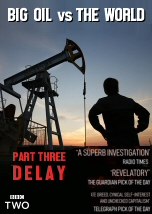
The last chapter explains how the 2010s became another lost decade in the fight against climate change – as the move to natural gas delayed a transition to more renewable sources of energy. Engineer Tony Ingraffea, in the 1980s, helped develop a new technique for extracting gas and oil from shale rock, which ultimately became known as 'Fracking'. It was to unleash vast new reserves of fossil fuels and was promoted as a cleaner energy source. But Ingraffea explains how he later came to regret his work when he realized that gas could be even worse for climate change than coal and oil. Dar-Lon Chang, a former ExxonMobil engineer, speaks for the first time on camera alleging that as the company increased its natural gas operations, it was not sufficiently monitoring methane leaks that were contributing to climate change. Now, after a year of unprecedented wildfires, drought and other climate-related disasters, multiple lawsuits are being brought in US courts in efforts to hold Big Oil legally accountable for the climate crisis.
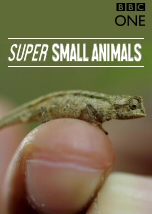
From a primate that’s no bigger than a mouse, to a chameleon that can fit on your fingertip, the natural world is full of fantastically small animals. Biologist Patrick Aryee explores the fascinating secrets behind these miniature marvels and shows that they’re not the underdogs you might think they are. Super Small Animals follows him as he meets the leading experts on these pint sized superstars, and finds out what makes them some of the most successful on the planet. First up, he reveals the huge benefits that being small can bring. There’s the little lemur whose diminutive frame helps it to exploit a unique gap in the eco-system, the tiny hummingbird that uses its size to out-maneuver the competition, and the world’s smallest seahorse that never has to leave home. He also explores why small animals are proportionally the strongest in the world, and introduces a peanut-sized beetle that can pull over a thousand times its own weight. Next he explores the challenges that animals face when they shrink in size, and the ingenious ways they overcome them. We find out how the smallest armadillo in the world manages to control its temperature in the searing desert sun, and the how the world’s smallest fish can survive in nothing more than a puddle, because it never really grows up. Patrick meets a secretive hippo that lives in the dense jungle, and looks like it’s been shrunk in the wash, and some of the world’s smallest snakes that give birth to enormous babies. He also meets a scientist that studies how really tiny spiders have a surprising trick that enables them to travel an incredible 40 miles per day, using almost no energy. Then there are the animals that refuse to be pigeon holed as small, and manage to punch way above their weight. He puts some astonishing invertebrates to the test, to see how they work together to become much bigger than the sum of their parts and meets a pint-sized predator that takes on some of the largest and most dangerous creatures on the planet, getting hands on to discover how its build helps it to be brave. Finally he uncovers the incredible lengths that deep sea anglerfish go to in order to be big and small at the same time, and has an endearing encounter with a tiny carnivore that manages to be small in just one direction. Whether their size helps them to hunt, hide or survive, all these remarkable animals prove that good things really do come in small packages.




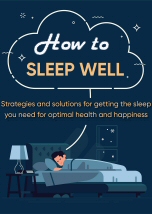




Revealing the very latest science breakthroughs and packed with personal anecdotes, this programme is a useful guide to anyone looking for tips and insights on how to get the benefits from learning how to sleep well.