The nervous system is fundamentally electric. When we move our arm, it moves because a electric signal has been sent to the muscle that controls it. Now, because the brain is electric, we could also use electricity to record what the brain is doing or bypass it entirely, and control a body. That means that we could restore movement to people who are paralyzed, feel through an artificial hand as if it was our own, and even read people's minds. Michael Stevens explores how electricity can be used to move cockroaches, control other peoples' limbs and even read peoples' thoughts.
The Internet promises us escape from reality. We can go places we never thought possible and express ourselves as never before. But as we sit in our homes surrounded by screens, are we free... and safe? In this episode meet a woman pulled into an online cult from the safety of her bedroom; a former pilot who suffers from Electromagnetic Hypersensitivity and can only find relief in the absence of electricity and wifi; plus, a quadriplegic who uses cutting-edge adaptive robotics and virtual reality to transcend his body's limitations.
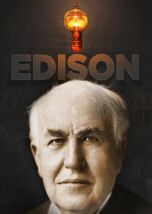
By the time he died in 1931, Thomas Alva Edison was one of the most famous men in the world. The holder of more patents than any other inventor in history, Edison had achieved glory as the genius behind such revolutionary inventions as sound recording, motion pictures, and electric light. Edison's curiosity led him to its cutting edge. With just three months of formal schooling, he took on one seemingly impossible technical challenge after another, and through intuition, persistence, and a unique team approach to innovation, invariably solved it." Driven and intensely competitive, Edison was often neglectful in his private life and could be ruthless in business. Challenged by competition in the industry he'd founded, Edison launched an ugly propaganda campaign against his rivals, and used his credibility as an electrical expert to help ensure that high-voltage electrocution became a form of capital punishment. Edison explores the complex alchemy that accounts for the enduring celebrity of America's most famous inventor, offering new perspectives on the man and his milieu, and illuminating not only the true nature of invention, but its role in turn-of-the-century America's rush into the future.
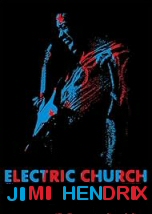
In July 1970, Jimi Hendrix stepped onto the stage of the Atlanta Pop Festival before an audience of more than 300,000 people—the largest American crowd of his career. This film presents rare, restored footage of that historic Independence Day performance, where he delivered unforgettable renditions of classics like Hey Joe, Voodoo Child (Slight Return), and The Star-Spangled Banner. Alongside the music, interviews with Hendrix, his bandmates Mitch Mitchell and Billy Cox, and contemporaries such as Paul McCartney provide insight into his artistry and state of mind at the time. Framed against the cultural backdrop of Vietnam, civil rights struggles, and the countercultural movement, this documentary captures not only a milestone concert, but also the moment Hendrix became both a symbol and a voice for a restless generation.
This episode provides an overview of the nature of electromagnetism, as discovered through the work of Michael Faraday. Tyson explains how the idea of another force of nature, similar to gravitational forces, had been postulated by Isaac Newton before. Tyson continues on Faraday, coming from poor beginnings, would end up becoming interested in studying electricity after reading books and seeing lectures by Humphry Davy at the Royal Institution. Davy would hire Faraday after seeing extensive notes he had taken to act as his secretary and lab assistant. After Davy and chemist William Hyde Wollaston unsuccessfully tried to build on Hans Christian Ørsted's discovery of the electromagnetic phenomena to harness the ability to create motion from electricity, Faraday was able to create his own device to create the first electric motor by applying electricity aligned along a magnet. Davy, bitter over Faraday's breakthrough, put Faraday on the task of improving the quality of high-quality optical glass, preventing Faraday from continuing his research. Faraday, undeterred, continued to work in the Royal Institution, and created the Christmas Lectures designed to teach science to children. Following Davy's death, Faraday returned to full time efforts studying electromagnetism, creating the first electrical generator by inserting a magnet in a coil of wires.
Tyson continues to note that despite losing some of his mental capacity, Faraday concluded that electricity and magnetism were connected by unseen fields, and postulated that light may also be tied to these forces. Using a sample of the optical glass that Davy had him make, Faraday discovered that an applied magnetic field could affect the polarization of light passing through the glass sample (a dielectric material), leading to what is called the Faraday effect and connecting these three forces. Faraday postulated that these fields existed across the planet, which would later by called Earth's magnetic field generated by the rotating molten iron inner core, as well as the phenomena that caused the planets to rotate around the sun. Faraday's work was initially rejected by the scientific community due to his lack of mathematical support, but James Clerk Maxwell would later come to rework Faraday's theories into the Maxwell's equations that validated Faraday's theories. Their combined efforts created the basis of science that drives the principles of modern communications today.
Beginning in 1997 with a few thousand revelers in Los Angeles, the Electric Daisy Carnival has become the largest dance music event in North America. Known for its over the top displays of pyrotechnics, world-class artists, costumed theatrical performers, interactive art installations, full scale carnival rides and state-of-the-art lighting and sound production, 2013's festival attracted 345,000 attendees from June 21-23". The film will follow festivalgoers as they prepare for their journey to EDC Las Vegas and chronicle their unique experience throughout the three-day festival. Behind the scenes footage and interviews with key Insomniac team members will give new audiences the chance to discover what has made the Electric Daisy Carnival a global phenomenon.






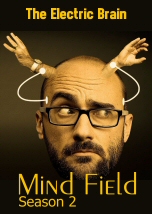


Michael Stevens explores how electricity can be used to move cockroaches, control other peoples' limbs and even read peoples' thoughts.