The documentary delves into the heart and soul of one of the greatest songwriters of all time. This intimate documentary offers an unprecedented look at Paul Simon's creative journey, from Sounds of Silence to Graceland, revealing the stories behind his most iconic songs and the relentless pursuit of artistic excellence that has defined his career. With rare archival footage, candid interviews, and an exclusive behind-the-scenes look at the making of his latest album, Seven Psalms, viewers are invited into Simon's world of poetry, rhythm, and melody. As Simon reflects on his legacy and navigates the challenges of aging and creativity, the film explores the profound influence of his music on generations of fans and fellow artists. “In Restless Dreams” is not just a celebration of his genius but a poignant exploration of the power of music to inspire, heal, and connect us all. This is a must-watch for anyone who has ever been moved by his timeless melodies or curious about the mind behind the music.
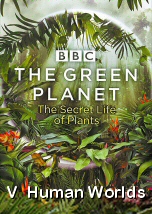
A guide to plants that thrive in human-dominated environments, including trees that grow across canyons in India, which have developed into living bridges. The programme examines the origins of growing crops and the ongoing influence on the world of wild plants, as well as efforts to preserve species, from snipers firing pesticide bullets from helicopters to fend off invasive plants to plants being painstakingly pollinated using a paintbrush.
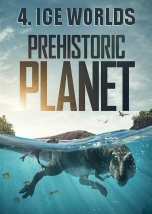
In the fourth episode, Dromaeosaurs stalk a hadrosaur herd as they cross a freezing river. Male Ornithomimus raid rival nests to bolster their own. Olorotitan raise their offspring on fertile volcanic fields but contend with biting mosquitoes. Troodontids hunt mammals flushed out by a forest fire. A juvenile Antarctopelta scours the forest for a new winter den. Within the snow-covered forest, a tense standoff develops between ancient rivals, Pachyrhinosaurus and Nanuqsaurus.
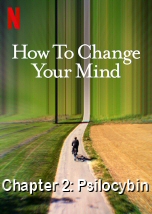
Magic mushrooms, long considered sacred by the Indigenous Mazatec in Mexico, become the subject of scientific studies measuring the intense effects of its Psilocybin and its potential therapeutic use. In the second episode, we are introduced to Ben, who’s battled with crippling Obsessive-Compulsive Disorder (OCD) his entire life. When he had his firstborn, Ben’s life became full of panic attacks regarding his son’s safety, and he knew something had to change. Ben signed up for a psilocybin-assisted therapy clinical trial which was testing whether the psychedelic could help people with severe OCD. In the session under the influence of psilocybin, Ben felt decomposed and eventually grew into a tree. While living as a tree, he saw his human self, playing with his child. Though this sounds scary, from Ben’s perspective, it was beautiful. He was one with the universe, seeing himself in the ultimate third-person perspective. Finally, he saw how it could be different if he didn’t let his OCD control him. And several months out, all the symptoms disappeared. Ben’s story is one of many told in this series, which gives hope that help is right around the corner for the millions who suffer —often in silence— with debilitating mental disorders. But Michael Pollan’s work is showcasing the success stories. Often, even in the most successful trials, psychedelic-assisted therapy only helps up to a third of people enter remission. More frequently, patients are helped —sometimes substantially— but they still suffer with their illnesses and some people aren’t helped at all.
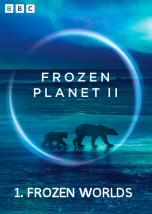
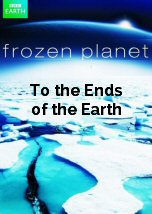
Journeying from pole to pole, The series 'Frozen Planet II' reveals surprising worlds that exist across the planet and the remarkable animals that make them their home. In a fragile world of beauty and hostility, nature finds a way to survive and thrive. David Attenborough explores a planet on the brink of major change. In the first episode, we begin our journey in the far south, in the most hostile place on earth, the frozen continent of Antarctica. After being raised on the ice in winter, emperor penguin chicks find themselves abandoned by their parents in spring. To survive, they must find their own way across the treacherous sea ice to the rich waters of the Southern Ocean. The waters surrounding Antarctica may be the richest of all, but they are also home to an exceptionally sophisticated predator, the killer whale. To reach their favored prey, Weddell seals, a family of killer whales have learnt to generate their own waves, washing the seals off their ice floes. It’s a technique that has been passed down over generations and is coordinated by the family matriarch, who can be over 100 years old. Leaving Antarctica and travelling north, we discover frozen habitats that are created by altitude. The greatest of these is the Himalaya, the tallest mountain range on earth, which contains so much ice and snow it is known as the third pole. In the shadow of the Himalaya lies a vast frozen grassy plain that is home to the fluffiest cat in the world, Pallas’s cat. It may have extremely dense fur, but if it’s to survive the Mongolian winter, it needs to catch lots of gerbils and voles. Easier said than done when you only have short legs and paws that are sensitive to the cold. North of the Great Steppe lies the boreal forest, which encircles the continents of North America, Europe and Asia, and remains frozen for six months of the year. Prowling these forests in the far east of Russia is the Siberian tiger, the largest cat in the world. In winter, it is on the lookout for black bears hibernating in caves, a high-risk strategy that only a cat of this size would attempt. Above the boreal forest, we cross into the Arctic Circle, where conditions become so extreme that trees can no longer grow. This is the tundra. Living here are relics of the last ice age, musk ox. In spring, their calves face a far greater danger than the cold, grizzly bears. Encounters can be brutal, but if just a few calves survive the gauntlet, the herd’s future is secure. To the north of the tundra is the Arctic Ocean, the only ocean that can completely freeze over. Living here is one of the most peculiar animals on earth, the hooded seal. Males have extraordinary inflatable noses, producing a bright red balloon out of their left nostrils. One male hopes this will make him irresistible. All of the frozen habitats share one thing in common: the threat posed by today’s climate change. Travelling to the island of Greenland, home to the largest body of ice in the northern hemisphere, we witness how global warming is melting its ice cap at faster rates than ever before, with profound consequences for global sea levels. Lastly, we visit the Arctic’s most iconic resident, the polar bear, as a mother bear struggles to provide for her cubs in a world of shrinking sea ice.
David Bowie was one of the most prolific and influential artists of our time. Working most notably in music and film, Bowie also explored various other art forms: dance, painting, sculpture, video collage, screenwriting, acting and live theatre. Bowie’s creative output and personal archives span over five million assets. Moonage Daydream is the first film sanctioned by the Bowie estate. In 2017, the estate presented filmmaker Brett Morgen unfiltered access to Bowie’s archives, including all master recordings, to create an artful and life-affirming journey through David Bowie’s creative life. Over five years, Morgen constructed a genre-defying cinematic experience that grapples with spirituality, transience, isolation, creativity, and time to reveal the celebrated icon in his own voice.














As Simon reflects on his legacy and navigates the challenges of aging and creativity, the film explores the profound influence of his music on generations of fans and fellow artists. “In Restless Dreams” is not just a celebration of his genius but a poignant exploration of the power of music to inspire, heal, and connect us all. This is a must-watch for anyone who has ever been moved by his timeless melodies or curious about the mind behind the music.