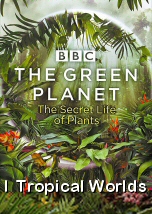
Dive with David Attenborough into a world where a single life can last a thousand years. See things no eye has ever seen, and discover the dramatic, beautiful plant life of Earth. In the first episode, Sir David Attenborough shows how more kinds of plants are crammed together in the tropical rainforests than anywhere else on Earth. The result is astonishing beauty and intense competition - a plant battleground. New filming techniques allow us to enter the plants’ world and see it from their perspective and on their timescale. From fast-growing trees to flowers that mimic dead animals, this is a journey into a magical world that operates on a different timescale to our own.
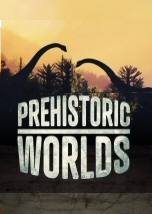
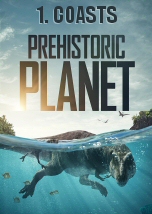
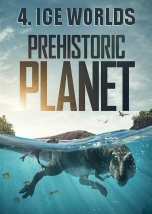
In the fourth episode, Dromaeosaurs stalk a hadrosaur herd as they cross a freezing river. Male Ornithomimus raid rival nests to bolster their own. Olorotitan raise their offspring on fertile volcanic fields but contend with biting mosquitoes. Troodontids hunt mammals flushed out by a forest fire. A juvenile Antarctopelta scours the forest for a new winter den. Within the snow-covered forest, a tense standoff develops between ancient rivals, Pachyrhinosaurus and Nanuqsaurus.
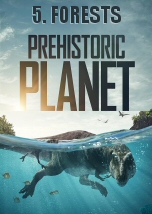
In the last episode, Austroposeidon level trees in search of fresh foliage. A herd of Triceratops journey through a cave to find an underground clay lick. A male Carnotaurus sets the stage for an extravagant display. A female Qianzhousaurus uses an autumn storm to her advantage while hunting Corythoraptor. A family of Edmontosaurus evade a forest fire, while an Atrociraptor and Ankylosaur reap its rewards. Juvenile Therizinosaurus attempt to climb up to a bee nest. Hatzegopteryx hunts Zalmoxes, and patrols the dense undergrowth and seaspray-battered coastline.
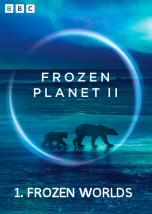
Journeying from pole to pole, The series 'Frozen Planet II' reveals surprising worlds that exist across the planet and the remarkable animals that make them their home. In a fragile world of beauty and hostility, nature finds a way to survive and thrive. David Attenborough explores a planet on the brink of major change. In the first episode, we begin our journey in the far south, in the most hostile place on earth, the frozen continent of Antarctica. After being raised on the ice in winter, emperor penguin chicks find themselves abandoned by their parents in spring. To survive, they must find their own way across the treacherous sea ice to the rich waters of the Southern Ocean. The waters surrounding Antarctica may be the richest of all, but they are also home to an exceptionally sophisticated predator, the killer whale. To reach their favored prey, Weddell seals, a family of killer whales have learnt to generate their own waves, washing the seals off their ice floes. It’s a technique that has been passed down over generations and is coordinated by the family matriarch, who can be over 100 years old. Leaving Antarctica and travelling north, we discover frozen habitats that are created by altitude. The greatest of these is the Himalaya, the tallest mountain range on earth, which contains so much ice and snow it is known as the third pole. In the shadow of the Himalaya lies a vast frozen grassy plain that is home to the fluffiest cat in the world, Pallas’s cat. It may have extremely dense fur, but if it’s to survive the Mongolian winter, it needs to catch lots of gerbils and voles. Easier said than done when you only have short legs and paws that are sensitive to the cold. North of the Great Steppe lies the boreal forest, which encircles the continents of North America, Europe and Asia, and remains frozen for six months of the year. Prowling these forests in the far east of Russia is the Siberian tiger, the largest cat in the world. In winter, it is on the lookout for black bears hibernating in caves, a high-risk strategy that only a cat of this size would attempt. Above the boreal forest, we cross into the Arctic Circle, where conditions become so extreme that trees can no longer grow. This is the tundra. Living here are relics of the last ice age, musk ox. In spring, their calves face a far greater danger than the cold, grizzly bears. Encounters can be brutal, but if just a few calves survive the gauntlet, the herd’s future is secure. To the north of the tundra is the Arctic Ocean, the only ocean that can completely freeze over. Living here is one of the most peculiar animals on earth, the hooded seal. Males have extraordinary inflatable noses, producing a bright red balloon out of their left nostrils. One male hopes this will make him irresistible. All of the frozen habitats share one thing in common: the threat posed by today’s climate change. Travelling to the island of Greenland, home to the largest body of ice in the northern hemisphere, we witness how global warming is melting its ice cap at faster rates than ever before, with profound consequences for global sea levels. Lastly, we visit the Arctic’s most iconic resident, the polar bear, as a mother bear struggles to provide for her cubs in a world of shrinking sea ice.
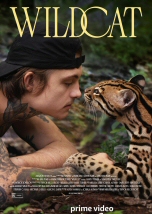
After returning from Afghanistan with severe depression and PTSD, Harry Turner went to the Peruvian Amazon to end his life. There, he met conservationist and scientist Samantha Zwicker, and through their work together raising orphaned wildlife he is finding a reason to live. 'Wildcat' takes viewers to the remote Las Piedras River to witness how two orphaned ocelots and the solitude of the rainforest help a young man and young woman with traumatic pasts. This feature-length documentary is an intimate, character-driven story about the impact of wild places on us - and our impact on them.
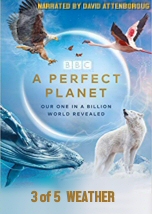
Weather controls the distribution of freshwater on Earth. David Attenborough narrates how this uneven distribution has given rise to an incredible diversity of species and habits, from the driest desert to the lushest tropical rainforest. Featuring a colony of ants banding together into a raft every time its home in the Amazon floods, a rain frog that manages to eke out an existence in one of the world's driest habitats on Earth, and the last wild camels that survive the Gobi Desert's bitter winters by eating snow that blows in from Siberia.











New filming techniques allow us to enter the plants’ world and see it from their perspective and on their timescale. From fast-growing trees to flowers that mimic dead animals, this is a journey into a magical world that operates on a different timescale to our own.