




Last Watched

"Satellite"  Sort by

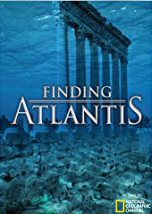
Finding Atlantis

   2011    History
Could the fabled lost city of Atlantis have been located? Professor Freund explained how he led a pursuit to find the lost civilisation, believed by many to be an ancient Greek myth, by using deep-ground radar, digital mapping and satellite imagery. He contends that Atlantis, described by Plato in 360BC, in Spain's Donaña National Park, north of Cadiz, and was wiped out by a giant tsunami. Plato wrote it had been destroyed by a natural disaster in 9,000BC. Experts are now surveying marshlands in Spain to look for proof of the ancient city.
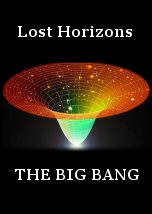
Lost Horizons: The Big Bang

   2008    Science
Professor Jim Al Khalili from the University of Surrey delves into over 50 years of the BBC science archive to tell the story behind the emergence of one of the greatest theories of modern science, the Big Bang. The remarkable idea that our universe simply began from nothing has not always been accepted with the conviction it is today and, from fiercely disputed leftfield beginnings, took the best part of the 20th century to emerge as the triumphant explanation of how the universe began. Using curious horn-shaped antennas, U-2 spy planes, satellites and particle accelerators, scientists have slowly pieced together the cosmological jigsaw, and this documentary charts the overwhelming evidence for a universe created by a Big Bang.

Race For Satellites

   2005    Technology
During 1953-1958, as the Cold War intensifies, Korolev is asked to build a rocket capable of carrying a five-ton warhead to America - he designs and constructs the R-7 Semyorka, and is later allowed to use it to launch the first satellite, Sputnik 1. Meanwhile, von Braun struggles to persuade the US government to allow him to launch his own satellite - after Sputnik's launch and the failure of the US Navy to launch a Vanguard satellite, he is finally allowed to launch the first American satellite, Explorer 1.
Series: Space Race

The Persistence of Memory

   1980    Science
The idea of intelligence is explored in the concepts of computers (using bits as their basic units of information), whales (in their songs and their disruptions by human activities), DNA, the human brain (the evolution of the brain stem, frontal lobes, neurons, cerebral hemispheres, and corpus callosum under the Triune Brain Model), and man-made structures for collective intelligence (cities, libraries, books, computers, and satellites). The episode ends with speculation on alien intelligence and the information conveyed on the Voyager Golden Record.
Series: Cosmos