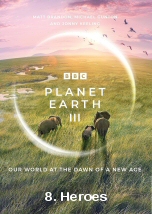
The last episode of the series showcases Africa, home to the greatest wildlife gatherings on earth and vast ecosystems. It delves into the lives of intelligent chimpanzees using tools in Ivory Coast, and the diverse cichlid fish in the Great Rift Valley's lakes. The film also explores the survival strategies of animals in the Namib Desert, including the brown hyena and the aardvark. But even in this land of plenty, wildlife faces huge challenges. Crucially, it is addressed the impact of climate change and human activities, highlighting the plight of endangered species like the northern white rhinoceros and the decreasing populations of elephants and cheetahs due to poaching. However, it also offers hope, illustrating successful conservation efforts like the recovery of the mountain gorilla population in Virunga National Park. The documentary is a vivid reminder of the richness of African wildlife and the urgent need for conservation efforts to preserve our planet's biodiversity.
Brian Jones, Jimi Hendrix, Janis Joplin and Jim Morrison all died at the age of 27 between 1969 and 1971. At the time, the coincidence gave rise to some comment, but it was not until the death of Kurt Cobain, about two and a half decades later, that the idea of a '27 Club' began to catch on in public perception, reignited with the death of Amy Winehouse in 2011. Through interviews with people who knew them, such as music stars, critics, medical experts and unseen footage, the lives, music, and artistry of those who died at 27 are investigated with a bid to find answers.
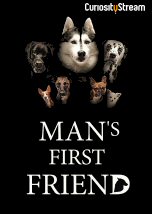
We call them 'man’s best friend', but their story is almost as old as man himself. Our very first friend in the world, they have walked by our side for over 20,000 years, helping us to hunt for food and offering us companionship and protection. Man’s First Friend is an epic new primetime documentary event that combines natural history, science and anthropology to explore the enduring relationship between humankind and dogs, how the two species have co-evolved together, where did they come from to take such a prominent position in our lives, and how did we learn to harness their unique talents. The film takes viewers on an extraordinary journey through some of the most remote locations in the world to answers these questions and more. It highlights what dogs are capable of: from the Pariah dog in India who protects her owner’s banana plantations from daily attacks by Black-headed Monkeys; to Kenyan Bloodhounds trained to track ivory poachers. Dogs comfort us, relieving loneliness and helping us cope with old age.
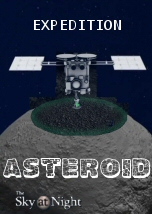
A look at two missions attempting one of the most difficult feats of space exploration - to collect a rock from another world. The film checks in on the US and Japanese attempts to bring a piece of an asteroid back to Earth. The missions have taken decades of planning, but the results will be worth it. We find out how studying these space rocks can teach us about the origins of our solar system and may one day help save Earth from a catastrophic collision.
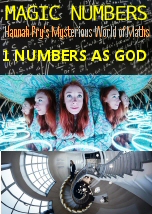
Mathematician Dr Hannah Fry explores the mystery of maths. It underpins so much of our modern world that it's hard to imagine life without its technological advances, but where exactly does maths come from? Is it invented like a language or is it something discovered and part of the fabric of the universe? It's a question that some of the most eminent mathematical minds have been wrestling with. To investigate this question, Hannah goes head first down the fastest zip wire in the world to learn more about Newton's law of gravity, she paraglides to understand where the theory of maths and its practice application collide, and she travels to infinity and beyond to discover that some infinities are bigger than others. In this episode, Hannah goes back to the time of the ancient Greeks to find out why they were so fascinated by the connection between beautiful music and maths. The patterns our ancestors found in music are all around us, from the way a sunflower stores its seeds to the number of petals in a flower. Even the shapes of some of the smallest structures in nature, such as viruses, seem to follow the rules of maths. All strong evidence for maths being discovered. But there are those who claim maths is all in our heads and something we invented. To find out if this is true, Hannah has her brain scanned. It turns out there is a place in all our brains where we do maths, but that doesn't prove its invented. Experiments with infants, who have never had a maths lesson in their lives, suggests we all come hardwired to do maths. Far from being a creation of the human mind, this is evidence for maths being something we discover. Then along comes the invention of zero to help make counting more convenient and the creation of imaginary numbers, and the balance is tilted in the direction of maths being something we invented. The question of whether maths is invented or discovered just got a whole lot more difficult to answer
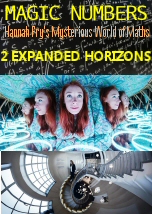
Dr Hannah Fry travels down the fastest zip wire in the world to learn more about Newton's ideas on gravity. His discoveries revealed the movement of the planets was regular and predictable. James Clerk Maxwell unified the ideas of electricity and magnetism, and explained what light was. As if that wasn't enough, he also predicted the existence of radio waves. His tools of the trade were nothing more than pure mathematics. All strong evidence for maths being discovered. But in the 19th century, maths is turned on its head when new types of geometry are invented. No longer is the kind of geometry we learned in school the final say on the subject. If maths is more like a game, albeit a complicated one, where we can change the rules, surely this points to maths being something we invent - a product of the human mind. To try and answer this question, Hannah travels to Halle in Germany on the trail of perhaps one of the greatest mathematicians of the 20th century, Georg Cantor. He showed that infinity, far from being infinitely big, actually comes in different sizes, some bigger than others. This increasingly weird world is feeling more and more like something we've invented. But if that's the case, why is maths so uncannily good at predicting the world around us? Invented or discovered, this question just got a lot harder to answer.



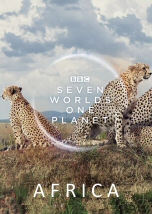





But even in this land of plenty, wildlife faces huge challenges. Crucially, it is addressed the impact of climate change and human activities, highlighting the plight of endangered species like the northern white rhinoceros and the decreasing populations of elephants and cheetahs due to poaching. However, it also offers hope, illustrating successful conservation efforts like the recovery of the mountain gorilla population in Virunga National Park.
The documentary is a vivid reminder of the richness of African wildlife and the urgent need for conservation efforts to preserve our planet's biodiversity.