


Last Watched

"Bee"  Sort by

The World Set Free

   2014    Nature
This episode explores the nature of the greenhouse effect (discovered by Joseph Fourier and Svante Arrhenius), and the evidence demonstrating the existence of global warming from humanity's influence. Tyson begins by describing the long-term history of the planet Venus; based on readings from the Venera series of probes to the planet, the planet had once had an ocean and an atmosphere, but due to the release of carbon dioxide from volcanic eruptions, the runaway greenhouse effect on Venus caused the surface temperatures to increase and boiled away the oceans. Tyson then notes the delicate nature of the amount of carbon dioxide in the atmosphere can influence Earth's climate due to the greenhouse effect, and that levels of carbon dioxide have been increasing since the start of the 20th century. Evidence has shown this to be from mankind's consumption of oil, coal, and gas instead of from volcanic eruptions due to the isotopic signature of the carbon dioxide. The increase in carbon dioxide has led to an increase in temperatures, in turn leading to positive feedback loops of the melting polar ice caps and dethawing of the permafrost to increase carbon dioxide levels. Tyson then notes that humans have discovered means of harvesting solar power, such as Augustin Mouchot's solar-driven motor in the 19th century, and Frank Shuman's solar-based steam generator in the 1910's. Tyson points out that in both cases, the economics and ease of using cheap coal and oil caused these inventions to be overlooked at the time. Today, solar and wind-power systems would be able to collect enough solar energy from the sun easily. Tyson then compares the motivation for switching to these cleaner forms of energy to the efforts of the Space race and emphasizes that it is not too late for humanity to correct its course.
Series: Cosmos: A Spacetime Odyssey
Why are We Here

   2014    Science
In episode two, Professor Brian Cox is off to India, where he assesses arguably the first evidence of rational thought in literature, the poetry of the Vedic monks. They pondered mankind's origins, realising there must have been a day with no yesterday - a day of creation - prompting the age-old question of where did the universe come from? Brian marvels that the universe seems to follow a set of rules, the laws of physics, allowing space to be considered on the grandest scale, travelling to the most distant, farthest reaches of the cosmos just by using our minds. Brian also visits Japan, and offers viewers the idea that man lives in just one of an infinite number of universes that are being made all the time.
Series: Human Universe

Are...We Alone

   2014    Science
Is mankind alone, or are there aliens out there, either waiting to be discovered, or on their way to find Earth? Professor Brian Cox spends this episode asking such questions, and what he discovers may raise a few eyebrows. He begins by exploring the human race's efforts to find neighbours in outer space, including the launch of two golden discs containing a greeting from Earth in the 1970s; they are still travelling and are now the most distant man-made objects from the planet. Brian also meets members of the Search for Extra-Terrestrial Intelligence, who have been monitoring radio signals for 50 years without success, before discussing the ingredients needed to make an intelligent civilisation with astrophysicist Dr Frank Drake.
Series: Human Universe

Erasing Dad

   2014    Culture
It tells the stories of six fathers separated from their children after a conflicting divorce and the difficulties to maintain the link with their children. Contains critical material regarding the functioning of the courts and alleges unequal treatment of the couples in conflict. The film had its premiere scheduled for 2014 but was suspended. The Argentinean judge Guillermo Blanch ordered producers to refrain from any transmission and / or retransmission of images or videos without the consent referrals of several people interviewed." The famous journalist and psychologist Liliana Hendel says in the documentary 'is difficult for a woman deviseth that she was beated, or their children, or that he does not give money or any form of violence'... 'the opposite of what usually happens, that any citizen is innocent until it is proven otherwise, I believe that in situations of domestic violence, cause the scale of the problem the burden of proof must be reversed. That is, if I say that he is guilty, he is guilty until proven innocent'. The Argentinean deputy Gladys González argue the documentary supports Parental Alienation Syndrome, a entity that does not exist and it has not been recognized by any health institution in the world, and with the deputy Cornelia Schmidt-Liermann signed a statement rejecting the SAP in the Chamber of Deputies

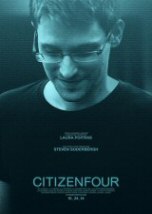
Citizenfour

   2014    History
Citizenfour received the Academy Award for Best Documentary Feature at the 2015 Oscars. The film was directed by Laura Poitras concerning Edward Snowden and the NSA spying scandal." In January 2013, Laura Poitras received an encrypted e-mail from a stranger who called himself Citizen Four. In it, he offered her inside information about illegal wiretapping practices of the NSA and other intelligence agencies. Poitras had already been working for several years on a film about monitoring programs in the US, the result of the September 11 attacks. In June 2013, accompanied by investigative journalist Glenn Greenwald and The Guardian intelligence reporter Ewen MacAskill, she went to Hong Kong with her camera for the first meeting with the stranger, who identified himself as Edward Snowden. Several other meetings followed. The recordings gained from the meetings form the basis of the film.

Maracana

   2014    Culture
It tells the story of FIFA World Cup of 1950, highlighting (but also showing other nations) the path of the two teams who played the final match: Uruguay and Brazil. The high quality of the footage is amazing, the text is smart and humorous, the music has been very well chosen in order to represent both the emotions involved in each moment and the contrast between the calmness of Uruguayan preparation and the crowded days of Brazilian team." The whole story shows not only one side. While Uruguayan team acquired confidence after an initial mistrust, Brazil was by far the best team in the competition but was heavily influenced by the environment in Brazilian society, the influence of politics and the pressure of the fans. While Uruguay overcame heroically all the constraints and, led by Obdulio Varela, won a title that few people believed, Brazilians got shocked because they considered themselves champions even before the final match, and their players became stigmatized until nowadays, not being celebrated as the fantastic team they were.