





Last Watched

"Disco"  Sort by

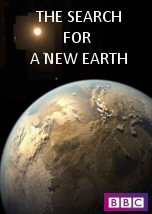
The Search for a New Earth

   2017    Technology
Planet Earth has been home to humankind for over 200,000 years, but with a population of 7.3 billion and counting and limited resources, this planet might not support us forever. Professor Stephen Hawking thinks the human species will have to populate a new planet within 100 years if it is to survive. With climate change, pollution, deforestation, pandemics and population growth, our own planet is becoming increasingly precarious. In this landmark film Professor Hawking, alongside engineer and radio astronomy expert Professor Danielle George and a former student, Christophe Galfard, join forces to find out if, and how, humans can reach for the stars and relocate to different planets. Travelling the globe, they meet top scientists, technologists and engineers who are working to answer our biggest questions: is there another planet out there that we could call home? How will we travel across the vast distances of space to get there? How will we survive the journey? And how will we set up a new human civilization on an alien world? Travelling the globe, they meet top scientists, technologists and engineers who are working to answer our biggest questions: is there another planet out there that we could call home? How will we travel across the vast distances of space to get there? How will we survive the journey? And how will we set up a new human civilization on an alien world? Taking in the latest advances in astronomy, biology and rocket technology from the Atacama Desert to the wilds of the Arctic, viewers will discover a whole world of cutting edge research. This programme shows that Professor Hawking’s ambition isn’t as fantastical as it sounds - and that science fiction is closer to science fact than we ever thought.
Top Science Stories of 2017

   2017    Science
Take a look back at many of the most fascinating science stories of 2017, a year full of stunning advancements in individual fields of study, from astronomy to biology, geology to history – when we piece these discoveries together we see the year in a new light.
Series: Top Science Stories

The Lost Tribes of Humanity

   2017    History
Alice Roberts explores the latest discoveries in the study of human origins, revealing the transformation that has been brought about in this field by genetics. Traditional Palaeoanthropology, based on fossils, is being transformed by advanced genome sequencing techniques. We now know that there were at least four other distinct species of human on the planet at the same time as us - some of them identified from astonishingly well-preserved DNA extracted from 50,000-year-old bones, others hinted at by archaic sections of DNA hidden in our modern genome. What's more, we now know that our ancestors met and interacted with these other humans, in ways that still have ramifications today. Alice uses these revelations to update our picture of the human family tree.

The Empire of Reason

   2017    History
Al-Khalili travels to northern Syria to discover how, a thousand years ago, the great astronomer and mathematician Al-Biruni estimated the size of the earth to within a few hundred miles of the correct figure. He discovers how medieval Islamic scholars helped turn the magical and occult practice of alchemy into modern chemistry. In Cairo, he tells the story of the extraordinary physicist Ibn al-Haytham, who helped establish the modern science of optics and proved one of the most fundamental principles in physics - that light travels in straight lines. Prof Al-Khalili argues that these scholars are among the first people to insist that all scientific theories are backed up by careful experimental observation, bringing a rigour to science that didn't really exist before.
Series: Science and Islam

The Power of Doubt

   2017    History
In the last episode, Al-Khalili turns detective, hunting for clues that show how the scientific revolution that took place in the 16th and 17th centuries in Europe had its roots in the earlier world of medieval Islam. He travels across Iran, Syria and Egypt to discover the huge astronomical advances made by Islamic scholars through their obsession with accurate measurement and coherent and rigorous mathematics.He then visits Italy to see how those Islamic ideas permeated into the west and ultimately helped shape the works of the great European astronomer Copernicus, and investigates why science in the Islamic world appeared to go into decline after the 16th and 17th centuries, only for it to re-emerge in the present day. Al-Khalili ends his journey in the Royan Institute in the Iranian capital Tehran, looking at how science is now regarded in the Islamic world
Series: Science and Islam

The Deep

   2017    Naturaleza    HD
The deep is perhaps the most hostile environment on earth, at least to us - a world of crushing pressure, brutal cold and utter darkness. We have barely begun to explore it, and yet it is the largest living space on the planet. Scientists already think that there is more life in the deep than anywhere else on earth. This episode takes us on an epic journey into the unknown, a realm that feels almost like science fiction. We discover alien worlds, bizarre creatures and extraordinary new behaviours never seen before. We encounter savage hordes of Humboldt squid hunting lanternfish in the depths and coral gardens flourishing in absolute darkness, with more species of coral to be found in the deep than on shallow tropical reefs. Narrated by David Attenborough.
Series: Blue Planet II