







Last Watched

"Cat"  Sort by

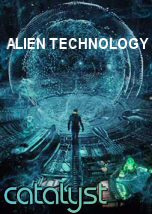
Alien Technology

   2017    Science    HD
Is there anyone out there? Astronomers have been pointing their radio telescopes at the skies for decades trying to pick up alien signals, so far without success. But now there's a new way of looking for aliens. Hitch a ride with Dr Graham Philips as he joins astronomers trawling through the galaxy looking for signs of extra-terrestrial intelligence.
Series: Catalyst

Underwater Universe of the Orda Cave

   2017    Nature    HD
Located beneath Russia's Ural Mountains, Orda Cave is legendary among divers for its unique beauty. The cave's waters are clearest in winter, when the land above lies frozen. With temperatures approaching minus 40 degrees, NHK attempts to film the cave for the first time ever using 4K cameras. Scientists give them insight into the cave's origins, enabling the crew to uncover the miraculous story of how the cave was naturally formed 300 million years ago by climate change and a shifting landscape.

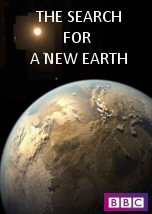
The Search for a New Earth

   2017    Technology
Planet Earth has been home to humankind for over 200,000 years, but with a population of 7.3 billion and counting and limited resources, this planet might not support us forever. Professor Stephen Hawking thinks the human species will have to populate a new planet within 100 years if it is to survive. With climate change, pollution, deforestation, pandemics and population growth, our own planet is becoming increasingly precarious. In this landmark film Professor Hawking, alongside engineer and radio astronomy expert Professor Danielle George and a former student, Christophe Galfard, join forces to find out if, and how, humans can reach for the stars and relocate to different planets. Travelling the globe, they meet top scientists, technologists and engineers who are working to answer our biggest questions: is there another planet out there that we could call home? How will we travel across the vast distances of space to get there? How will we survive the journey? And how will we set up a new human civilization on an alien world? Travelling the globe, they meet top scientists, technologists and engineers who are working to answer our biggest questions: is there another planet out there that we could call home? How will we travel across the vast distances of space to get there? How will we survive the journey? And how will we set up a new human civilization on an alien world? Taking in the latest advances in astronomy, biology and rocket technology from the Atacama Desert to the wilds of the Arctic, viewers will discover a whole world of cutting edge research. This programme shows that Professor Hawking’s ambition isn’t as fantastical as it sounds - and that science fiction is closer to science fact than we ever thought.

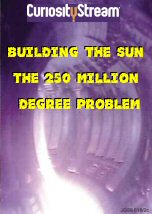
Building the Sun The 250 Million Degree Problem

   2017    Technology
Scientists investigate the way the Sun builds its power -- through fusion -- hoping to find a way to use fusion as a less dangerous and less radioactive waste-producing path to energy than fission. But there are some major difficulties along the way. Fusion really is the perfect way to make energy. We have millions of years worth of fuel. It produces no long-lived radioactive waste. If we can solve the engineering challenges, energy will become cheaper, more available for everybody.
Series: Catalyst

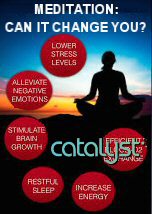
Meditation Can It Change You

   2017    Medicine
Reporter Dr. Graham Phillips examines the effects of meditation in his own life, and the medical evidence of how it affects those who practice it. Can meditation literally make your brain younger?
Series: Catalyst

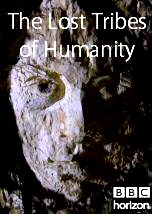
The Lost Tribes of Humanity

   2017    History
Alice Roberts explores the latest discoveries in the study of human origins, revealing the transformation that has been brought about in this field by genetics. Traditional Palaeoanthropology, based on fossils, is being transformed by advanced genome sequencing techniques. We now know that there were at least four other distinct species of human on the planet at the same time as us - some of them identified from astonishingly well-preserved DNA extracted from 50,000-year-old bones, others hinted at by archaic sections of DNA hidden in our modern genome. What's more, we now know that our ancestors met and interacted with these other humans, in ways that still have ramifications today. Alice uses these revelations to update our picture of the human family tree.