







Last Watched

"Lead"  Sort by

Moon

   2000    Science
The little known story of our quest to understand the origins of the Moon. Neil Armstrong's "giant leap for mankind" began a scientific journey of discovery that lead to one of the most startling conclusions in the history of astronomy. The Moon was born from Earth.
Series: The Planets
Michael Jordan to the Max

   2000    Culture
A tribute to the life and career of one of the best basketball players of all-time. The film chronicles Jordan's triumphs through interviews with former players, coaches and Jordan himself.
Follow Michael Jordan's last basketball season as he leads the Chicago Bulls to their sixth NBA championship. Michael Jordan to the Max provides a rare glimpse of Michael Jordan on and off the court. Featuring electrifying on court action and candid interviews with Phil Jackson, Steve Kerr, Doug Collins and Bob Costas. Get ready to experience some of the greatest moments in modern sports history from one of the most dominant sport legends of all time.

An Everyday Miracle

   1998    Medicine
This series, presented by Robert Winston, takes us on a journey from birth to death using time-lapse photography, computer graphics and various state-of-the-art imaging techniques to explore every aspect, every nook and crevice of the human body in its various stages of growth, maturity and eventual decay. Though heart-warming in that it shows the commonality of human experience, The Human Body is also a potentially depressing reminder of our frail physicality and mortality." In this episode, follow Jeff and Phillippa from conception to the birth of their first child Bob in An Everyday Miracle. Learn why conception is the most dangerous part of your life, and the struggles that you must go through to even reach the first step. The couple openly discuss their concerns and joy throughout their entire pregnancy and this episode in particular would be well worth viewing by those who are expecting their first child. From experience, this tasteful and informative section captures aspects of pregnancy that the hospital-run Maternity Classes don't explain as well. You even get to see the birth of their child which makes for a great lead into the next section. And in case you were wondering, every day there are around 100 million acts of sexual intercourse taking place in the world resulting in around 910,000 conceptions.
Series: The Human Body

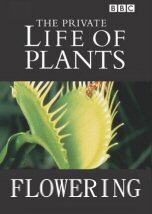
Flowering

   1995    Nature
The third episode is devoted to the ways in which plants reproduce. Pollen and a stigma are the two components needed for fertilisation. Most plants carry both these within their flowers and rely on animals to transport the pollen from one to the stigma of another. To do this, they attract their couriers with colour, scent and nectar. It isn't just birds that help pollination: some mammals and reptiles also do so. However, it is mostly insects that are recruited to carry out the task. To ensure that pollen is not wasted by being delivered to the wrong flower, some species of plant have developed exclusive relationships with their visitors, and the gentian and its attendant carpenter bees is one example. Since pollen can be expensive to produce in terms of calories, some plants, such as orchids, ration it by means of pollinia and a strategically placed landing platform. Other orchids offer no reward for pollination, but instead mislead their guests by mimicking their markings and aroma, thus enticing males to 'mate' with them (Pseudocopulation). The most extreme fertilisation method is one of imprisonment, and one plant that uses it is the dead horse arum. It is often found near gull colonies, and mimics the appearance and smell of rotting flesh. Blow-flies are attracted to it, and are forced to stay the night before being allowed to depart in the morning, laden with pollen. Finally, Attenborough introduces the world's largest inflorescence: that of the titan arum.
Series: The Private Life of Plants

Cosmos Carl Sagan: The Shores of the Cosmic Ocean

   1980    Science
Carl Sagan opens the program with a description of the cosmos and the Spaceship of the Imagination. The ship journeys through the universe's hundred billion galaxies, the Local Group, the Andromeda Galaxy, the Milky Way, the Orion Nebula, our Solar System, and finally the planet Earth. Eratosthenes' successful calculation of the circumference of Earth leads to a description of the ancient Library of Alexandria. Finally, the Ages of Science are described, before pulling back to the full span of the Cosmic Calendar.
Series: Cosmos

The Backbone of Night

   1980    Science
Carl Sagan teaches students in a classroom in his childhood home in Brooklyn, New York, which leads into a history of the different mythologies about stars and the gradual revelation of their true nature. In ancient Greece, some philosophers (Aristarchus of Samos, Thales of Miletus, Anaximander, Theodorus of Samos, Empedocles, Democritus) freely pursue scientific knowledge, while others (Plato, Aristotle, and the Pythagoreans) advocate slavery and epistemic secrecy.
Series: Cosmos
Neanderthal

Neanderthal

  History
Universe

Universe

2021  Science
High Score

High Score

2020  Technology
The Crime of the Century

The Crime of the Century

2021  Medicine
Top Gear

Top Gear

2012  Technology
All or Nothing: Arsenal

All or Nothing: Arsenal

2022  Culture